The story of HIV is not merely a tale of a virus; it is an epic narrative spanning continents, decades, and the very fabric of human existence. It begins as a silent, invisible threat emerging from the heart of Africa, silently weaving its way through populations, before erupting into a global pandemic that redefined public health, sparked unprecedented scientific collaboration, and tragically claimed millions of lives. For a knowledgeable audience, understanding HIV’s causes goes far beyond simply listing modes of transmission; it delves into the intricate molecular machinery of a retrovirus, the evolutionary journey from primate to human, the socio-economic amplifiers that fueled its spread, and the profound interplay between biology, behavior, and societal structure. This is a story of discovery, resilience, and the relentless pursuit of knowledge in the face of an extraordinary challenge.
The Agent Unmasked: The Intricate World of the Human Immunodeficiency Virus
At the heart of the HIV pandemic lies the Human Immunodeficiency Virus itself – a formidable retrovirus whose very existence is a testament to the elegant yet brutal efficiency of natural selection. To truly grasp its causes, we must first understand the agent. HIV is a lentivirus, a genus within the Retroviridae family, characterized by a long incubation period before disease onset. Its core characteristic, and indeed its namesake, is the enzyme reverse transcriptase, which allows it to transcribe its RNA genome into DNA, a process "reverse" to the central dogma of molecular biology. This integrated DNA, known as a provirus, becomes a permanent part of the host cell’s genome, making lifelong infection an inevitable consequence once established.
The structure of HIV is a marvel of viral engineering. Encased within a lipid envelope derived from the host cell membrane, the virus displays critical surface glycoproteins: gp120 and gp41. These proteins are the keys to infection, with gp120 responsible for binding to the CD4 receptor on target cells – primarily CD4+ T lymphocytes, macrophages, and dendritic cells – and gp41 facilitating the fusion of the viral and cellular membranes, allowing the viral core to enter the host cytoplasm. Beneath the envelope lies the viral capsid, a conical structure composed of p24 protein, which encapsulates two identical copies of single-stranded RNA, along with crucial enzymes: reverse transcriptase, integrase, and protease.
The HIV genome is surprisingly compact, containing nine genes that encode fifteen proteins. Beyond the structural genes (gag, pol, env) responsible for producing the core proteins, enzymes, and envelope glycoproteins, HIV possesses a suite of regulatory and accessory genes (tat, rev, nef, vif, vpr, vpu). These genes are not merely ornamental; they play critical roles in modulating viral replication, evading the host immune response, and enhancing pathogenicity. For instance, the Nef protein downregulates CD4 and MHC class I molecules on the surface of infected cells, hindering both superinfection and immune recognition. Tat and Rev are essential for efficient viral gene expression, ensuring the virus can churn out new copies once established. This sophisticated genetic architecture underscores HIV’s capacity to persist, replicate, and ultimately dismantle the host immune system.
The viral lifecycle itself is a meticulously choreographed sequence of events, a ballet of molecular interactions that ultimately leads to the demise of CD4+ T cells, the orchestrators of adaptive immunity. The process begins with attachment and entry, as gp120 binds to CD4 and then to a co-receptor, either CCR5 or CXCR4, dictating the virus’s tropism (R5 strains using CCR5 are typically found in early infection, while X4 strains using CXCR4 emerge later and are often associated with faster disease progression). Following fusion, the viral core enters the cytoplasm, where reverse transcriptase converts the RNA into a double-stranded DNA copy. This viral DNA is then transported into the nucleus and, with the help of integrase, is inserted into the host cell’s genome. This integration step is pivotal, as the viral DNA, now a provirus, can remain latent for extended periods or immediately begin transcribing new viral RNA.
During active replication, host RNA polymerase transcribes the proviral DNA into mRNA, which is then translated into viral proteins. These proteins, some of which are large polyproteins, are cleaved into functional units by the viral protease. Finally, new viral RNA genomes and proteins assemble at the cell membrane, budding off as mature virions, ready to infect new cells. Each cycle of replication, particularly the budding process, ultimately leads to the destruction of the infected CD4+ T cell, progressively depleting the immune system and paving the way for opportunistic infections and malignancies characteristic of Acquired Immunodeficiency Syndrome (AIDS). Understanding these intricate molecular causes is foundational to appreciating the virus’s insidious nature and the immense challenge of developing effective treatments and a cure.
The Origin Story: From SIV to HIV – A Zoonotic Leap of Faith
The journey of HIV from an obscure primate virus to a global human pathogen is one of the most compelling and meticulously reconstructed tales in epidemiology. It is a story rooted in the concept of zoonosis – the transmission of a disease from animals to humans – and meticulously pieced together through phylogenetic analysis, archival samples, and historical detective work.
The scientific consensus firmly establishes that HIV originated from simian immunodeficiency viruses (SIVs), which are endemic and largely non-pathogenic in various non-human primate species across Africa. Specifically, HIV-1, the more virulent and globally dominant strain, is understood to have crossed over from chimpanzees (Pan troglodytes troglodytes) carrying SIVcpz. HIV-2, less pathogenic and primarily confined to West Africa, originated from sooty mangabeys (Cercocebus atys) carrying SIVsmm. This isn’t a single, isolated event; phylogenetic analyses indicate multiple independent zoonotic transmissions from SIVs to humans. For HIV-1 alone, at least four distinct groups (M, N, O, P) have been identified, each representing a separate cross-species jump. Group M, responsible for the vast majority of the global pandemic, is believed to have originated from a specific subspecies of chimpanzee, Pan troglodytes troglodytes, found in the forests of southeastern Cameroon and the Democratic Republic of Congo (DRC).
The "bushmeat hypothesis" is the leading explanation for these initial cross-species transmissions. Hunters in Central Africa, engaging in the hunting, butchering, and consumption of wild primates for food, would have been regularly exposed to primate blood and bodily fluids. A cut, a scratch, or a mucosal exposure during this process would provide a direct conduit for SIV to enter the human bloodstream. While such exposures might have been common, most would not have resulted in sustained human infection. For the virus to establish itself and begin human-to-human transmission, a series of conditions – including a sufficiently high viral load in the initial human host and subsequent opportunities for onward transmission – would have been necessary.
Genetic sequencing and molecular clock analyses estimate that the initial zoonotic jump for HIV-1 Group M occurred around the early 20th century, likely between 1900 and 1920. The precise geographical origin points to the region around Kinshasa (then Leopoldville) in the Belgian Congo. This sprawling colonial city, undergoing rapid urbanization and infrastructure development during the early to mid-20th century, inadvertently became the crucible for the burgeoning epidemic. The factors that allowed a localized SIV infection in a human to amplify and spread included:
- Colonialism and Urbanization: The influx of people to burgeoning urban centers like Kinshasa for labor created dense populations, often in poor sanitary conditions.
- Transportation Networks: The construction of railways and roads facilitated the movement of people, including infected individuals, from rural areas to urban hubs and across wider regions.
- Changes in Social Practices: The rise of prostitution, often linked to transient male labor forces, significantly increased the opportunities for sexual transmission.
- Unsterile Medical Practices: The widespread use of unsterilized syringes and needles in rudimentary clinics for mass vaccination campaigns or treatment of common diseases (e.g., sleeping sickness, syphilis) in the early to mid-20th century provided a highly efficient, though unintended, pathway for blood-borne transmission within communities. A single contaminated syringe could infect multiple individuals.
These factors converged in Kinshasa, creating a perfect storm where a nascent zoonotic infection could gain traction and evolve. The city’s status as a major transport hub further ensured that once established, the virus could then silently spread along trade routes and eventually, with increased international travel, to other continents. The earliest confirmed human HIV infection dates back to a plasma sample from 1959 from a man in Kinshasa, and further genetic analysis of an archived lymph node biopsy from 1960 also from Kinshasa provided crucial evidence of early HIV-1 group M circulation.
The global dissemination of HIV-1 Group M is thought to have occurred primarily in the 1970s. One prevailing hypothesis suggests that the virus travelled from the DRC to Haiti, possibly through Haitian professionals working in the Congo. From Haiti, it is believed to have entered the United States, likely through a single index case, subsequently spreading rapidly within key populations, particularly gay men and intravenous drug users, before being clinically recognized in the early 1980s. This intricate journey from a remote chimpanzee to a worldwide pandemic underscores how seemingly isolated events, when combined with human migration, societal changes, and medical practices, can have catastrophic global consequences. The story of HIV’s origin is a powerful reminder of our interconnectedness with the natural world and the profound impact of human activity on disease emergence.
Modes of Transmission: The Pathways of Human-to-Human Spread
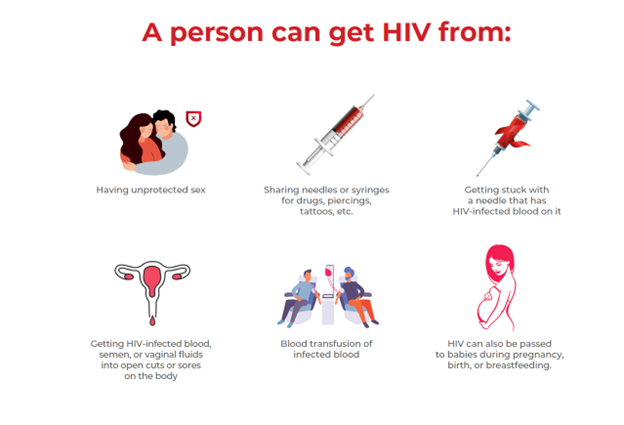
Once HIV made the zoonotic leap and established itself in the human population, its subsequent spread became a function of specific, well-defined modes of transmission. Understanding these pathways is critical not only for comprehending the epidemic’s dynamics but also for implementing effective prevention strategies. It’s important to emphasize that HIV is not highly transmissible and requires specific conditions for efficient spread; it cannot be transmitted through casual contact.
The three primary modes of HIV transmission are:
-
Sexual Transmission: This is by far the most common route globally, accounting for the vast majority of new infections. HIV is present in the bodily fluids of infected individuals, specifically blood, semen, pre-seminal fluid, rectal fluids, vaginal fluids, and breast milk. Sexual transmission occurs when these fluids come into contact with a mucous membrane (found in the rectum, vagina, penis, or mouth) or damaged tissue (e.g., cuts or sores).
- Unprotected Anal Sex: Receptive anal intercourse carries the highest risk of sexual transmission due due to the delicate and thin lining of the rectum, which is prone to microscopic tears, and the high concentration of immune cells (CD4+ T cells) in the rectal mucosa that can be targeted by the virus.
- Unprotected Vaginal Sex: This is also a significant route, with women generally at higher biological risk than men during heterosexual intercourse due to greater mucosal surface area exposed and longer duration of exposure to infected seminal fluid.