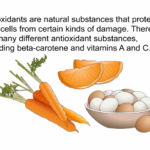
In the vibrant tapestry of modern nutrition, where superfoods reign supreme and the quest for optimal health often leads us down complex dietary paths, a fundamental truth sometimes gets lost in the noise. We meticulously select the brightest carrots, the deepest orange sweet potatoes, and the darkest leafy greens, confident in their rich bounty of beta-carotene – a potent provitamin A carotenoid, celebrated for its antioxidant prowess and its crucial role in vision, immune function, and skin health. Yet, for many, the journey of this golden nutrient from plate to cell remains incomplete, a tale of potential unfulfilled.
This is not a story of dietary deficiency in the traditional sense, but rather one of bioavailability – the proportion of a nutrient that is absorbed and utilized by the body. It’s a narrative often overlooked, yet profoundly impactful, revealing that merely consuming a nutrient is but half the battle. The other half, the one that truly matters, involves understanding the intricate dance between food components and our physiological machinery. And in the case of beta-carotene, the most crucial dance partner, the unsung hero that unlocks its full potential, is dietary fat.
Imagine beta-carotene as a VIP guest arriving at a grand ball, but without an invitation or a proper escort. It’s there, present in all its glory, but unable to enter the main hall where the real party happens. Dietary fat, in this analogy, is the essential chaperone, the key that opens the doors, guides the guest through the bustling crowd, and ensures its safe arrival at its destination. Without this escort, the beta-carotene, despite its intrinsic value, remains largely outside, a fleeting presence with minimal impact.
This article embarks on a journey to unravel this vital connection, to tell the story of beta-carotene’s absorption, explaining why the simple act of pairing your vegetables with a healthy fat can profoundly alter your body’s ability to harness its benefits. We will delve into the molecular mechanisms, explore the historical context of this understanding, and equip the knowledgeable reader with the insights needed to optimize their nutritional intake, transforming mere consumption into genuine nourishment.
The Protagonist: Beta-Carotene – A Lipophilic Luminary
Our story begins with beta-carotene itself. A member of the carotenoid family, these organic pigments are responsible for the vibrant red, orange, and yellow hues found in many fruits and vegetables. Beyond their aesthetic appeal, carotenoids are powerful antioxidants, capable of neutralizing harmful free radicals that contribute to cellular damage and aging. Beta-carotene stands out among its kin because it is a "provitamin A" carotenoid, meaning the human body can convert it into Vitamin A (retinol), an essential nutrient critical for myriad physiological functions.
Vitamin A is a cornerstone of human health. It is indispensable for maintaining healthy vision, particularly in low light conditions, and its deficiency is a leading cause of preventable blindness worldwide. Beyond the eyes, Vitamin A plays a pivotal role in immune function, supporting the integrity of mucous membranes and the development of white blood cells. It’s crucial for cell growth and differentiation, impacting everything from skin health to reproductive processes.
But here’s the crucial plot twist: beta-carotene, like all carotenoids, is inherently lipophilic – "fat-loving." This chemical characteristic dictates its entire journey through the human body. Unlike water-soluble vitamins such as Vitamin C or the B vitamins, which readily dissolve in the aqueous environment of our digestive tract and bloodstream, beta-carotene shies away from water. It seeks out lipid environments, preferring to associate with fats and oils. This fundamental property is the linchpin upon which its absorption hinges.
The Unseen Battle: Overcoming the Aqueous Barrier
Imagine the human digestive tract as a long, winding river. For water-soluble nutrients, this river is a friendly thoroughfare, carrying them effortlessly towards absorption. For beta-carotene, however, this river is a formidable barrier. The stomach and small intestine, while containing some fat, are predominantly aqueous environments. To traverse this water-rich landscape and reach the absorptive cells of the intestinal lining (enterocytes), beta-carotene needs a special kind of assistance – an emulsifying and solubilizing agent that only dietary fat can effectively provide.
This is where the story truly unfolds, revealing the intricate ballet of biochemistry that transforms a raw nutrient into a usable form.
Act 1: The Mechanical and Chemical Prelude
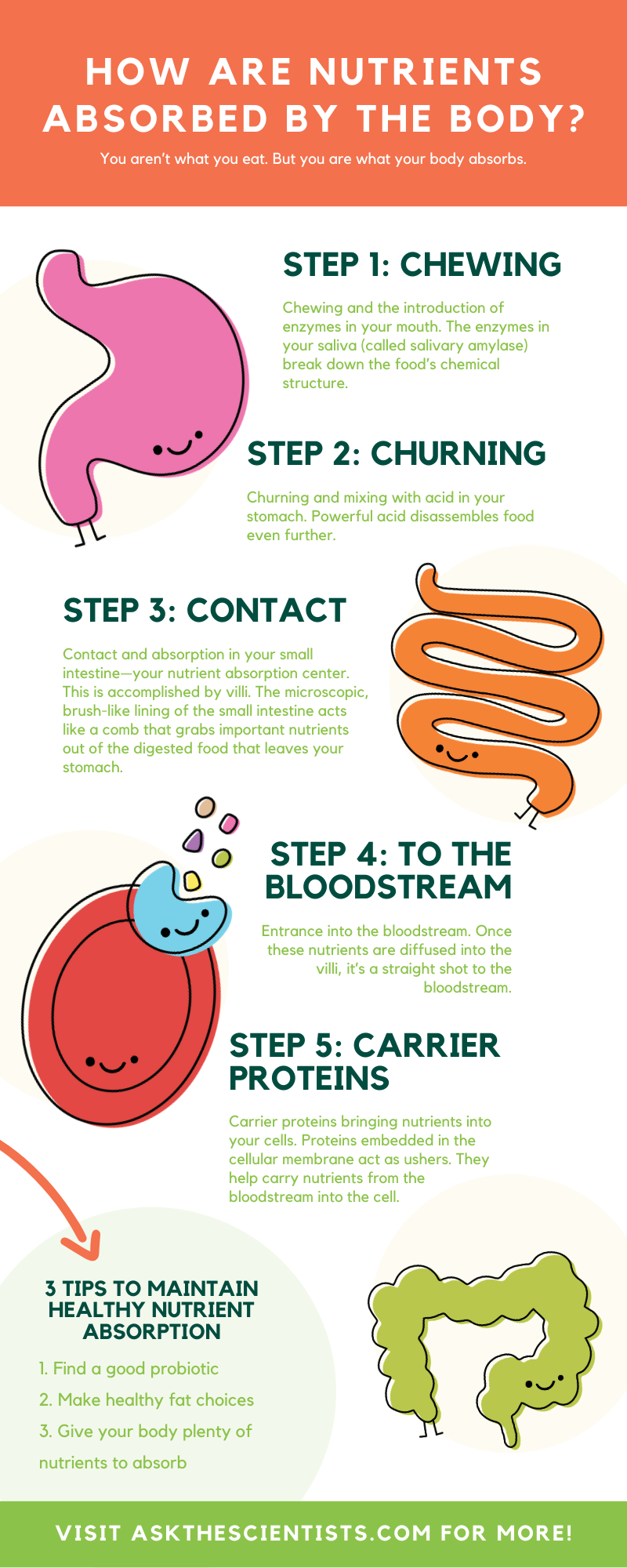
The journey begins in the mouth, where chewing mechanically breaks down food, increasing its surface area. In the stomach, further mechanical churning occurs, along with the initial enzymatic breakdown of proteins and some fats by gastric lipase. However, the real action for beta-carotene and other fat-soluble compounds commences in the small intestine.
Act 2: The Arrival of Bile – Nature’s Detergent
As the partially digested food (chyme) moves from the stomach into the duodenum, the first section of the small intestine, its fatty content triggers a cascade of hormonal signals. One of the most important is the release of cholecystokinin (CCK), a hormone that stimulates the gallbladder to contract and release bile into the duodenum.
Bile, produced by the liver and stored in the gallbladder, is a complex fluid containing bile salts, phospholipids, cholesterol, and bilirubin. Its primary function is to emulsify dietary fats. Think of emulsification like shaking oil and vinegar together to temporarily suspend the oil droplets in the vinegar. Bile salts, with their hydrophilic (water-loving) and hydrophobic (water-fearing) ends, act as detergents, breaking down large fat globules into tiny, microscopic droplets. This dramatically increases the surface area of the fat, making it more accessible to digestive enzymes.
This step is absolutely critical for beta-carotene. Because beta-carotene is dissolved within these fat droplets, the emulsification process effectively disperses the beta-carotene throughout the watery chyme, preventing it from clumping together and remaining inaccessible. Without sufficient dietary fat to trigger bile release and provide a medium for emulsification, beta-carotene would largely remain trapped within larger food particles, unable to interact effectively with the digestive machinery.
Act 3: Lipases and the Formation of Micelles – The Micro-Transportation System
Once emulsified, the fat droplets become targets for pancreatic lipases, enzymes secreted by the pancreas. These lipases break down triglycerides (the primary form of fat in our diet) into monoglycerides and free fatty acids.
Now, with the help of bile salts, these monoglycerides and free fatty acids, along with cholesterol and, crucially, the dissolved beta-carotene, spontaneously aggregate to form tiny, spherical structures called micelles. Imagine micelles as microscopic transport bubbles or "taxi cabs" designed for the watery environment of the small intestine. Their outer surface is hydrophilic, allowing them to navigate the aqueous chyme, while their interior is hydrophobic, providing a safe, fat-loving haven for beta-carotene and other fat-soluble passengers.
This micelle formation is the penultimate step before absorption. Without micelles, beta-carotene would be unable to traverse the "unstirred water layer" – a thin, watery boundary that separates the intestinal contents from the brush border of the enterocytes. The micelles effectively ferry the beta-carotene across this barrier, bringing it right to the doorstep of the absorptive cells.
Act 4: Entry into the Enterocytes – Crossing the Threshold
Upon reaching the brush border of the enterocytes, the micelles interact with the cell membrane. The monoglycerides, free fatty acids, cholesterol, and beta-carotene are then released from the micelles and absorbed into the enterocytes, primarily through passive diffusion across the lipid bilayer of the cell membrane. Some specific transport proteins, like scavenger receptor class B type 1 (SR-B1), have also been identified as playing a role in carotenoid uptake, but passive diffusion remains a significant pathway.
The bile salts, having completed their mission, are largely reabsorbed in the ileum (the final section of the small intestine) and recycled back to the liver via the enterohepatic circulation, ready to assist in the digestion of the next fatty meal.
Act 5: Inside the Enterocyte – Transformation and Packaging
Once inside the enterocyte, beta-carotene faces a crucial decision point. It can either remain as beta-carotene or be cleaved by an enzyme called Beta-Carotene 15,15′-Monooxygenase 1 (BCMO1) into two molecules of retinal (an aldehyde form of Vitamin A). Retinal is then quickly reduced to retinol, the primary storage and transport form of Vitamin A. This conversion process is not 100% efficient and varies significantly among individuals due to genetic factors and dietary influences.
Regardless of whether it remains beta-carotene or is converted to retinol, these lipophilic molecules cannot directly enter the bloodstream, which is largely aqueous. They need another mode of transport. Inside the enterocyte, they are re-esterified with fatty acids and then packaged, along with other fats and cholesterol, into larger lipoprotein particles called chylomicrons. Think of chylomicrons as larger, more robust "delivery trucks" designed for long-haul transport.
Act 6: The Lymphatic Highway and Beyond – Distribution to the Body
These chylomicrons are too large to directly enter the capillaries surrounding the small intestine. Instead, they are exocytosed from the enterocytes and enter the lymphatic system, a network of vessels that parallels the circulatory system. The lymphatic system eventually drains into the bloodstream, typically near the heart.