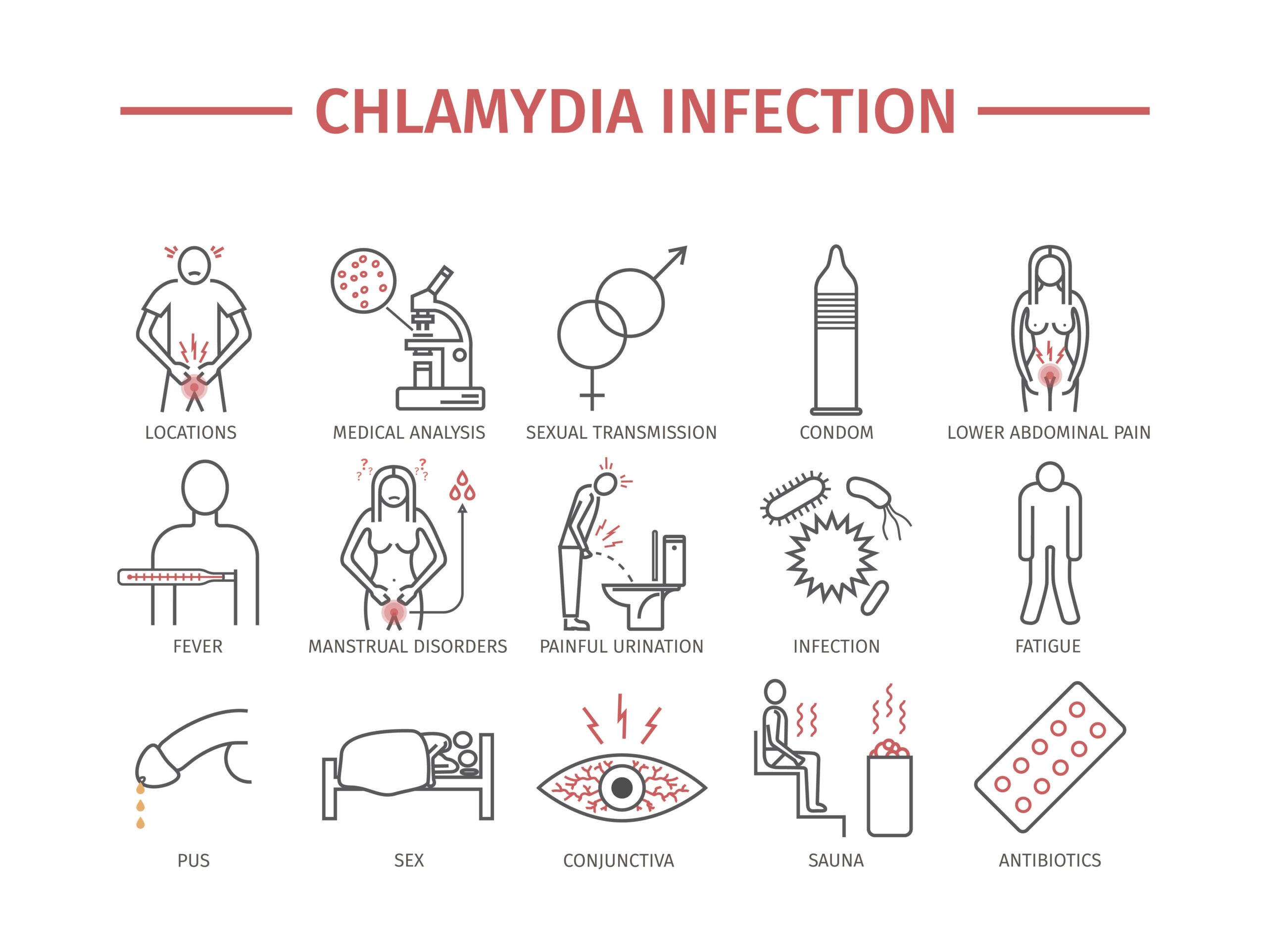
In the intricate tapestry of human health, there exist threads that, though vital, often remain unseen, their presence only hinted at by the subtle shifts in the pattern. Chlamydia, a pervasive sexually transmitted infection (STI) caused by the bacterium Chlamydia trachomatis, is one such thread. It is a master of disguise, a silent orchestrator of disease that often operates beneath the radar of awareness, its narrative unfolding in whispers rather than shouts. For the knowledgeable audience, familiar with the nuances of pathology and public health, the story of Chlamydia’s signs and symptoms is not merely a list of clinical manifestations; it is a profound exploration of epidemiological challenge, physiological consequence, and the critical importance of vigilance in the face of an insidious adversary.
Our journey into understanding Chlamydia begins with acknowledging its extraordinary capacity for stealth. Unlike many infections that announce their arrival with an unequivocal alarm, Chlamydia trachomatis frequently establishes a foothold and proliferates without triggering any discernible symptoms. This asymptomatic nature is not a benign characteristic; it is, in fact, the very cornerstone of its epidemiological success and the primary reason it remains a leading cause of preventable infertility and other severe health complications worldwide. The story of Chlamydia, therefore, is largely a story of absence – the absence of pain, the absence of discharge, the absence of fever – an absence that belies a persistent, active infection with potentially devastating long-term repercussions.
The Asymptomatic Master: Chlamydia’s Most Potent Weapon
To truly grasp the narrative of Chlamydia’s symptomatology, one must first confront its most defining characteristic: its frequently asymptomatic presentation. Estimates suggest that up to 70-80% of women and 50% of men infected with Chlamydia will experience no symptoms at all. This is not a statistical anomaly but a fundamental biological strategy of the bacterium. Chlamydia trachomatis is an obligate intracellular pathogen, meaning it can only reproduce inside human cells. Its life cycle involves an elementary body (EB), an infectious but metabolically inactive form, and a reticulate body (RB), a metabolically active but non-infectious form. This intricate dance within host cells, often epithelial cells of the genitourinary tract, can occur without provoking a robust inflammatory response sufficient to cause overt symptoms.
Imagine a person going about their daily life, feeling perfectly healthy, engaging in relationships, pursuing their goals, entirely unaware that a microscopic battle is unfolding within their body. They experience no discomfort, no unusual discharges, no pain. This scenario plays out millions of times globally each year, creating a vast, hidden reservoir of infection. This silent spread is not just a personal tragedy; it is a public health crisis. Individuals unknowingly transmit the infection to their partners, who in turn may transmit it further, perpetuating a cycle of silent propagation. The lack of immediate warning signs means that diagnosis is often delayed, and treatment, when it finally occurs, may come too late to prevent the more severe sequelae of chronic or ascending infection. This is the first, and perhaps most crucial, chapter in the story of Chlamydia’s impact: the narrative of the unseen, the unspoken, and the unknowingly shared burden.
When the Mask Slips: Symptoms in Men
While Chlamydia is notoriously asymptomatic, a significant proportion of infected men will eventually develop symptoms, often involving the urethra, epididymis, or rectum. These manifestations, when they occur, offer crucial clues, albeit sometimes vague ones, to the presence of the infection.
Urethritis: The Most Common Manifestation
For men, urethritis is the most frequent symptomatic presentation of Chlamydia. The urethra, the tube that carries urine and semen out of the body, becomes inflamed. The symptoms, though often milder than those caused by gonorrhea, can be persistent and bothersome:
- Dysuria: This is often described as a burning sensation, a sharp sting, or a dull ache during urination. The discomfort can range from a fleeting annoyance to a significant impediment to daily life, making each trip to the restroom a dreaded event. It’s often mistaken for a urinary tract infection (UTI), leading to misdiagnosis or delayed appropriate treatment.
- Urethral Discharge: While often less copious and purulent than gonococcal discharge, Chlamydial urethral discharge can be a tell-tale sign. It is typically clear, watery, or mucoid, sometimes appearing milky or whitish. Its presence, even if subtle, is an important indicator. Some men might notice it only as a slight staining on their underwear, particularly in the morning, or as a sticky sensation at the urethral meatus. The sheer variety in appearance makes it difficult for individuals to self-diagnose reliably.
- Urethral Itching or Irritation: A persistent tickle, itch, or feeling of irritation within the urethra can be a subtle but persistent symptom. This sensation might precede the development of more overt dysuria or discharge, acting as an early, though easily dismissed, warning.
- Urinary Frequency and Urgency: While less common than dysuria, some men may experience an increased urge to urinate or more frequent urination, again mimicking the symptoms of a UTI.
The narrative of male urethritis due to Chlamydia is often one of gradual onset and mild, fluctuating symptoms, making it easy to ignore or attribute to other, less serious causes. This delay in seeking care contributes significantly to the spread of the infection.
Epididymitis: The Ascending Threat
If Chlamydial urethritis remains untreated, the infection can ascend, traveling up the vas deferens to the epididymis, the coiled tube located at the back of the testicle that stores and carries sperm. This complication, known as epididymitis, represents a more severe turn in the story, demanding immediate medical attention.
- Unilateral Testicular Pain and Swelling: The hallmark of epididymitis is the sudden or gradual onset of pain and swelling, typically in one testicle. The pain can range from a dull ache to an excruciating throb, often radiating to the groin or lower abdomen. The affected testicle may become tender to the touch, enlarged, and feel heavy.
- Associated Systemic Symptoms: In more severe cases, epididymitis can be accompanied by fever, chills, nausea, and general malaise.
- Impact on Fertility: Chronic or recurrent epididymitis, especially if untreated, can lead to scarring and blockage of the epididymis, potentially impairing sperm transport and contributing to male infertility. The silent urethritis, left unchecked, can thus evolve into a direct threat to reproductive health.
The story of Chlamydial epididymitis is a stark reminder that what begins as a seemingly minor, localized infection can escalate into a significant threat, weaving a narrative of pain, inflammation, and potential reproductive compromise.
Proctitis: The Rectal Manifestation
Chlamydia can also infect the rectum, particularly in men who engage in receptive anal intercourse, but also through autoinoculation or spread from the urethra. Rectal Chlamydia, or proctitis, can also be largely asymptomatic. When symptoms do occur, they include:
- Rectal Pain or Discomfort: A persistent ache, soreness, or feeling of fullness in the rectal area.
- Rectal Discharge: Mucus, pus, or blood may be observed from the rectum, particularly during bowel movements.