The human body is a tapestry of intricate signals, often communicating profound shifts through subtle changes. Among these, the phenomenon of "puffy nipples" – a seemingly innocuous enlargement or protrusion of the nipple and/or areola – stands out as a common, yet often perplexing, concern. Far from being a mere cosmetic detail, the puffiness of a nipple can be a silent narrator, recounting tales of hormonal upheavals, lifestyle choices, medical conditions, or even the natural progression of life. For the discerning individual, a knowledgeable audience attuned to the body’s whispers, understanding these underlying narratives is not just about identifying a symptom, but about comprehending the complex physiology that governs us.
While frequently benign and transient, especially during certain life stages, persistent or unexplained nipple puffiness warrants attention. It’s a signal that prompts us to ask: What story is my body trying to tell? This comprehensive exploration delves into six common causes, unraveling the intricate biological and circumstantial factors behind this often-misunderstood bodily change, painting a vivid picture of the journeys our bodies embark upon.
1. The Symphony of Hormones: Puberty, Menstrual Cycles, and Pregnancy
Perhaps the most common and universally understood narrative behind puffy nipples is the dramatic interplay of hormones. These chemical messengers orchestrate countless bodily functions, and their fluctuations can profoundly impact breast tissue, including the nipples and areola. The story here is one of growth, preparation, and cyclical change, written in the ebb and flow of estrogen, progesterone, and other vital compounds.
Puberty: The Awakening of Form
Consider the journey of a young individual entering puberty. For both boys and girls, this transformative period is marked by a surge of sex hormones.
-
In Girls: The first noticeable sign of breast development, known as thelarche, often begins with the budding of the breast beneath the nipple and areola. Estrogen, primarily produced by the ovaries, acts as the principal architect, stimulating the growth of glandular tissue, fat deposition, and ductal systems. This initial phase can make the nipples appear distinctly puffy and sensitive as the breast mound begins to form. Imagine a young girl, perhaps twelve or thirteen, noticing this subtle swelling. It’s a natural, anticipated step in her development, a physical manifestation of her body preparing for womanhood. The puffiness here is not a cause for alarm, but a testament to the powerful, transformative work of estrogen.
-
In Boys: The Enigma of Pubertal Gynecomastia: While often associated with female development, boys too can experience nipple puffiness during puberty, a condition known as pubertal gynecomastia. This occurs in a significant percentage of adolescent boys, typically between the ages of 13 and 17. The underlying cause is a temporary imbalance between estrogen and testosterone. As testosterone levels rise dramatically, some of it is converted into estrogen by an enzyme called aromatase, present in various tissues, including fat cells. If the estrogenic stimulation temporarily outweighs the androgenic effects, it can lead to the proliferation of glandular tissue beneath the nipple, causing it to swell and become tender. Picture a teenage boy, already navigating the turbulent waters of self-identity, suddenly confronted with tender, puffy nipples. It can be a source of significant embarrassment and anxiety, yet it is a largely physiological response to hormonal shifts. In the vast majority of cases, this condition resolves spontaneously within a few months to a couple of years as the hormonal balance stabilizes, with testosterone asserting its dominance. It’s a temporary narrative of hormonal negotiation, a fleeting chapter in the broader story of male development.
The Menstrual Cycle: A Monthly Rhyme
For women of reproductive age, the menstrual cycle is a monthly narrative of preparation and renewal, profoundly influenced by the cyclical dance of estrogen and progesterone.
- Mid-Cycle and Pre-Menstrual Phase: As ovulation approaches and in the luteal phase (the week or two before menstruation), estrogen and progesterone levels rise. Estrogen promotes fluid retention and ductal growth, while progesterone stimulates the glandular tissue. This combined hormonal surge can lead to increased blood flow, fluid accumulation, and swelling in the breasts, making the nipples and areola appear puffier and feel more sensitive or tender. Many women experience this phenomenon as a predictable part of their cycle, a bodily signal that menstruation is approaching. It’s the body’s intricate way of preparing for a potential pregnancy each month, even if that preparation ultimately leads to the shedding of the uterine lining. The puffiness here is a familiar, recurring theme in the story of female fertility.
Pregnancy: The Grand Overture
Pregnancy is perhaps the most profound hormonal odyssey a woman’s body undertakes, and the nipples play a crucial role in this unfolding story of new life.
- Early Pregnancy: Almost immediately after conception, a cascade of hormones begins. Human Chorionic Gonadotropin (hCG), the hormone detected by pregnancy tests, rises rapidly. This, along with increasing levels of estrogen and progesterone, prepares the breasts for lactation. The nipples and areola often become darker, larger, and significantly puffier, often accompanied by heightened sensitivity. The Montgomery glands (small bumps on the areola) also become more prominent, producing an oily substance to lubricate and protect the nipples. This dramatic transformation is the body’s proactive measure, an essential chapter in the story of nurturing. The puffiness is not merely cosmetic; it’s a functional adaptation, preparing the delicate tissues for the rigors of breastfeeding. It’s a powerful indicator of the monumental biological shifts occurring within, a clear and undeniable signal of a new life taking root.
In essence, hormonal fluctuations tell a story of dynamic adaptation, growth, and preparation, making them one of the most common and compelling reasons behind the subtle swell of puffy nipples.
2. Gynecomastia: Beyond the Hormonal Fluctuation
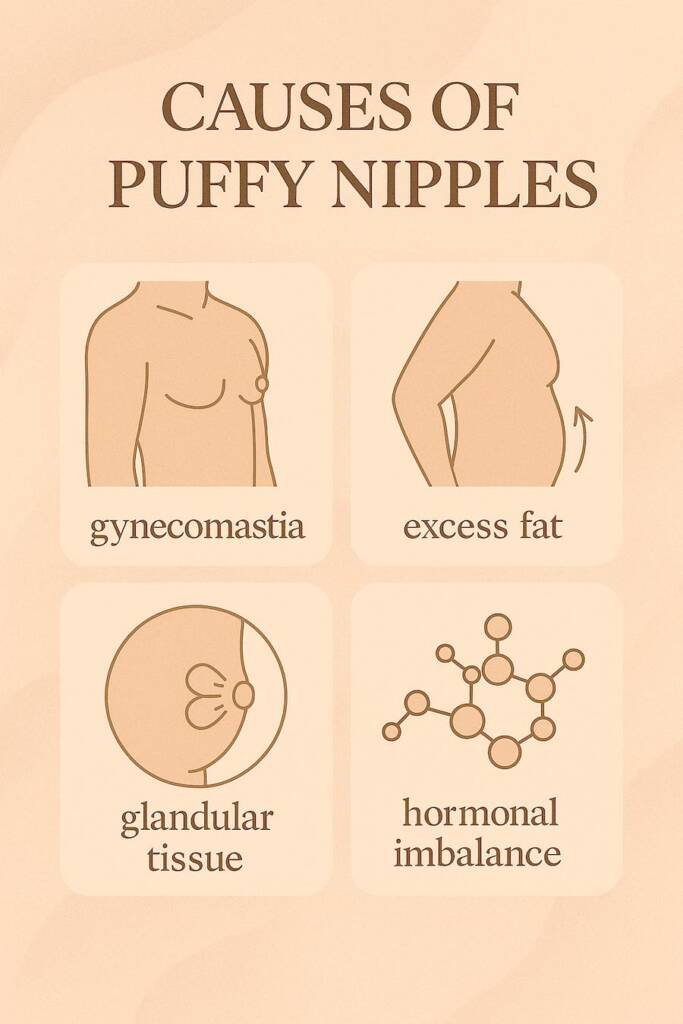
While puberty introduces us to transient hormonal imbalances, persistent or adult-onset nipple puffiness, particularly in men, often points to a more specific condition: gynecomastia. This condition represents a genuine enlargement of male breast glandular tissue, distinct from simple fatty deposits. It tells a complex story, sometimes of underlying medical conditions, sometimes of medication side effects, and sometimes, frustratingly, with no clear cause.
True Gynecomastia: The Glandular Overgrowth
True gynecomastia involves the proliferation of the mammary gland tissue itself, feeling rubbery or firm beneath the nipple. The narrative here is one of an imbalance between estrogen and androgens (male hormones like testosterone) within the breast tissue.