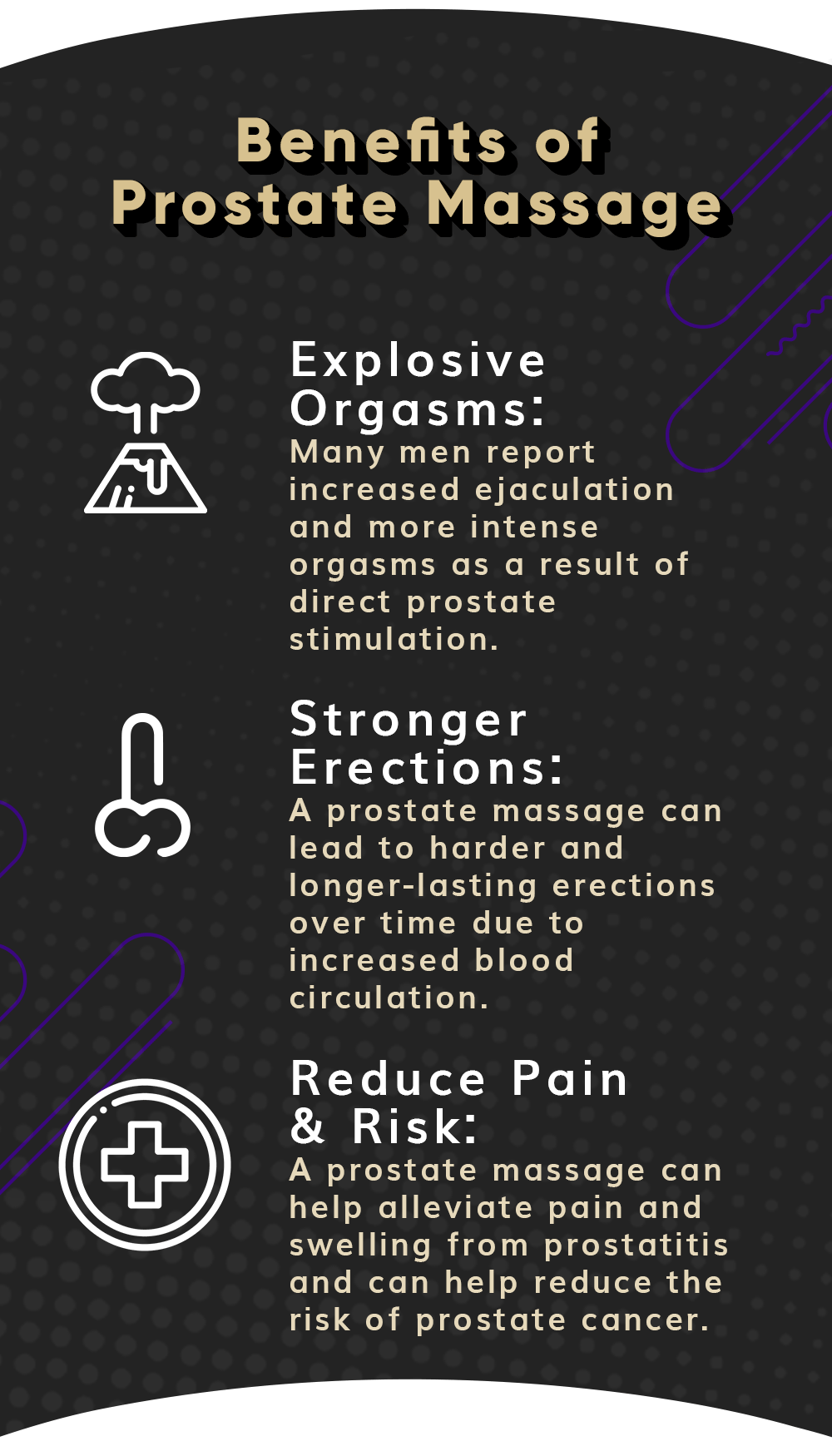
In the labyrinthine landscape of human anatomy, certain organs remain shrouded in a curious blend of mystery, medical jargon, and societal reticence. For men, the prostate gland often occupies this peculiar space. Mention it, and conversations typically gravitate towards concerns of aging, cancer screenings, or the inconvenience of benign prostatic hyperplasia. It’s an organ discussed in hushed tones, almost exclusively within the context of pathology.
But what if this walnut-sized gland, nestled deep within the male pelvis, held keys to something far more profound than mere urinary function or disease? What if it was a neglected nexus of sensation, a potent amplifier of pleasure, and a potential conduit for holistic well-being?
This is the story of the prostate, not as a medical problem to be managed, but as an intimate frontier awaiting exploration. It’s a journey that challenges taboos, redefines masculinity, and invites us to reconsider the intricate interplay between physical health and ecstatic pleasure. We will delve into the historical whispers, the anatomical marvels, the nuanced techniques, and the compelling promises – both sensual and therapeutic – that prostate massage offers.
The Prostate: A Misunderstood Maestro
To truly appreciate the potential of prostate massage, one must first understand its essence. Imagine a small, firm gland, roughly the size and shape of a walnut, situated just beneath the bladder, encircling the urethra. This strategic location places it at the crossroads of the urinary and reproductive systems.
Anatomically Speaking: The prostate is composed of glandular tissue, smooth muscle, and fibrous connective tissue. Its primary role in reproduction is to produce prostatic fluid, a milky, slightly acidic fluid that makes up a significant portion of semen. This fluid contains enzymes like prostate-specific antigen (PSA), which liquefies semen, and citrate, a nutrient for sperm. The smooth muscles within the prostate contract during ejaculation, pushing seminal fluid into the urethra.
Beyond the Biological Mandate: What makes the prostate particularly interesting, especially in the context of pleasure, is its rich innervation. It is densely packed with nerve endings, particularly those associated with the parasympathetic nervous system, which governs rest, digestion, and sexual arousal. Its close proximity to the rectum and the perineum (the area between the scrotum and the anus) makes it accessible and highly sensitive to direct stimulation. For many, this makes it the male equivalent of the female G-spot – a concentrated zone capable of eliciting profound and unique orgasmic experiences.
Furthermore, the prostate is intricately connected to the broader pelvic floor musculature. The pelvic floor is a hammock of muscles that supports the bladder, bowel, and sexual organs, playing a crucial role in urinary continence, bowel function, and sexual response. Tension or dysfunction in the pelvic floor can directly impact prostate health and sexual sensation. Understanding this interconnectedness is vital, as stimulating the prostate can also indirectly engage and relax these crucial muscles, creating a ripple effect of benefits.
Whispers Through Time: A Brief History of Prostate Awareness
The concept of stimulating the prostate is not a purely modern invention, nor is it solely confined to the realm of sexual exploration. Its origins are multifaceted, tracing back to therapeutic applications long before its pleasurable dimensions were widely acknowledged.
In traditional medicine systems, particularly those with a holistic view of the body like Ayurveda or Traditional Chinese Medicine, there was an implicit understanding of pelvic energy and organ health. While direct "prostate massage" as we understand it today might not have been explicitly documented, practices focusing on abdominal massage, perineal stimulation, and energy work often targeted the same general region, aiming to improve circulation, release blockages, and promote overall vitality in the lower abdomen and pelvic area. These ancient practices often linked sexual health with general well-being, suggesting an intuitive grasp of the prostate’s significance.
The Western medical gaze, however, approached the prostate primarily from a pathological perspective. As early as the 19th and early 20th centuries, doctors began to recognize the therapeutic potential of prostate massage for conditions like chronic prostatitis. The prevailing theory was that massage could help drain congested prostatic fluid, relieve inflammation, and improve blood flow, thereby alleviating symptoms such as pain, discomfort, and urinary issues. For decades, it remained a standard medical procedure, albeit one often performed with little regard for patient comfort or privacy, viewed purely as a clinical intervention.
The shift from a strictly therapeutic lens to one encompassing pleasure began to emerge more prominently in the latter half of the 20th century, coinciding with a broader sexual revolution and a growing openness about human sexuality. The rise of sexology, the exploration of varied sexual practices, and eventually, the mainstreaming of discussions around male pleasure (beyond the purely penile) brought the prostate into a new light. It was no longer just an organ of disease but a potential source of profound sensation. The term "male G-spot" gained traction, driven by anecdotal accounts, sexual health literature, and, inevitably, the burgeoning adult entertainment industry, which, while sometimes oversimplifying or sensationalizing, undeniably played a role in destigmatizing and popularizing the concept.
Today, we stand at an intersection where the ancient wisdom of holistic body awareness, the clinical insights of modern medicine, and the liberated explorations of sexual wellness converge. The prostate is no longer just a medical concern; it is increasingly recognized as a vital component of a man’s overall health, pleasure, and well-being.
The Art and Science of Stimulation: How Prostate Massage Works
Approaching prostate massage, whether for pleasure or health, requires a combination of knowledge, respect for the body, and a willingness to explore. It’s an intimate act, demanding hygiene, preparation, and a gentle touch.
The Modalities of Massage:
-
External Perineal Massage: This is the least invasive method. The perineum, the area of skin between the anus and the scrotum, lies directly above the prostate. Gentle pressure and circular motions applied to this area can provide indirect stimulation. While less intense than direct internal massage, it can still be highly pleasurable for some, contributing to arousal and relaxation of the pelvic floor. It’s an excellent starting point for those hesitant about internal exploration.
-
Internal (Rectal) Massage: This is the most direct and effective method for stimulating the prostate. Due to the prostate’s anatomical position anterior to the rectum, it is readily accessible via the anal canal.
- Self-Massage: Many men choose to explore this privately. Specially designed prostate massagers (often L-shaped or curved to target the gland), vibrating toys, or even a clean, lubricated finger can be used. The key is to start slowly, listen to the body, and prioritize comfort.
- Partner Massage: For couples, prostate massage can be an incredibly intimate and bonding experience. It requires open communication, mutual trust, and explicit consent. The partner uses a clean, lubricated finger or a prostate massager.
- Professional Massage: Some sexual wellness coaches, tantra practitioners, or even some specialized physiotherapists offer prostate massage. This can be a guided, educational experience, particularly for those new to the practice or seeking therapeutic relief. Medically, urologists may still perform prostate massage for diagnostic purposes (e.g., to collect prostatic fluid for analysis) or therapeutically for chronic prostatitis.