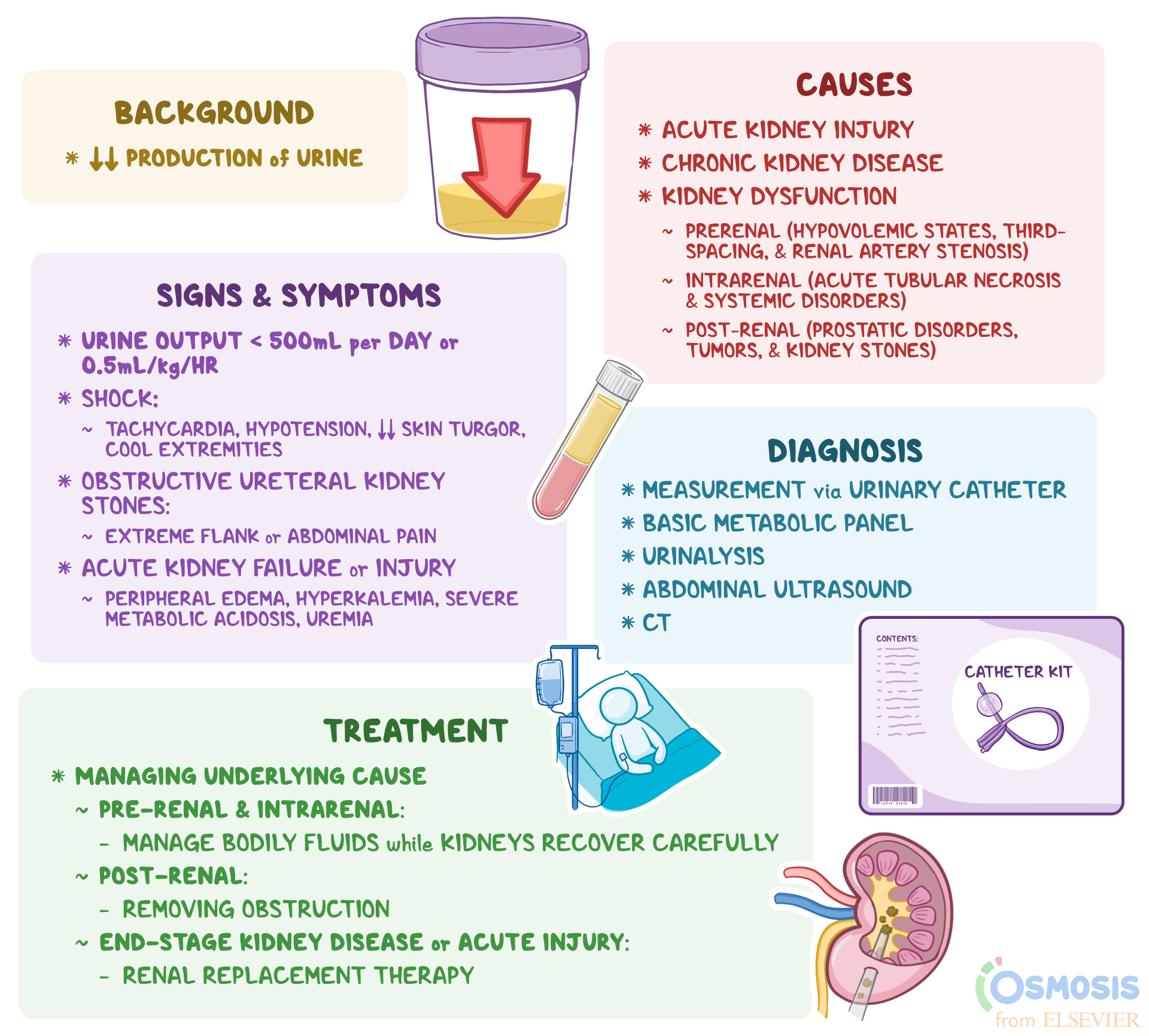
The human body is a symphony of interconnected systems, constantly striving for a delicate balance, a state known as homeostasis. Among the most vital conductors of this internal orchestra are the kidneys, two bean-shaped organs nestled beneath the rib cage, tirelessly filtering waste, regulating electrolytes, and maintaining fluid balance. Their output, urine, is more than just a waste product; it’s a daily report card, a vital sign that whispers volumes about our internal state. When this report card shows a drastic change, specifically a significant reduction in urine output, it triggers a critical alarm: oliguria.
Oliguria, defined as a daily urine volume of less than 400-500 milliliters in adults (or less than 0.5 mL/kg/hour in children), is never a benign finding. It is a stark indicator that something is profoundly amiss within the body, a signal that demands immediate attention and a thorough investigation. To the knowledgeable clinician, oliguria isn’t merely a symptom; it’s a compelling narrative, a diagnostic puzzle whose pieces, once assembled, reveal a story of physiological stress, damage, or obstruction. This journey into understanding oliguria is a deep dive into the body’s intricate mechanics, exploring the myriad ways in which its delicate equilibrium can be disrupted. We embark on this narrative not just to list causes, but to understand the "why" and "how" behind this silent alarm, tracing the diagnostic pathways that guide us through its complex tapestry.
I. The Pre-Renal Predicament: When the Supply Line Fails
Imagine a bustling city (representing the kidneys) with state-of-the-art water treatment plants (the nephrons, the kidney’s functional units). These plants are perfectly capable of purifying water, but they are dependent on a consistent and adequate supply of raw water from a main pipeline. If the pressure in this pipeline drops drastically, or the flow of water itself diminishes, the treatment plants, despite being structurally sound, will inevitably produce less clean water. This analogy perfectly encapsulates the essence of pre-renal oliguria: the kidneys themselves are healthy, but they are starved of the blood supply necessary to perform their vital filtration duties.
Pre-renal causes are the most common culprits behind acute kidney injury (AKI) and, consequently, oliguria. They represent a systemic problem affecting the perfusion of the kidneys, essentially a failure of the "supply line." The kidneys, in their wisdom, respond to this reduced blood flow by attempting to conserve fluid, a desperate measure to maintain core body functions. This adaptive response is a hallmark of pre-renal states, a crucial clue in the diagnostic narrative.
The Depths of Volume Depletion: A Crisis of Supply
The most straightforward story of pre-renal oliguria begins with hypovolemia, an absolute reduction in the body’s total blood volume. This can unfold in several dramatic ways:
-
True Dehydration: The simplest yet often overlooked cause. Whether it’s the aftermath of a severe gastrointestinal illness marked by relentless vomiting and diarrhea, prolonged exposure to extreme heat without adequate fluid intake, or even inadequate oral intake in an elderly or debilitated individual, the body’s fluid reserves can plummet. As the circulating blood volume shrinks, blood pressure falls, and the kidneys, sensing this systemic deficit, reduce urine production to conserve every precious drop.
-
Hemorrhage: A sudden and significant loss of blood, such as from a traumatic injury, a ruptured aneurysm, or a massive gastrointestinal bleed, represents an acute and severe form of hypovolemia. The body’s priority shifts to maintaining perfusion to vital organs like the brain and heart, often at the expense of the kidneys. The dramatic drop in blood volume directly translates to diminished renal blood flow and, inevitably, oliguria.
-
Excessive Fluid Loss from Other Compartments: Beyond overt bleeding, fluid can be lost from the effective circulating volume through various mechanisms. Severe burns, for instance, lead to massive plasma leakage from damaged capillaries. Pancreatitis or peritonitis can cause significant fluid shifts into the "third space" (areas where fluid does not contribute to effective circulating volume). Even the aggressive use of diuretics, while sometimes necessary, can inadvertently push a patient into a hypovolemic state if not carefully monitored. In each scenario, the story is the same: the circulating volume available to the kidneys dwindles, triggering their conservation mode.
The Enigma of Decreased Effective Circulating Volume: When the Volume is There, But Not Quite
Sometimes, the total body fluid volume might appear normal, or even elevated, yet the kidneys still perceive a deficit in their blood supply. This is the intriguing tale of decreased effective circulating volume, where fluid is present but not effectively perfusing the vital organs.
-
Congestive Heart Failure (CHF): Here, the heart, the body’s pump, falters. Despite often having an excess of total body fluid, patients with CHF suffer from reduced cardiac output. The heart simply cannot pump enough blood forward to adequately perfuse the kidneys. The kidneys interpret this reduced flow as hypovolemia and respond by retaining sodium and water, paradoxically worsening the fluid overload while still producing scant urine. It’s a vicious cycle where the body’s compensatory mechanisms become detrimental.
-
Cirrhosis and Liver Failure: The liver, a metabolic powerhouse, plays a crucial role in regulating vascular tone. In advanced liver disease, particularly with portal hypertension, there’s a profound systemic vasodilation and a shift of fluid into the abdominal cavity (ascites). This widespread dilation of blood vessels effectively "pools" blood away from the central circulation, creating a relative underfilling of the arterial system. The kidneys, sensing this reduced effective arterial blood volume, react by fiercely conserving fluid, leading to oliguria. This can culminate in Hepatorenal Syndrome, a severe form of pre-renal failure where the kidneys fail despite being structurally intact.
-
Sepsis and Systemic Vasodilation: Sepsis, a life-threatening response to infection, often involves a massive release of inflammatory mediators that cause widespread vasodilation. The blood vessels expand dramatically, leading to a precipitous drop in systemic vascular resistance. Even with a normal or increased total blood volume, the "pipes are too wide," and the blood pressure plummets, resulting in inadequate perfusion to critical organs, including the kidneys. The story here is one of overwhelming systemic inflammation hijacking the body’s circulatory control.