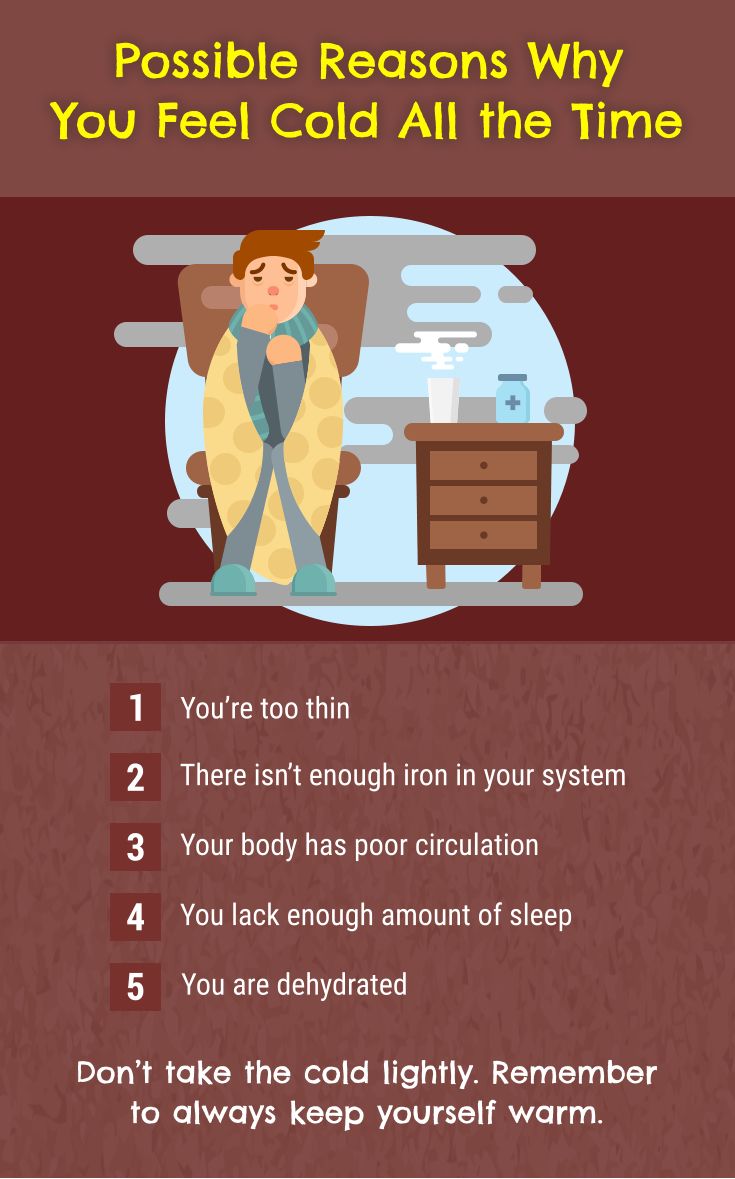
The persistent shiver. The automatic reach for another blanket, another sweater, even when others are comfortably shedding layers. It’s a familiar, frustrating sensation for many – an internal thermostat seemingly stuck on an Arctic setting, regardless of the external temperature. You might be dismissed with a casual, "You’re just cold-natured," or "Eat more," but for those who experience it, the perpetual chill is more than a minor inconvenience; it’s a constant, energy-sapping battle.
This isn’t a story about a simple draft or a preference for warmth. This is a journey into the intricate workings of the human body, exploring the eleven profound reasons why someone might feel cold all the time. It’s about understanding that the body is a complex orchestra, and a persistent chill can often be a subtle but significant signal that one of its instruments is playing out of tune. For the knowledgeable individual seeking to understand their own physiology or that of a loved one, this exploration delves beyond surface explanations, uncovering the deeper biological narratives behind the constant cold.
The Silent Signals: Listening to Your Body’s Thermostat
Imagine waking up feeling as though the warmth has been drained from your bones, a sensation that lingers throughout the day, impervious to external heat. You might pile on layers, drink hot beverages, and even crank up the heating, only to find the chill stubbornly clinging to you. This isn’t weakness; it’s a symptom, a narrative spun by your body that deserves to be heard. Understanding the "why" behind this constant cold can be the first step towards not just feeling warmer, but towards a healthier, more balanced existence.
1. The Oxygen Deprivation Story: Anemia (Iron Deficiency)
The Narrative: Sarah, a vibrant young professional, found herself increasingly exhausted, her skin developing an unsettling pallor, and her hands and feet perpetually icy, even in her warm office. She initially blamed long hours and stress, but the chill was different – a deep, bone-cold sensation that wouldn’t abate. Her story is a common one, echoing the silent struggle of millions battling anemia, particularly iron deficiency.
The Physiology: At its core, feeling cold is often about inefficient heat production or retention. Iron plays a pivotal role in this. It’s an essential component of hemoglobin, the protein in red blood cells responsible for transporting oxygen from your lungs to every cell in your body. Oxygen, in turn, is critical for cellular metabolism – the process by which your cells convert nutrients into energy and, crucially, heat.
When iron levels are low, your body struggles to produce enough healthy red blood cells. This leads to reduced oxygen delivery, a state known as anemia. With less oxygen reaching your tissues, cellular metabolism slows down, resulting in decreased heat generation. Your body, perceiving this drop in core temperature, diverts blood flow away from the extremities (hands, feet, ears) to protect vital organs, making those areas feel even colder. The narrative of anemia is one of oxygen starvation at a cellular level, leaving the body struggling to maintain its warmth. Beyond the chill, anemia often manifests with fatigue, weakness, pale skin, shortness of breath, dizziness, and brittle nails – a constellation of symptoms painting a clear picture of systemic oxygen deprivation. Diagnosis is straightforward, typically involving a complete blood count (CBC) to assess hemoglobin and ferritin levels. Replenishing iron stores, often through dietary changes or supplements, can dramatically reverse this chilling tale.
2. The Slowed-Down Metabolism Story: Hypothyroidism
The Narrative: Mark, a man in his late 40s, noticed a gradual, insidious shift. He was gaining weight despite no change in diet, his hair was thinning, and a profound fatigue settled over him. Most notably, he was always cold, seeking out sweaters and blankets even in summer. His doctors initially struggled to pinpoint the cause, dismissing his symptoms as part of "getting older." Mark’s journey illustrates the subtle yet pervasive impact of an underactive thyroid.
The Physiology: The thyroid gland, a small, butterfly-shaped organ in your neck, is the master regulator of your metabolism. It produces thyroid hormones (primarily T3 and T4) that influence nearly every cell in your body, dictating the speed at which they convert food into energy. Think of it as the body’s internal thermostat and accelerator pedal.
In hypothyroidism, the thyroid gland doesn’t produce enough of these vital hormones. This causes the body’s metabolic processes to slow down significantly. A sluggish metabolism means less energy production, and consequently, less heat generation. Your basal metabolic rate (BMR) drops, making you feel perpetually cold because your body simply isn’t burning enough fuel to stay warm. The narrative here is one of a body operating in slow motion, conserving energy to an extreme degree. Alongside the pervasive chill, individuals with hypothyroidism often experience unexplained weight gain, fatigue, constipation, dry skin, hair loss, muscle aches, depression, and a general mental fog. Diagnosing hypothyroidism involves a simple blood test measuring Thyroid Stimulating Hormone (TSH) levels, and treatment typically involves daily thyroid hormone replacement medication, which can restore the body’s internal thermostat to its optimal setting.
3. The Restricted Flow Story: Poor Circulation (e.g., Raynaud’s Phenomenon, PAD)
The Narrative: Emily’s fingers would turn stark white, then blue, and finally angry red, accompanied by throbbing pain, whenever she stepped into a cold room or even opened a freezer door. Her feet often felt like blocks of ice, regardless of how many socks she wore. This extreme sensitivity to cold, particularly in the extremities, is the hallmark of compromised circulation, a story of blood flow being restricted where it’s needed most.
The Physiology: Our circulatory system is a vast network of arteries and veins that delivers oxygen and nutrient-rich blood throughout the body, playing a crucial role in thermoregulation. Warm blood flowing to the extremities helps maintain their temperature. Poor circulation, however, disrupts this vital process.
Conditions like Raynaud’s Phenomenon involve an exaggerated constriction of small blood vessels in the fingers and toes (and sometimes nose, ears, or lips) in response to cold temperatures or stress. This intense vasoconstriction dramatically reduces blood flow, causing the affected areas to become cold, numb, and change color. The narrative is one of a localized "shutting down" of warmth. Peripheral Artery Disease (PAD), another condition, involves the narrowing of arteries, typically in the legs, due to atherosclerosis (plaque buildup). This reduces blood flow to the lower extremities, making them feel cold, numb, and often painful, especially during activity. The body’s inability to effectively transport warm blood to its farthest reaches leaves these areas vulnerable to the chill. Beyond coldness, symptoms include numbness, tingling, pain, slow-healing sores, and skin discoloration in the affected areas. Diagnosis often involves physical examination, specific tests like the ankle-brachial index (ABI) for PAD, and in the case of Raynaud’s, careful symptom assessment. Management ranges from lifestyle changes and protective measures to medications that relax blood vessels, aiming to restore the vital flow of warmth.
4. The Insulation Deficit Story: Low Body Fat/Underweight
The Narrative: Alex, a naturally lean individual with a fast metabolism, found himself perpetually shivering, despite eating regular meals. He often felt a distinct lack of "padding" that others seemed to possess, making him more susceptible to even mild temperature drops. This is the story of insufficient natural insulation, a direct consequence of low body fat.
The Physiology: Body fat, or adipose tissue, isn’t just an energy reserve; it’s a critical insulator. Subcutaneous fat, located just beneath the skin, acts as a barrier, slowing down heat loss from the body’s core to the environment. Think of it like a natural wetsuit or a layer of thermal clothing.
Individuals with a low body mass index (BMI) or very low body fat percentages simply have less of this insulating layer. Their bodies lose heat more rapidly to the environment, requiring their internal systems to work harder to maintain a stable core temperature. This constant effort can manifest as a persistent feeling of cold, especially in cooler environments. The narrative here is one of diminished thermal protection. While low body fat can be a result of genetics, intense physical activity, or certain medical conditions, it can also be a symptom of inadequate caloric intake or eating disorders. It’s crucial to distinguish between naturally lean and clinically underweight, as the latter can carry significant health risks beyond just feeling cold. Other signs might include fatigue, irregular menstrual cycles in women, and compromised immune function. Ensuring adequate caloric intake and a healthy body fat percentage is key to restoring the body’s natural thermal defenses.
5. The Dehydrated Thermostat Story: Dehydration
The Narrative: Maria, a busy student, often forgot to drink water throughout the day, opting instead for coffee and sugary drinks. She noticed a persistent tiredness and a strange, internal chill that no amount of layering seemed to fix. Her story highlights a common oversight: the profound impact of dehydration on the body’s ability to regulate its own temperature.
The Physiology: Water is the unsung hero of countless bodily functions, and thermoregulation is no exception. It makes up a significant portion of our blood plasma, which is crucial for circulating warmth throughout the body. More importantly, water is essential for sweat production, the body’s primary cooling mechanism. But it also plays a role in heat generation.
When you’re dehydrated, your blood volume decreases. This makes your blood thicker and less efficient at circulating, reducing its ability to carry heat to the extremities and distribute warmth evenly. Furthermore, water is a critical component of metabolic processes that generate heat. When water levels are low, these metabolic reactions can be less efficient, leading to reduced heat production. The narrative of dehydration is one where the body’s internal systems, deprived of their essential medium, struggle to perform their most basic functions, including maintaining a stable and comfortable temperature. Other symptoms of dehydration include thirst, dry mouth, fatigue, infrequent urination, and dark urine. Simply increasing fluid intake, especially plain water, can often resolve this particular chill, reminding us that sometimes the simplest solutions are the most profound.
6. The Exhausted Regulator Story: Lack of Sleep/Fatigue
The Narrative: David, burning the candle at both ends with work and family commitments, found himself not only perpetually tired but also constantly seeking warmth. He’d fall asleep under a pile of blankets only to wake up still feeling a deep, internal chill. His story underscores the often-underestimated connection between sleep deprivation and the body’s thermal regulation.
The Physiology: Sleep is not merely a period of rest; it’s a critical time for cellular repair, hormone regulation, and the restoration of vital bodily functions. During sleep, our body’s core temperature naturally drops slightly, and various hormones involved in metabolism and energy production are regulated.
Chronic lack of sleep disrupts these delicate processes. When you’re sleep-deprived, your body is in a constant state of stress, impacting the hypothalamus – the brain region responsible for regulating body temperature, among other things. The hypothalamus’s ability to maintain a stable internal temperature can be compromised, leading to dysregulation. Furthermore, severe fatigue itself can reduce your metabolic rate, as your body conserves energy, which in turn means less heat production. The narrative here is one of an exhausted system struggling to perform its regulatory duties. Beyond the cold, chronic sleep deprivation leads to impaired cognitive function, mood disturbances, weakened immune system, and increased risk of various health problems. Prioritizing adequate, restorative sleep can often reset the body’s internal thermostat and alleviate this particular chill, allowing the body’s regulatory systems to function optimally.