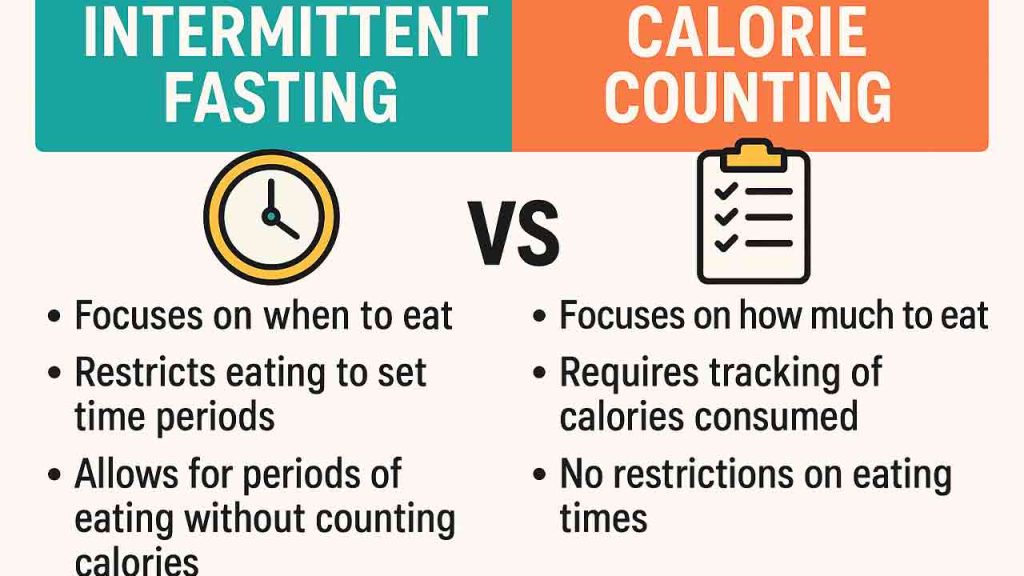
The human body, a marvel of biological engineering, is also a canvas for our desires, anxieties, and aspirations. Among these, the quest for optimal health and a desirable physique often takes center stage, manifesting most commonly in the pursuit of weight loss. For centuries, humanity has grappled with the intricacies of shedding excess pounds, navigating a bewildering labyrinth of diets, fads, and scientific pronouncements. In this intricate dance between physiology and psychology, two prominent methodologies have emerged as front-runners, each with its own compelling narrative: the time-honored discipline of Calorie Counting and the more recently popularized, yet ancient in principle, art of Intermittent Fasting.
To the uninitiated, the choice might seem binary, a simple declaration of one victor over the other. But for the knowledgeable audience, those who understand that the human body is no mere machine but a complex, adaptive ecosystem, the question is far richer, steeped in nuance, individual variability, and the often-overlooked psychological tapestry of our relationship with food. This article embarks on a journey to unravel the stories of these two titans, dissecting their mechanisms, evaluating their efficacy, exploring their psychological footprints, and ultimately, guiding the reader towards crafting their own sustainable weight loss narrative.
The Saga of Calorie Counting: The Architect of Energy Balance
Let us begin with the elder statesman, the methodology that has underpinned most conventional dietary advice for decades: Calorie Counting. Its narrative is one of elegant simplicity, rooted in the first law of thermodynamics – the principle of energy conservation. At its core, calorie counting posits that weight loss (or gain) is a direct consequence of the energy balance equation: Calories In vs. Calories Out. Consume fewer calories than your body expends, and you will lose weight. It sounds almost irrefutably logical, a testament to the power of basic arithmetic applied to biology.
The Foundational Premise: Energy In, Energy Out
For the calorie counter, the body is a finely tuned engine. Food represents fuel, measured in units of energy called calories. Every physical activity, from breathing to running a marathon, represents energy expenditure. The goal, then, is to create a sustained "energy deficit." This deficit forces the body to tap into its stored energy reserves – primarily fat – leading to a reduction in body mass.
This approach demands meticulous attention. It requires the dieter to become a food detective, scrutinizing nutrition labels, measuring portions, logging meals into apps or journals, and often estimating the caloric content of everything that passes their lips. It’s a system built on awareness, precision, and conscious decision-making.
The Mechanics Unveiled:
- Establishing a Baseline: The first step typically involves calculating one’s Basal Metabolic Rate (BMR) – the calories burned at rest – and then factoring in activity levels to determine Total Daily Energy Expenditure (TDEE).
- The Deficit: A moderate deficit, typically 500-750 calories below TDEE, is then targeted to achieve a sustainable weight loss of 1-2 pounds per week.
- Macronutrient Awareness: While the total caloric intake is paramount for weight loss, calorie counting often encourages an awareness of macronutrient distribution (proteins, carbohydrates, fats) to optimize satiety, muscle preservation, and overall nutritional adequacy. Protein, in particular, is often emphasized for its thermic effect and satiating properties.
- Dietary Flexibility: Theoretically, no food is entirely off-limits. As long as it fits within the caloric budget, it can be consumed. This flexibility is often touted as a major advantage, preventing feelings of deprivation.
The Pros: Precision and Control
For many, calorie counting offers a profound sense of control. It demystifies the weight loss process, providing a clear, quantifiable metric for progress.
- Scientific Backing: The energy balance equation is a cornerstone of metabolic science. When executed accurately, a caloric deficit will lead to weight loss.
- Educates on Food Content: It forces individuals to learn about the caloric density and nutritional breakdown of different foods, fostering a deeper understanding of their diet.
- Adaptability: It can be tailored to various dietary preferences (vegan, keto, etc.) and fitness goals (e.g., specific macronutrient ratios for muscle gain or fat loss).
- Predictability: With consistent adherence, weight loss can be somewhat predictable, offering a tangible reward for effort.
The Cons: The Tyranny of the Tally
Despite its logical appeal, the narrative of calorie counting is not without its shadows. For many, it morphs from a tool of empowerment into a source of relentless anxiety and frustration.
- Tedium and Time-Consuming: The constant tracking, weighing, and logging can be incredibly burdensome, especially in social settings or when eating out.
- Inaccuracy: Calorie labels can be off by up to 20%, restaurant estimates are notoriously unreliable, and human error in portion sizing is rampant. Furthermore, the body’s energy expenditure is not static, varying with stress, sleep, and even gut microbiome composition.
- Psychological Burden: The obsession with numbers can lead to an unhealthy relationship with food, fostering guilt, shame, and orthorexia (an unhealthy obsession with eating "correctly"). It can turn eating from a joyous, intuitive act into a rigid, calculated chore.
- Doesn’t Account for Quality: A calorie is not just a calorie. 200 calories from an avocado behave differently in the body than 200 calories from a candy bar, impacting satiety, hormonal response, and micronutrient intake.