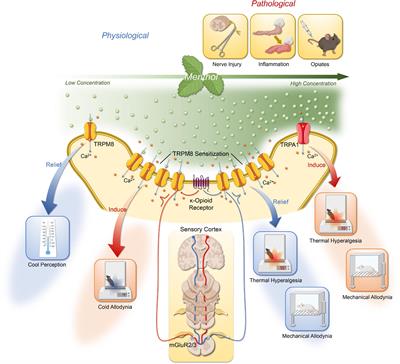
From the ancient gardens of Babylon to the sleek, modern pharmacies of today, the humble mint leaf has embarked on an extraordinary journey. It is a journey woven through millennia of human experience, a silent witness to countless moments of post-meal comfort, a whispered secret passed down through generations of herbalists. Yet, beneath the refreshing aroma and the invigorating coolness lies a profound scientific narrative – a tale of molecular recognition, cellular choreography, and neurological pathways that culminate in the soothing balm we associate with mint. This is the story of menthol, the primary active compound in mint, and its elegant mechanism for calming the tempest within our digestive systems.
The Refreshing Enigma: An Introduction to Mint’s Promise
Imagine a meal, rich and satisfying, but perhaps a touch too indulgent. A familiar heaviness settles, a subtle discomfort that threatens to overshadow the pleasure of the repast. Then, a cup of peppermint tea is offered, or perhaps a small mint lozenge. Almost immediately, a wave of coolness washes over the palate, a clean sensation that seems to cut through the lingering richness. But the magic doesn’t stop there. As the mint compounds make their way into the system, a gradual easing of the internal disquiet begins. Bloating softens, the gnawing ache subsides, and a sense of digestive harmony returns.
This universal experience, transcending cultures and cuisines, is not merely anecdotal. It is a testament to the potent, multifaceted pharmacological actions of mint, specifically through its star constituent, L-menthol. For centuries, mint has been revered as a carminative – an agent that helps relieve flatulence – and an antispasmodic, capable of relaxing the smooth muscles of the gut. But how does a simple plant compound achieve such a sophisticated therapeutic effect? The answer lies deep within our cellular machinery, a story of receptors, ion channels, and a complex interplay with our body’s intricate communication networks. To truly appreciate mint’s digestive prowess, we must embark on a scientific expedition, peeling back the layers of tradition to reveal the precise molecular symphony at play.
Chapter 1: The Chemical Conductor – Menthol, The Star of Our Story
Our narrative begins with the protagonist itself: menthol. This naturally occurring organic compound is a cyclic alcohol, a monoterpenoid alcohol, to be precise. Its chemical formula, C₁₀H₂₀O, belies a structural elegance that is key to its biological activity. Menthol exists in several stereoisomeric forms, but the biologically most active and predominant form found in nature is L-menthol (also known as (-)-menthol). It is this specific chiral configuration that allows it to precisely dock into its target receptors within the human body.
Menthol is characterized by its distinctive minty aroma and its powerful cooling sensation. It is a volatile compound, meaning it readily evaporates at room temperature, contributing to the immediate olfactory and gustatory experience. Its lipophilic (fat-loving) nature allows it to easily penetrate biological membranes, a crucial property for its journey from the mouth to the digestive tract and beyond.
The primary source of menthol is the peppermint plant (Mentha × piperita), a hybrid species of watermint and spearmint. While other Mentha species also contain menthol, peppermint is particularly rich in this compound, often comprising 40-50% of its essential oil. The essential oil itself is a complex mixture of various terpenes, ketones, and esters, but menthol stands out as the most pharmacologically significant.
The perception of "coolness" is central to menthol’s identity, and it’s far more than a simple flavor. Unlike true cooling, which involves a reduction in temperature, menthol produces a psychophysical sensation of coldness even when there is no actual temperature drop. This unique ability is the first major clue to its mechanism of action and points us towards the specific sensory receptors it engages. This interaction, initially perceived on the skin and mucous membranes, is a microcosm of the more profound interactions that occur deeper within the digestive system.
Chapter 2: The Cellular Stage – TRPM8, The Primary Receptor
To understand how menthol works, we must first understand the intricate language of our cells. Cells communicate through a myriad of signaling molecules and structures, among the most critical of which are ion channels. These protein tunnels embedded in the cell membrane regulate the flow of ions (charged particles like calcium, sodium, and potassium) in and out of the cell. This flow generates electrical signals that are fundamental to nerve impulses, muscle contraction, and countless other physiological processes.
Our story’s primary stage, and menthol’s most well-known dance partner, is a specific type of ion channel called TRPM8 (Transient Receptor Potential Melastatin 8). Discovered in the early 2000s, TRPM8 was quickly identified as the principal cold and menthol receptor in mammals. It belongs to the broader family of Transient Receptor Potential (TRP) channels, a diverse group of sensors involved in detecting a wide range of stimuli, including temperature, taste, pressure, and pain.
The Mechanism of Activation:
When L-menthol encounters a cell expressing TRPM8, it binds to specific sites on the receptor protein. This binding induces a conformational change in the TRPM8 channel, essentially causing it to "open." Once open, the channel becomes permeable to specific ions, primarily calcium (Ca²⁺) and sodium (Na⁺). These positively charged ions rush into the cell, leading to a change in the cell’s electrical potential – a process called depolarization.
In sensory neurons, this depolarization generates an electrical signal that is propagated along the nerve fiber to the brain, where it is interpreted as the sensation of cold. This explains menthol’s refreshing coolness on the skin and in the mouth. However, the revelation that truly deepened our understanding of mint’s digestive power was the discovery of TRPM8’s widespread expression beyond just superficial sensory neurons.
TRPM8 in the Gut:
Crucially for our narrative, TRPM8 channels are not confined to the surface. They are found extensively throughout the digestive tract, expressed on:
- Enteric Neurons: These are the nerve cells that form the "brain of the gut" – the enteric nervous system – which independently controls most gastrointestinal functions.
- Smooth Muscle Cells: The cells that make up the muscular layers of the gut, responsible for peristalsis (the wave-like contractions that move food).
- Immune Cells: Cells involved in the gut’s immune surveillance.
- Epithelial Cells: The cells lining the gut lumen.
The presence of TRPM8 in these diverse cell types within the digestive system provides the molecular foundation for menthol’s profound therapeutic effects. When menthol is ingested, it travels down the esophagus, stomach, and into the intestines. Along this journey, it continuously interacts with TRPM8 channels, initiating a cascade of events that ultimately lead to digestive relief. This widespread expression means that menthol isn’t just sending one signal; it’s orchestrating a complex symphony of cellular responses, each contributing to the overall soothing effect.
Chapter 3: The Gut Symphony – Menthol’s Diverse Actions on the Digestive System
With TRPM8 as the primary conductor, menthol orchestrates a multifaceted response within the gut, addressing several key aspects of digestive discomfort.
3.1. Smooth Muscle Relaxation: The Antispasmodic Effect
One of the most clinically significant actions of menthol in the digestive system is its ability to relax smooth muscles. The rhythmic contractions of the gut are essential for digestion, but in conditions like Irritable Bowel Syndrome (IBS), these contractions can become erratic, overly strong, or uncoordinated, leading to painful spasms, cramping, and altered bowel habits. Menthol acts as a potent antispasmodic through several mechanisms: