The sun had barely kissed the horizon when Alex, a seasoned but recently inconsistent runner, laced up his shoes. Today was the day he’d reclaim his former glory, push past the mental blocks, and conquer the steepest hill in the park – a brutal ascent affectionately known as "The Beast." He started strong, a surge of adrenaline masking the subtle creaks of under-prepared muscles. The first quarter-mile felt exhilarating, a forgotten joy. But as he began his assault on The Beast, the familiar rhythm of his stride faltered. His breath hitched, his legs felt heavy, and a strange, fiery sensation began to bloom in his thighs. By the summit, he was gasping, leaning against a tree, his muscles trembling, stomach churning. He felt utterly spent, defeated not just by the hill, but by an invisible force that seemed to seize his very being.
Alex, like countless others who push their physical limits, was experiencing the undeniable signs of his body building up too much lactic acid. For decades, lactic acid was demonized, painted as the villain responsible for muscle soreness, fatigue, and even cramps – a toxic waste product of exertion. However, modern physiology has unveiled a far more nuanced, even heroic, role for this molecule. Lactate, the conjugate base of lactic acid, is not merely a metabolic dead end but a crucial fuel, a signaling molecule, and a dynamic player in our energy systems. Yet, when its production outstrips the body’s ability to clear and utilize it, the delicate balance of our internal environment is disrupted, sending out a cascade of signals – the body’s silent scream, alerting us to an impending metabolic crisis.
Understanding these signals is not just for elite athletes; it’s a vital dialogue with our own physiology. For the knowledgeable individual, delving into the intricacies of lactic acid buildup means discerning the difference between healthy exertion and dangerous overload, between pushing boundaries and courting injury. This isn’t just a list of symptoms; it’s the unfolding story of your body’s ingenious, yet sometimes overwhelmed, response to stress.
The Lactic Acid Paradox: Friend, Foe, or Frenemy?
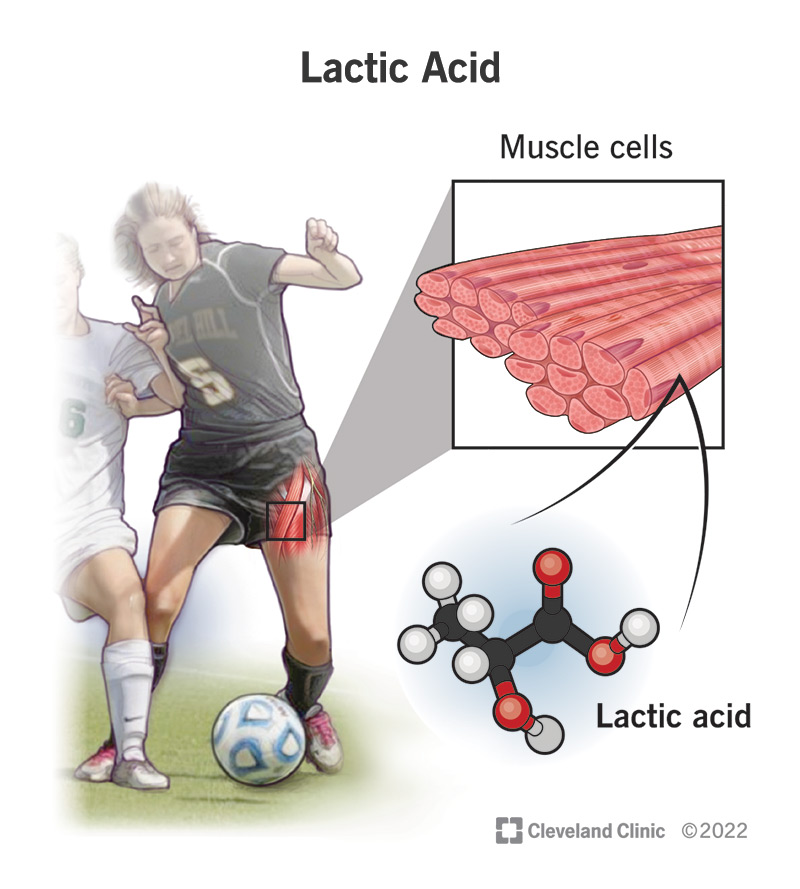
Before we dive into the signs, let’s set the record straight on lactic acid. Our bodies primarily generate energy through aerobic respiration, a highly efficient process that uses oxygen to break down glucose and fats. But when oxygen supply can’t meet demand – during intense exercise, for instance – our cells shift to anaerobic glycolysis. This pathway rapidly breaks down glucose into pyruvate, which, in the absence of sufficient oxygen for further aerobic processing, is converted into lactate by the enzyme lactate dehydrogenase (LDH). This reaction also regenerates NAD+, a coenzyme essential for glycolysis to continue, thus allowing energy production to proceed even in oxygen-deprived states.
The crucial point is this: lactate is not the direct cause of the burning sensation or muscle fatigue. The rapid breakdown of ATP during intense activity releases hydrogen ions (H+), which lower the muscle cell’s pH, leading to acidosis. It is this drop in pH, along with other factors like inorganic phosphate accumulation, that interferes with muscle contraction, enzyme function, and calcium handling, ultimately contributing to the sensation of fatigue and the "burn." Lactate, in fact, acts as a buffer by consuming H+ ions when it forms from pyruvate, and it serves as a valuable fuel source, shuttled to other tissues (like the heart, brain, or less active muscles) to be converted back to pyruvate and oxidized aerobically. It can even be transported to the liver via the Cori Cycle to be converted back into glucose (gluconeogenesis).
The "buildup" occurs when the rate of lactate production exceeds the rate of its clearance and utilization. This threshold, often called the lactate threshold or maximal lactate steady state, is a critical determinant of endurance performance. When you cross it, your body enters a state where acidosis begins to accumulate, and that’s when the "silent screams" begin.
The Immediate Red Flags: Acute Overload Signals
These are the most recognizable signs, the ones Alex experienced on The Beast, that manifest during or immediately after intense exertion when lactate production has surged beyond your body’s capacity to cope.
-
The Incendiary Burn: Muscle Pain and Burning Sensation
This is perhaps the quintessential sign. As hydrogen ions accumulate within muscle cells, the pH drops. This acidic environment directly stimulates nociceptors (pain receptors) in the muscle, sending urgent signals to the brain. It also impairs the function of enzymes crucial for muscle contraction and reduces the ability of contractile proteins (actin and myosin) to interact efficiently. The sensation is not just discomfort; it’s a profound, deep-seated ache that feels like your muscles are on fire, forcing you to slow down or stop. For the knowledgeable individual, understanding this isn’t merely "lactic acid hurting"; it’s a complex interplay of H+ ions, nerve stimulation, and impaired cellular machinery. -
The Lead-Weighted Limbs: Extreme Muscle Fatigue and Weakness
Beyond the burn, muscles feel heavy, sluggish, and profoundly weak. What was once effortless now requires Herculean effort. This isn’t just perceived tiredness; it’s a physiological reality. The acidic environment directly inhibits the release of calcium from the sarcoplasmic reticulum, which is essential for initiating muscle contraction. Furthermore, the ability of the muscle fibers to generate force is compromised. You literally cannot recruit your muscle fibers effectively, leading to a noticeable drop in power and coordination. Imagine trying to lift a feather, but your muscles respond as if it’s a boulder – that’s the feeling of profound lactic-acid-induced fatigue. -
The Gasps for Air: Heavy, Labored Breathing (Hyperventilation)
When acidosis sets in, your body’s sophisticated buffering systems spring into action. The most immediate and powerful buffer is the bicarbonate system. Bicarbonate ions (HCO3-) combine with excess H+ ions to form carbonic acid (H2CO3), which then dissociates into water (H2O) and carbon dioxide (CO2). This CO2 is then expelled through your lungs. Thus, an increase in blood acidity triggers your respiratory centers to increase the rate and depth of breathing – hyperventilation – to "blow off" more CO2 and, in doing so, reduce the concentration of H+ ions and normalize pH. This is why you find yourself gasping, unable to catch your breath, even if your oxygen levels are seemingly adequate. Your lungs are working overtime not just for oxygen intake, but as a critical pH regulator. -
The Queasy Stomach: Nausea and Potential Vomiting
Severe systemic acidosis can have widespread effects, and the gastrointestinal system is not immune. The changes in blood pH can trigger chemoreceptors in the brainstem, specifically in the area postrema (the "vomiting center"). Additionally, blood flow to the gut is often shunted away to working muscles during intense exercise, and this, combined with the metabolic stress, can lead to feelings of nausea, abdominal cramping, and, in extreme cases, vomiting. This is your body’s desperate plea for cessation, a complete systemic shutdown signal. Alex’s churning stomach was a clear indicator of just how far he’d pushed beyond his limits. -
The Spinning Head: Dizziness and Lightheadedness
When the body is under such immense metabolic stress, its priorities shift dramatically. Blood flow is redirected to vital organs and working muscles. If the cardiovascular system struggles to maintain adequate blood pressure and perfusion to the brain amidst the systemic stress and hyperventilation (which can alter cerebral blood flow), dizziness and lightheadedness can ensue. The body’s regulatory mechanisms are stretched to their limit, leading to a transient reduction in brain oxygenation or a disruption in autonomic nervous system control, making you feel unsteady, disoriented, and potentially faint.