In the annals of modern medicine, few advancements have sparked as much hope and transformation as the advent of GLP-1 receptor agonists. For millions grappling with type 2 diabetes and, more recently, chronic weight management, these medications represent not just a treatment, but a pathway to reclaiming health, vitality, and a future once clouded by the relentless march of disease. Yet, as with any potent tool, its efficacy is profoundly intertwined with its proper application. The GLP-1 journey, while revolutionary in its biochemical prowess, often begins with a simple, yet deeply personal, act: self-injection.
This is where the story truly unfolds, not in the intricate dance of receptors and hormones, but in the quiet ritual performed in kitchens and bathrooms across the globe. It’s a story of empowerment, responsibility, and the subtle art of choosing a site – a seemingly minor decision that holds the key to comfort, consistent absorption, and ultimately, the full therapeutic benefit of these life-changing drugs. For the knowledgeable audience, those intimately familiar with the nuances of patient care and pharmacological precision, understanding the ‘where’ is as critical as understanding the ‘what’ and the ‘why.’
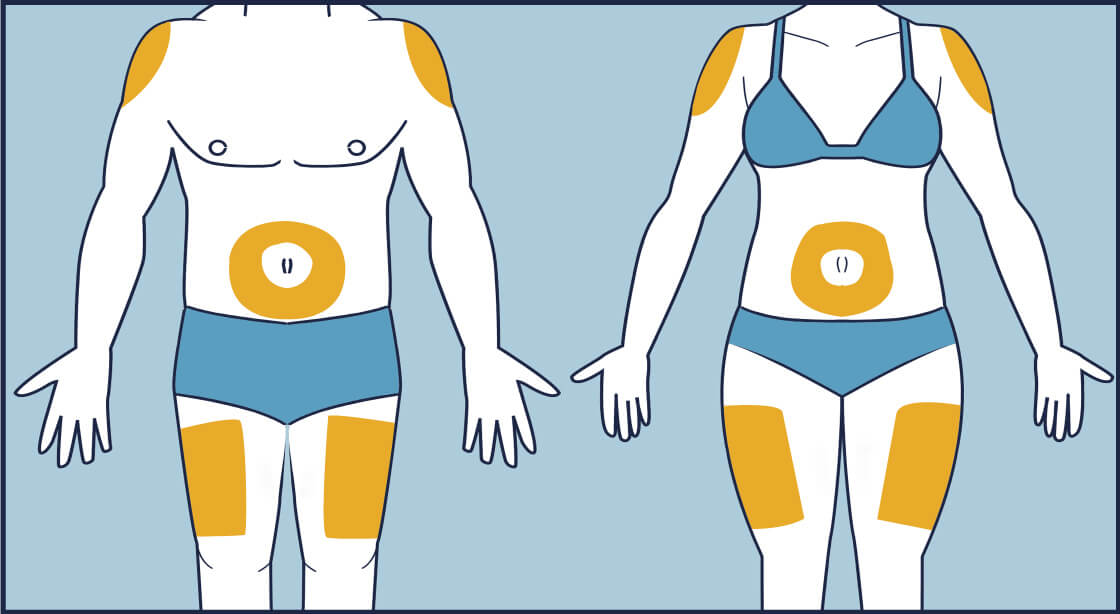
We embark on a narrative that dissects the three most common GLP-1 injection sites: the abdomen, the thigh, and the upper arm. Each site possesses its own unique anatomical landscape, physiological considerations, and a distinct relationship with the patient’s experience. This isn’t merely a guide; it’s an exploration into the unseen architecture of self-care, designed to transform a routine task into an informed, confident, and highly effective component of one’s health regimen.
The Abdomen: The Uncontested Prime Real Estate
When the conversation turns to subcutaneous injections, the abdomen almost invariably takes center stage. It is, for many, the default, the first choice, and for good reason. Its anatomical and physiological characteristics make it a near-perfect canvas for the consistent and comfortable delivery of medications like GLP-1 agonists.
The Anatomy of Advantage:
The abdominal area, specifically the region roughly two inches away from the navel, extending towards the hips and below the rib cage, boasts an expansive and relatively consistent layer of subcutaneous adipose tissue. This fatty layer is the ideal environment for GLP-1 medications. Subcutaneous injections are designed for slow, sustained absorption into the bloodstream, avoiding the rapid uptake and potential discomfort associated with intramuscular injections. The abundance of fat cells in the abdomen provides a generous buffer, ensuring the medication is deposited precisely where it needs to be, away from muscle tissue and major blood vessels.
Furthermore, the abdomen is rich in capillaries – tiny blood vessels that facilitate the gradual absorption of the drug into systemic circulation. This extensive capillary network ensures a relatively steady and predictable pharmacokinetic profile, meaning the medication enters the bloodstream at a consistent rate, leading to stable drug levels and optimal therapeutic effect. This predictability is crucial for GLP-1s, which exert their effects over hours, regulating glucose and appetite.
Another significant advantage lies in the nerve distribution. The abdominal wall, while certainly innervated, generally has fewer superficial nerve endings in the subcutaneous layer compared to other areas. This translates directly into a more comfortable injection experience. For individuals who may be needle-averse or those embarking on a long-term treatment journey, minimizing discomfort is paramount to adherence and psychological well-being.
The Art of Precision: Technique and Best Practices:
Injecting into the abdomen isn’t simply about finding a soft spot; it’s about a systematic approach that maximizes efficacy and minimizes complications.
-
Site Selection and Preparation: The general rule of thumb is to stay at least two inches away from the navel, which is more densely innervated and has a higher concentration of blood vessels. Imagine a large donut around your belly button – the "dough" is your target zone. Within this zone, visualize a grid. Each week, or with each injection, move to a different spot within this grid. This practice, known as site rotation, is non-negotiable.
- Why rotation matters: Injecting repeatedly into the same spot can lead to lipohypertrophy – a localized thickening of fatty tissue that can impair drug absorption and lead to erratic blood levels. It can also increase scar tissue formation, bruising, and discomfort.
- Hygiene: Always clean the chosen site with an alcohol swab and allow it to air dry completely. This prevents bacteria from being introduced into the skin, minimizing the risk of infection. Do not fan or blow on the area, as this can reintroduce contaminants.
-
Pinch and Inject: For most GLP-1 pens, the recommended technique involves gently pinching a fold of skin and fat between your thumb and forefinger. This action lifts the subcutaneous tissue away from the underlying muscle, ensuring a truly subcutaneous injection, especially important for leaner individuals.
- Angle: The needle should generally be inserted at a 90-degree angle to the pinched skin. For very lean individuals or those with shorter needles, a 45-degree angle might be considered, but always consult with a healthcare professional to confirm the appropriate technique for your specific device and body type.
- Needle Insertion: A quick, decisive insertion is often less painful than a slow, hesitant one. Once the needle is in, release the skin pinch (unless instructed otherwise by your specific device’s instructions for use). Administer the dose according to the pen’s instructions, ensuring the full dose is delivered before withdrawing the needle.
-
Post-Injection Care: After the injection, withdraw the needle straight out. Do not rub the injection site vigorously, as this can push the medication into muscle tissue or cause bruising. A gentle, brief pressure with a clean cotton ball or gauze may be applied if there is any minor bleeding.