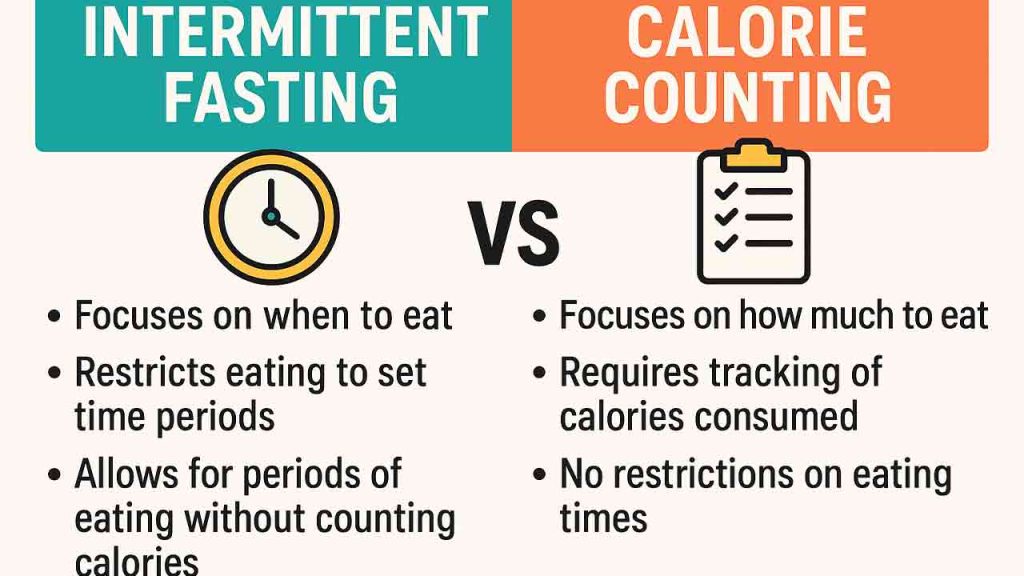
The human body, a marvel of biological engineering, possesses an elegant simplicity when it comes to weight management: energy in must balance energy out. Yet, for countless individuals, the journey toward sustainable weight loss feels anything but simple. It’s a winding path fraught with conflicting advice, fleeting trends, and the siren song of quick fixes. In this perennial quest, two formidable methodologies have risen to prominence, each with its zealous adherents and compelling arguments: the meticulous discipline of Calorie Counting and the rhythmic cadence of Intermittent Fasting.
This isn’t merely a debate of techniques; it’s a narrative of human behavior, metabolic adaptation, and the relentless pursuit of health and well-being. We stand at a crossroads, pondering which script—the precise ledger or the ancient rhythm—will lead us to our desired destination. Let us embark on an expansive exploration, delving deep into the science, the practicalities, the triumphs, and the challenges presented by each approach, ultimately seeking to understand not just which is "more effective," but which story resonates most profoundly with the individual.
Act I: The Incumbent – Calorie Counting: The Grand Old Theory of Energy Balance
For decades, calorie counting has been the undisputed monarch of weight loss advice. Its premise is disarmingly straightforward, rooted in the first law of thermodynamics: to lose weight, you must consume fewer calories than your body expends. This fundamental principle, known as energy balance, underpins nearly every dietary recommendation.
The Genesis of a Methodology:
The concept of the "calorie" as a unit of energy was popularized in the late 19th and early 20th centuries, laying the groundwork for a quantifiable approach to nutrition. Early dietitians and physicians began prescribing specific caloric intakes for weight management, transforming the abstract concept of energy into a tangible metric for food.
The Mechanism of Action: A Precise Equation
At its core, calorie counting demands awareness and arithmetic.
- Determine Your Baseline: The first step involves calculating your Total Daily Energy Expenditure (TDEE). This is an estimate of the calories your body burns in a 24-hour period, factoring in your Basal Metabolic Rate (BMR – calories burned at rest), the Thermic Effect of Food (TEF – calories burned digesting food), and your activity level (Non-Exercise Activity Thermogenesis, NEAT, and Exercise Activity Thermogenesis, EAT). Online calculators, often using formulas like Mifflin-St Jeor or Harris-Benedict, provide a starting point.
- Establish a Deficit: To lose weight, a consistent caloric deficit is necessary. A common guideline suggests that a deficit of 500 calories per day can lead to approximately one pound of fat loss per week (since 3,500 calories roughly equates to one pound of fat).
- Track and Adjust: This is where the "counting" comes in. Every morsel, every sip (beyond water), is logged. Food labels are scrutinized, portion sizes are measured, and apps become indispensable companions. The goal is to stay within the prescribed caloric budget while ensuring adequate macronutrient (protein, fat, carbohydrates) and micronutrient intake.
The Strengths: Precision, Awareness, and Tangible Control
- Empirical Foundation: The energy balance equation is undeniably true. If you consistently consume fewer calories than you burn, your body will tap into stored energy reserves, leading to weight loss. This scientific bedrock provides a strong sense of reliability.
- Heightened Awareness: Calorie counting is an education in disguise. It forces individuals to confront the caloric density of foods they once consumed mindlessly. The innocent-looking latte, the handful of nuts, the "healthy" smoothie – all reveal their true energetic cost, fostering a more mindful relationship with food choices.
- Structure and Control: For those who thrive on data and clear parameters, calorie counting offers a tangible framework. It provides a sense of control over the weight loss process, allowing for precise adjustments based on progress. If weight loss stalls, the solution is often clear: reduce calories further or increase activity.
- Flexibility (within limits): While often perceived as restrictive, calorie counting allows for dietary flexibility within the budget. No food is inherently "forbidden," though nutrient-dense, lower-calorie options naturally become more appealing. A small treat can be incorporated, provided it fits the daily allowance.
The Weaknesses: Tedium, Obsession, and the Quality Conundrum
- The Burden of Tracking: For many, the meticulous logging of every food item becomes an unbearable chore. It interrupts social gatherings, adds stress to meal preparation, and can feel like a constant homework assignment. This high barrier to adherence is perhaps its greatest downfall.
- The "Calorie is a Calorie" Fallacy: While strictly true for energy balance, this perspective overlooks the profound impact of food quality. 100 calories from a sugary soda are not metabolically equivalent to 100 calories from broccoli or lean protein. The former spikes insulin, offers no satiety, and provides negligible nutrients; the latter promotes satiety, stabilizes blood sugar, and delivers essential vitamins and minerals. Focusing solely on quantity can lead to prioritizing "empty" calories if they fit the budget, potentially compromising nutritional status and long-term health.
- Potential for Orthorexia and Disordered Eating: The intense focus on numbers can, for some, devolve into an unhealthy obsession. Food becomes an enemy to be measured and controlled, rather than a source of nourishment and enjoyment. This can lead to anxiety around eating, guilt, and even trigger or exacerbate disordered eating patterns.
- Metabolic Individuality: While the general principle holds, individual metabolic rates can vary. Factors like genetics, gut microbiome composition, hormonal status, and even sleep quality can influence how efficiently calories are utilized or stored, making TDEE calculations imperfect estimates.
- Sustainability: The biggest hurdle for calorie counting is often its long-term sustainability. The mental load required can be exhausting, leading to "diet fatigue" and a return to old habits once the initial motivation wanes.