The first whisper of doubt often arrives quietly, a fleeting moment of unresponsiveness, a slight hesitation in a moment that should be effortless. It’s rarely a dramatic collapse, but rather a subtle shift, a minor hiccup that the mind, ever-eager to protect its owner, quickly dismisses. Just tired. Too much stress. Had a few drinks. These are the initial rationalizations, the polite excuses we offer ourselves when the body, for a moment, doesn’t quite comply with the mind’s desires.
For many men, this is where the story of erectile dysfunction (ED) begins – not with a diagnosis, but with a question mark hanging in the air. It’s a question loaded with unspoken fears: fears of inadequacy, of lost youth, of failing a partner, of losing a vital part of one’s identity. The journey to truly know if you have ED is often a winding path, paved with self-doubt, tentative experimentation, and eventually, hopefully, a brave step towards understanding and resolution. This article aims to illuminate that path, offering guidance on how to recognize the signs, understand the underlying causes, and navigate the journey towards diagnosis with confidence and clarity.
The Whispers of Doubt: Recognizing the Early Signs
Let’s imagine David, a man in his late 40s. He’s active, generally healthy, and enjoys a loving relationship. One evening, during an intimate moment, he finds it takes a little longer than usual to achieve an erection. It’s firm enough, but the effort feels… different. He shrugs it off. A week later, the same thing happens, perhaps a little more pronounced. The erection is there, but it’s not quite as rigid as he remembers, and it wanes slightly faster. He starts to feel a prickle of anxiety. Is this just age? Is something wrong with me?
This is the quintessential starting point for many. ED isn’t always a complete inability to achieve an erection. More often, it manifests as a spectrum of issues:
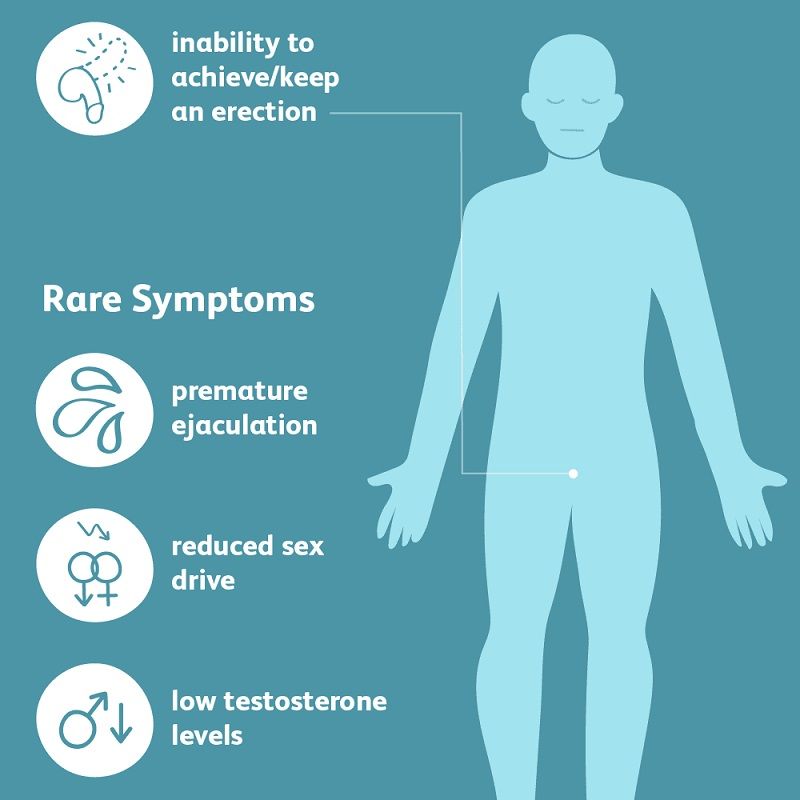
- Difficulty Achieving an Erection: This is the most straightforward symptom. You might find it hard to become erect at all, even with sufficient stimulation.
- Difficulty Maintaining an Erection: Perhaps you can achieve an erection, but it doesn’t last long enough for satisfying sexual activity. It might soften during penetration or even before. This is a very common presentation and often more insidious as it can be easily rationalized away.
- Reduced Rigidity: The erection you achieve might not be as firm or hard as it used to be, making penetration difficult or less pleasurable. This subtle change can be particularly unsettling.
- Inconsistent Erections: One time everything works fine, the next time it’s a struggle. This unpredictability can be particularly frustrating and anxiety-inducing, leading to a "performance anxiety" cycle.
- Reduced Sexual Desire (Libido): While not a direct symptom of ED itself, a decrease in libido can sometimes be linked to underlying issues that also cause ED, such as low testosterone or depression. Conversely, the anxiety and frustration of ED can also lead to a decreased desire for sex.
The key to distinguishing true ED from occasional "off-nights" lies in persistence and pattern. An isolated incident or two, especially during periods of extreme stress, fatigue, or excessive alcohol consumption, is generally not indicative of ED. However, if these difficulties become more frequent, occurring in more than 50% of attempts over several weeks or months, it’s time to pay closer attention. David’s initial shrugs turn into genuine concern when the pattern becomes undeniable.
Defining the Shadow: What Exactly is ED?
Medically, Erectile Dysfunction (ED) is defined as the consistent or recurrent inability to achieve and/or maintain an erection sufficient for satisfactory sexual performance. The emphasis here is on "consistent or recurrent." It’s not a one-off event; it’s a pattern that begins to impact your quality of life and sexual intimacy.
Understanding this definition is crucial because it helps to normalize the experience. ED is a medical condition, not a moral failing or a sign of weakness. It affects an estimated 30 million men in the United States alone, and its prevalence increases with age, though it can affect men of any age. It’s a common issue, and acknowledging it as such is the first step towards seeking help.
The Body’s Unspoken Language: Physical Clues
One of the most critical aspects of knowing if you have ED is understanding that it is often a symptom of an underlying health condition. The penis, with its intricate network of blood vessels, nerves, and tissues, acts as a barometer for overall cardiovascular and neurological health. Think of it this way: if the plumbing in your house is faulty, it’s often a sign of a deeper issue with the water supply or pipes, not just a problem with the faucet itself.
For David, and countless men like him, the physical clues can be subtle but significant:
- Cardiovascular Disease: This is perhaps the most common underlying cause. Erections rely on healthy blood flow. Conditions like atherosclerosis (hardening of the arteries), high blood pressure (hypertension), and high cholesterol can restrict blood flow to the penis. The arteries in the penis are much smaller than those supplying the heart or brain, so they often show signs of damage earlier. ED can, in fact, be an early warning sign of impending heart attack or stroke.
- Diabetes: Uncontrolled blood sugar levels can damage both blood vessels and nerves throughout the body, including those essential for erectile function. Diabetic neuropathy can impair nerve signals, and diabetic vasculopathy can hinder blood flow.
- Hormonal Imbalances: Low testosterone (hypogonadism) is a well-known culprit. Testosterone plays a vital role in libido, energy levels, and erectile quality. Other hormonal issues, such as thyroid problems or elevated prolactin levels, can also contribute.
- Neurological Conditions: Diseases like Parkinson’s, multiple sclerosis, or stroke can interfere with the nerve signals that initiate and sustain an erection. Spinal cord injuries or nerve damage from surgery (e.g., prostatectomy) are also significant causes.
- Obesity: Excess weight is linked to a host of health problems that contribute to ED, including heart disease, diabetes, and low testosterone.
- Kidney Disease: Chronic kidney disease can lead to hormonal imbalances, nerve damage, and vascular problems, all of which impact erectile function.
- Peyronie’s Disease: This condition involves the development of fibrous scar tissue inside the penis, leading to painful, curved erections and sometimes ED.
- Medications: A wide range of commonly prescribed medications can have ED as a side effect. These include certain blood pressure drugs (especially diuretics and beta-blockers), antidepressants (SSRIs), antihistamines, tranquilizers, appetite suppressants, and drugs for prostate conditions.