For decades, it has been an almost unconscious part of our daily ritual: a quick swipe, a reassuring spray, a promise of freshness and dryness. The humble antiperspirant, an invisible armor against the realities of human physiology, has become a cornerstone of personal hygiene. Yet, beneath its unassuming surface lies a complex narrative, one woven with threads of scientific inquiry, public concern, and the persistent whispers of doubt: Is the aluminum within our antiperspirants truly safe?
This question, far from being a simple yes or no, has spurred countless studies, fueled online debates, and even altered consumer behavior. For the knowledgeable audience, accustomed to dissecting scientific claims and sifting through information, the story of aluminum in antiperspirants is a compelling journey into the intersection of chemistry, biology, public health, and the often-turbulent landscape of risk perception. Let us embark on this journey, peeling back the layers of fear and fact to understand the full narrative.
Chapter 1: The Biology of Sweat and the Rise of the Antiperspirant
Before we delve into the safety of aluminum, it’s crucial to understand why antiperspirants exist and how they work. Sweat, a primal bodily function, serves primarily to regulate body temperature. We possess two main types of sweat glands:
- Eccrine Glands: These are the most numerous, found almost everywhere on the body. They produce a clear, odorless, watery sweat composed mainly of water and salts, primarily for thermoregulation.
- Apocrine Glands: Located in areas like the armpits, groin, and around the nipples, these glands become active during puberty. They produce a thicker, milky fluid that is initially odorless. However, when this fluid interacts with bacteria naturally residing on the skin’s surface, it breaks down, producing the volatile organic compounds responsible for what we perceive as body odor.
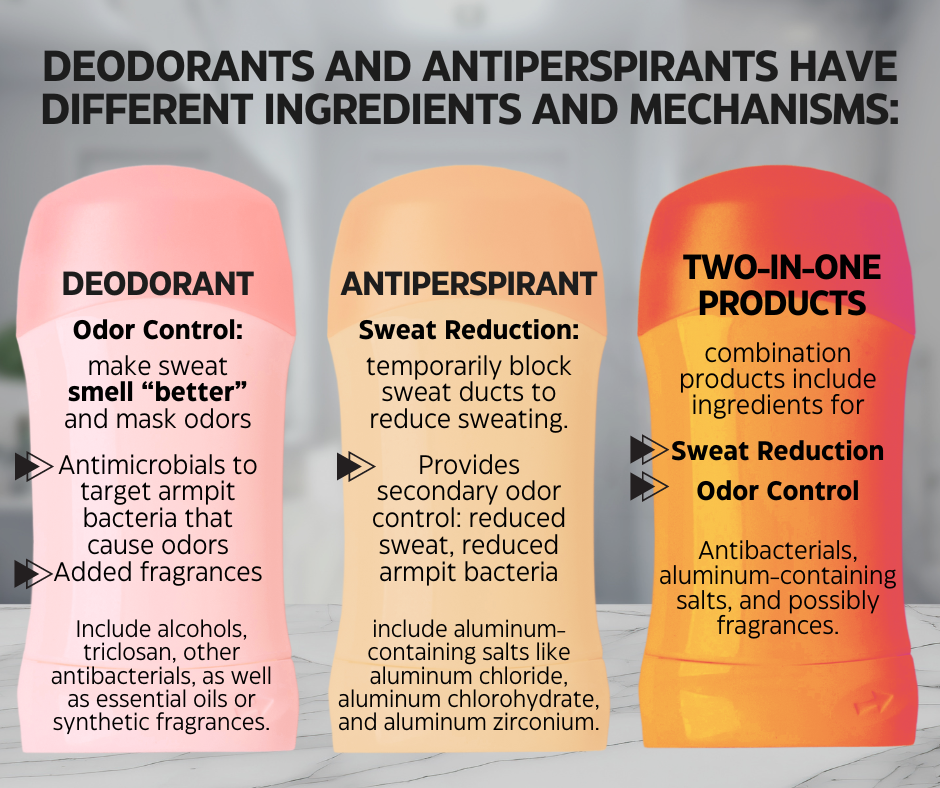
Deodorants and antiperspirants address these two distinct problems:
- Deodorants primarily target body odor by masking it with fragrance or by using antimicrobial agents to reduce the bacterial population on the skin. They do not prevent sweating.
- Antiperspirants, on the other hand, directly aim to reduce sweat production. And here, our protagonist, aluminum, takes center stage.
The history of antiperspirants dates back to the late 19th century, with early formulations often harsh and irritating. It wasn’t until the early 20th century that more refined, and crucially, less irritating, aluminum-based compounds began to dominate the market. The active ingredients typically found in antiperspirants are aluminum salts such as aluminum chloride, aluminum chlorohydrate, or aluminum zirconium tetrachlorohydrex gly.
Their mechanism of action is surprisingly elegant and localized. When applied to the skin, these aluminum salts dissolve in the sweat and form a temporary plug within the sweat duct, just below the skin’s surface. This plug physically blocks the sweat from reaching the skin’s surface, thereby reducing wetness. The effect is not permanent; the plugs are gradually shed with the natural exfoliation of skin cells, requiring daily reapplication. It’s a localized, superficial intervention, designed to manage an inconvenience rather than alter fundamental physiological processes.
This understanding of how antiperspirants work is foundational. It highlights that the aluminum is not intended for systemic absorption, but rather for a localized, mechanical effect. Yet, it is precisely the proximity to lymph nodes and the potential for any absorption, however minimal, that has fueled decades of intense scrutiny.
Chapter 2: The Genesis of Fear – The Allegations Unfold
The story of aluminum’s perceived danger in antiperspirants is a fascinating case study in how scientific hypotheses can take root in the public consciousness, sometimes outstripping the very evidence meant to support them. Two primary health concerns have dominated the discourse: a link to breast cancer and a link to Alzheimer’s disease.
The Breast Cancer Hypothesis: A Proximity Problem?
The most persistent and widely publicized concern is the alleged link between aluminum in antiperspirants and breast cancer. This hypothesis emerged in the early 2000s, gaining traction through anecdotal reports and a few initial studies that, while provocative, were far from conclusive. The core arguments underpinning this fear can be summarized as follows:
- Location, Location, Location: Antiperspirants are applied directly to the armpit, an area rich in lymph nodes that drain the breast region. The theory posits that aluminum compounds could be absorbed through the skin, accumulate in these lymph nodes, and travel to breast tissue.
- Estrogenic Effects: Some researchers hypothesized that aluminum could mimic estrogen or exert estrogen-like effects. Since estrogen is a known driver of many breast cancers, this theoretical mechanism raised alarms. Aluminum, in this scenario, could potentially alter gene expression in breast cells or contribute to tumor growth.
- Shaving Theory: Another facet of the hypothesis suggested that micro-abrasions from shaving the underarm area could increase the absorption of aluminum, creating a direct pathway into the body.
- Paraben Parallels: This concern often gets conflated with the debate surrounding parabens (preservatives also found in some cosmetics) and their potential estrogenic activity. While distinct issues, they both contribute to a broader anxiety about chemicals in personal care products.
These arguments, when presented without the full context of scientific rigor, sound plausible and concerning. They tap into a primal fear of carcinogens and the desire to protect oneself from avoidable risks. The media, ever hungry for a compelling narrative, often amplified these preliminary findings, turning whispers into shouts and firmly embedding the "aluminum equals breast cancer" idea into popular culture.
The Alzheimer’s Disease Hypothesis: A Ghost from the Past?
The link between aluminum and Alzheimer’s disease is an older, though still occasionally cited, concern. This hypothesis gained prominence in the 1960s and 70s following observations of high concentrations of aluminum in the brains of individuals with Alzheimer’s. The initial reasoning was straightforward: if aluminum is found in diseased brains, perhaps it causes the disease.