Body odor. The very phrase often evokes a subtle wince, a collective sigh of social anxiety. It’s a topic whispered about, meticulously managed, and sometimes, a source of profound personal distress. Yet, beneath the veneer of social etiquette lies a fascinating, intricate biological symphony – an unseen world of bacteria, sweat glands, and volatile compounds that shape one of our most primal sensory experiences. Far from being a mere nuisance, body odor (BO) is a complex interplay of genetics, environment, and personal choices, offering a unique window into our individual physiology.
For the knowledgeable mind, the story of body odor isn’t just about masking an unpleasant smell; it’s a deep dive into microbiology, human biology, evolutionary biology, and even the subtle nuances of human psychology and social interaction. It’s a narrative that begins at the cellular level and extends to the broadest cultural perspectives, revealing how profoundly our personal scent impacts our lives.
The Biological Blueprint: Unraveling the Causes of Body Odor
To truly understand and minimize body odor, we must first embark on a journey into its very origins. The common misconception is that sweat itself smells. While sweat plays an indispensable role, it is, in fact, almost entirely odorless when freshly secreted. The true architects of body odor are the trillions of microorganisms that reside on our skin, particularly bacteria. These microscopic inhabitants, forming our skin microbiome, feast upon the organic compounds in our sweat, metabolizing them into the volatile molecules that our noses perceive as "body odor."
1. The Dual Nature of Sweat Glands:
Our skin is equipped with two primary types of sweat glands, each with distinct functions and contributions to BO:
- Eccrine Glands: These are the most numerous sweat glands, found almost all over the body, particularly on the palms, soles, and forehead. Their primary function is thermoregulation – cooling the body down through evaporation. The sweat they produce is mostly water (99%), along with electrolytes (sodium chloride), urea, ammonia, and lactic acid. Crucially, eccrine sweat is largely odorless. However, if left to accumulate, especially in areas like the feet, bacteria can still process its components, leading to foot odor.
- Apocrine Glands: These glands are fewer in number, concentrated in specific areas rich in hair follicles: the armpits (axillae), groin, around the nipples, and eyelids. Unlike eccrine glands, apocrine glands become active primarily during puberty, responding to emotional stress, fear, pain, and sexual arousal. Their sweat is thicker, milkier, and richer in organic compounds such as lipids, proteins, and steroids. It is this apocrine sweat that serves as the primary feast for skin bacteria, making the armpits the notorious epicenter of BO.
2. The Unseen Orchestra: Our Skin Microbiome:
The skin is not a sterile surface; it’s a bustling ecosystem. Within this ecosystem, certain bacterial species are particularly adept at breaking down apocrine sweat. Key players include:
- Corynebacterium spp.: These gram-positive bacteria are highly efficient at metabolizing long-chain fatty acids and amino acids in apocrine sweat, producing short-chain fatty acids like 3-methyl-2-hexenoic acid (3M2H) and 3-hydroxy-3-methylhexanoic acid (HMHA). These compounds are responsible for the distinctive "goaty" or "cumin-like" notes often associated with strong BO.
- Staphylococcus hominis: Another common skin inhabitant, S. hominis has been identified as a significant contributor, capable of converting odorless precursors (like L-carnitine conjugates) into potent thioalcohol compounds, which impart a sulfuric, onion-like aroma.
- Propionibacterium spp.: Found deep in hair follicles and sebaceous glands, these bacteria are often associated with acne but can also contribute to BO, particularly a vinegary smell, by metabolizing amino acids into propionic acid.
The specific "scent signature" of an individual’s BO is a direct result of the unique composition and activity of their skin microbiome, influenced by a multitude of factors.
3. Beyond Sweat and Bacteria: Other Influencing Factors:
- Genetics: Perhaps one of the most intriguing discoveries linking genetics to BO is the ABCC11 gene. Individuals with a specific variant of this gene (a single nucleotide polymorphism) produce very little or no odorous apocrine sweat and often have dry earwax. This gene variant is common in East Asian populations, explaining why many individuals of East Asian descent experience minimal body odor. Conversely, those with the "wet earwax" variant are more prone to BO.
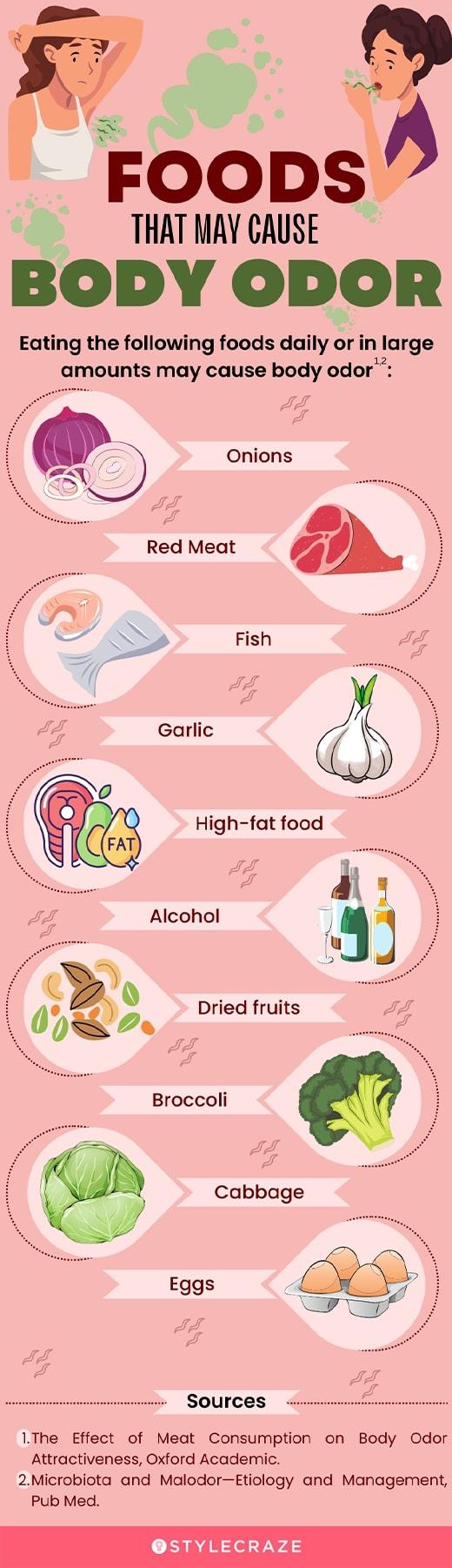
- Diet: The old adage "you are what you eat" holds some truth when it comes to BO. Certain foods and beverages contain compounds that, after digestion, are excreted through sweat glands or breath, contributing to a unique scent.
- Sulfur-rich foods: Garlic, onions, curry, cruciferous vegetables (broccoli, cabbage) can release sulfurous compounds that are metabolized and secreted.
- Red Meat: Some studies suggest a link between high red meat consumption and stronger BO, though the mechanisms are still debated.
- Alcohol: The body metabolizes alcohol into acetic acid, which can be excreted through sweat, contributing to a distinct smell.
- Processed Foods/Sugars: A diet high in these can potentially alter the skin microbiome or lead to an overgrowth of certain bacteria, indirectly affecting BO.
- Hormonal Changes: Puberty, menstruation, pregnancy, and menopause all involve significant hormonal fluctuations. Androgens (male hormones) play a role in apocrine gland activity, which is why BO often intensifies during puberty. Changes in estrogen and progesterone can also influence sweat composition and bacterial activity.