The scent is unmistakable – a crisp, invigorating wave that awakens the senses, a taste that cleanses and refreshes, leaving a cool tingle in its wake. This is Mentha, the humble mint, an herb so ubiquitous it is found in everything from toothpaste to cocktails, from ancient remedies to modern pharmaceuticals. Yet, beneath its commonality lies a profound biological complexity, a potent arsenal of compounds that have quietly waged war against one of the body’s most insidious adversaries: inflammation.
For millennia, long before the advent of microscopes or molecular biology, humanity intuitively understood mint’s soothing power. It was the “internal coolant,” the balm for fevered brows, the settler of upset stomachs, the clearer of congested airways. Now, as science peels back the layers of traditional wisdom, we discover that these ancient observations were not mere folklore but prescient insights into a sophisticated biochemical dialogue. Mint doesn’t just cool; it actively modulates the inflammatory cascade, offering a gentle yet powerful counter-narrative to the body’s overzealous defense mechanisms. This is the story of how a familiar garden herb transforms into a formidable ally, battling the silent fires that rage within, a testament to nature’s profound pharmacy.
Aromatic Chronicles: Mentha Through the Ages
The journey of Mentha from wild botanical to revered medicine is a tapestry woven through the annals of human civilization. Its refreshing aroma and distinctive flavor profile ensured its place in kitchens and apothecaries across continents, but it was its perceived therapeutic efficacy that truly cemented its legacy.
Our earliest documented encounters with mint stretch back to ancient Egypt, where dried mint leaves were discovered in tombs, suggesting its use in funerary rituals or as a medicinal offering. The Ebers Papyrus, one of the oldest and most important medical papyri from ancient Egypt, hints at various herbal remedies, though specific mentions of mint are less direct than in later cultures. However, its presence in a society so advanced in herbal medicine is telling.
It was the Greeks and Romans who truly elevated mint to a position of prominence. The Greek physician Hippocrates, often called the “Father of Medicine,” undoubtedly encountered mint in his extensive herbal pharmacopeia. Pliny the Elder, the Roman naturalist, meticulously documented mint’s properties in his monumental work, Natural History. He noted its use as a digestive aid, a breath freshener, and a remedy for headaches. Roman banquets frequently featured mint in sauces and garnishes, not merely for flavor but also for its reputed ability to aid digestion and prevent overindulgence from causing discomfort. Athletes would rub mint on their arms before competitions, believing it would enhance their strength and focus. Mythologically, mint’s origins are steeped in transformation: the nymph Minthe, transformed into an herb by Persephone out of jealousy, destined to be trodden underfoot yet perpetually fragrant – a metaphor, perhaps, for its enduring resilience and pervasive influence.
As the Roman Empire waned, the knowledge of herbs, including mint, was meticulously preserved and expanded in the monasteries of medieval Europe. Monks, acting as both scholars and apothecaries, cultivated extensive herb gardens, and mint was a staple. It was used to treat everything from stomach ailments and insomnia to coughs and colds. The influential herbalist Hildegard von Bingen, a 12th-century German abbess, documented mint’s warming and digestive properties. Later, during the Renaissance, botanical encyclopedias and herbals like those by John Gerard in England detailed mint’s various species and their applications, solidifying its place in European folk medicine.
Simultaneously, mint flourished in the sophisticated medical systems of the East. In Ayurveda, the ancient Indian system of medicine, mint (Pudina) is valued for its ability to balance the Kapha and Vata doshas, its cooling energy, and its digestive, carminative, and decongestant properties. It was, and still is, used for indigestion, nausea, respiratory issues, and to alleviate fevers. Traditional Chinese Medicine (TCM) recognizes mint (Bo He) for its pungent, cooling nature, entering the lung and liver meridians. It’s prescribed to dispel wind-heat, clear the head and eyes, and soothe the liver – making it effective for colds, headaches, sore throats, and even emotional stress. Unani medicine, derived from Greek medicine and practiced widely in the Middle East and South Asia, also heavily incorporates mint for similar indications, emphasizing its refreshing and anti-inflammatory qualities.
The Age of Exploration further globalized mint, introducing new varieties and consolidating its reputation. By the 17th and 18th centuries, distinct species like peppermint (Mentha piperita), a natural hybrid of watermint and spearmint, began to be cultivated for their potent medicinal properties, particularly in England. Its unique aroma and pronounced cooling sensation quickly made it a favored remedy.
From ancient Egyptian tombs to bustling medieval marketplaces, from serene monastic gardens to the intricate pharmacies of Ayurvedic and TCM practitioners, mint’s journey is a testament to its enduring appeal and perceived efficacy. This rich historical tapestry laid the groundwork for modern scientific inquiry, prompting researchers to ask: what is it about this unassuming herb that has captivated healers and comfort-seekers for millennia? The answer, as we shall see, lies deep within its molecular structure, in its ability to interact with the body’s most fundamental defense mechanism: inflammation.
Understanding Inflammation: The Double-Edged Sword
To truly appreciate Mentha‘s role as an internal coolant, one must first grasp the intricate nature of inflammation itself. Far from being a mere pathology, inflammation is a fundamental biological process, a cornerstone of the body’s innate immune response. It is, in essence, the body’s alarm system, its first line of defense against injury, infection, and irritation.
When tissue damage occurs, whether from a cut, a burn, or an invading pathogen, the body swiftly mobilizes its inflammatory machinery. The classic signs of acute inflammation—redness (rubor), heat (calor), swelling (tumor), pain (dolor), and loss of function (functio laesa)—are not arbitrary symptoms but manifestations of a highly coordinated defensive maneuver. Blood vessels dilate, increasing blood flow to the affected area (causing redness and heat). Their permeability increases, allowing plasma proteins and immune cells to leak into the tissue (causing swelling). Nerve endings are sensitized (causing pain). This cascade is designed to isolate the injury, destroy harmful agents, and initiate tissue repair. In its acute form, inflammation is a hero, indispensable for survival and healing.
However, the hero can become a villain. When the inflammatory response becomes prolonged, dysregulated, or inappropriately triggered, it transitions from acute to chronic inflammation. This persistent, low-grade, systemic inflammation is a silent saboteur, slowly eroding tissues and organs, rather than repairing them. Unlike its acute counterpart, chronic inflammation often lacks overt symptoms, making it a stealthy threat. It is the smoldering fire that, over time, can contribute to a vast array of debilitating and life-threatening conditions.
The key players in this intricate inflammatory cascade are numerous and interconnected. Immune cells like macrophages, neutrophils, and lymphocytes are recruited to the site of injury, releasing a complex symphony of signaling molecules. Among these are cytokines, such as Tumor Necrosis Factor-alpha (TNF-α), Interleukin-1 beta (IL-1β), and Interleukin-6 (IL-6), which act as messengers, amplifying the inflammatory signal. Chemokines guide immune cells to the inflamed tissue. Enzymes like Cyclooxygenase (COX-1 and COX-2) and Inducible Nitric Oxide Synthase (iNOS) are critical. COX enzymes are responsible for producing prostaglandins, which mediate pain, fever, and inflammation, while iNOS generates nitric oxide, a potent inflammatory mediator. Another family of enzymes, lipoxygenases (LOX), produce leukotrienes, which play a significant role in allergic and asthmatic responses.
Compounding this complexity is the role of Reactive Oxygen Species (ROS) and oxidative stress. During inflammation, immune cells generate ROS as part of their pathogen-killing arsenal. While necessary in moderation, excessive ROS production overwhelms the body’s antioxidant defenses, leading to oxidative stress. This, in turn, damages cellular components, perpetuates inflammation, and can even alter gene expression, creating a vicious cycle that fuels chronic disease.
The list of diseases linked to chronic inflammation is extensive and growing, underscoring its profound impact on public health. It is a major driver in autoimmune conditions like rheumatoid arthritis and inflammatory bowel disease (Crohn’s disease and ulcerative colitis). It contributes to respiratory illnesses such as asthma and chronic obstructive pulmonary disease (COPD). Cardiovascular diseases, including atherosclerosis and heart failure, have strong inflammatory components. Neurodegenerative disorders like Alzheimer’s and Parkinson’s diseases are increasingly understood to involve neuroinflammation. Even certain cancers are now recognized to thrive in inflammatory microenvironments.
Given the destructive potential of chronic inflammation, the need for effective “coolants” – agents that can modulate, temper, or resolve this runaway process – is paramount. While pharmaceutical interventions certainly play a crucial role, the search for natural alternatives, often with fewer side effects and a broader spectrum of action, has led researchers back to the wisdom of traditional medicine. And among these natural coolants, Mentha stands out, not merely for its refreshing taste but for its sophisticated ability to engage with and dampen the inflammatory fires.
Deconstructing Mentha: A Phytochemical Symphony
The ability of Mentha to act as an internal coolant and modulate inflammation is not attributable to a single miraculous compound but rather to a sophisticated “phytochemical symphony” – a harmonious interaction of numerous bioactive constituents working in concert. While over 20 species and hundreds of varieties of mint exist, the most commonly studied for their medicinal properties are Mentha piperita (peppermint) and Mentha spicata (spearmint), each possessing a distinct, yet overlapping, chemical profile.
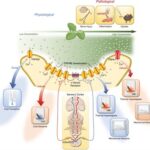
The most iconic compound in peppermint, responsible for its characteristic cooling sensation and much of its therapeutic punch, is menthol. This monoterpene alcohol activates the TRPM8 receptor, a cold-sensitive ion channel, creating the sensation of coolness, even in the absence of actual temperature change. Beyond this sensory effect, menthol is a potent analgesic and anti-inflammatory agent. It can desensitize pain receptors, reduce muscle spasms, and exert local anesthetic effects.
Alongside menthol, other volatile compounds contribute significantly to mint’s profile. Menthone, another monoterpene, is a major constituent in peppermint, contributing to its aroma and potentially influencing its biological activity. Isomenthone and menthofuran are also present, often in smaller quantities, each adding subtle nuances to the overall effect. Spearmint, in contrast, has a lower menthol content and is characterized by higher levels of carvone and limonene, which give it a sweeter, less pungent aroma, and contribute to its unique set of therapeutic actions, including potent antioxidant and anti-inflammatory effects.
Beyond the volatile essential oils, mint is a rich source of polyphenols, particularly flavonoids and phenolic acids, which are powerful antioxidants and anti-inflammatory compounds. Among the flavonoids, luteolin, hesperidin, and eriocitrin are frequently identified. Luteolin, found in many plant foods, is renowned for its ability to inhibit various inflammatory pathways and scavenge free radicals. Hesperidin and eriocitrin, citrus flavonoids also present in mint, contribute to its antioxidant capacity and may help protect vascular integrity, thereby indirectly reducing inflammation.
Rosmarinic acid is perhaps one of the most significant phenolic acids found in abundance in mint, especially in spearmint. This compound has garnered considerable scientific attention for its potent antioxidant, anti-inflammatory, and antiviral properties. Rosmarinic acid has been shown to inhibit the production of pro-inflammatory mediators and protect cells from oxidative damage. Other phenolic acids like caffeic acid and ferulic acid also contribute to the herb’s overall protective effects.
The synergistic interplay of these compounds is crucial. It’s not just menthol acting alone, nor just rosmarinic acid. Instead, the complex mixture of terpenes, flavonoids, and phenolic acids creates a holistic effect that often surpasses the sum of individual components. This concept of synergy is central to understanding the efficacy of many traditional herbal remedies. The various compounds can modulate multiple targets in the inflammatory cascade, enhance each other’s bioavailability, or protect each other from degradation, leading to a more robust and sustained therapeutic outcome.
While vitamins and minerals are present in mint (e.g., Vitamin A, Vitamin C, iron, manganese), their contribution to the specific anti-inflammatory action is generally considered secondary to the more potent phytochemicals. It is the intricate molecular architecture of these specialized plant compounds that allows Mentha to engage with the body’s physiological processes, offering a nuanced and multi-faceted approach to dampening the fires of inflammation. This phytochemical symphony is the key to unlocking mint’s potential as “Nature’s Internal Coolant.”
Mentha’s Mechanism of Action: Cooling the Inflammatory Fire
The transition from recognizing mint’s cooling and soothing effects to understanding how it achieves these effects represents a significant leap from anecdotal observation to rigorous scientific investigation. Modern research has unveiled a multi-pronged attack by Mentha‘s bioactive compounds on various targets within the complex inflammatory cascade. It doesn’t merely mask symptoms; it actively modulates the underlying biochemical processes.
One of the primary ways Mentha compounds exert their anti-inflammatory effects is by modulating the production and activity of pro-inflammatory cytokines and chemokines. Studies have shown that extracts and isolated compounds from mint can significantly reduce the levels of key inflammatory messengers such as Tumor Necrosis Factor-alpha (TNF-α), Interleukin-1 beta (IL-1β), and Interleukin-6 (IL-6). These cytokines are pivotal in initiating and amplifying inflammatory responses. By downregulating their production, mint essentially turns down the volume of the inflammatory alarm system.