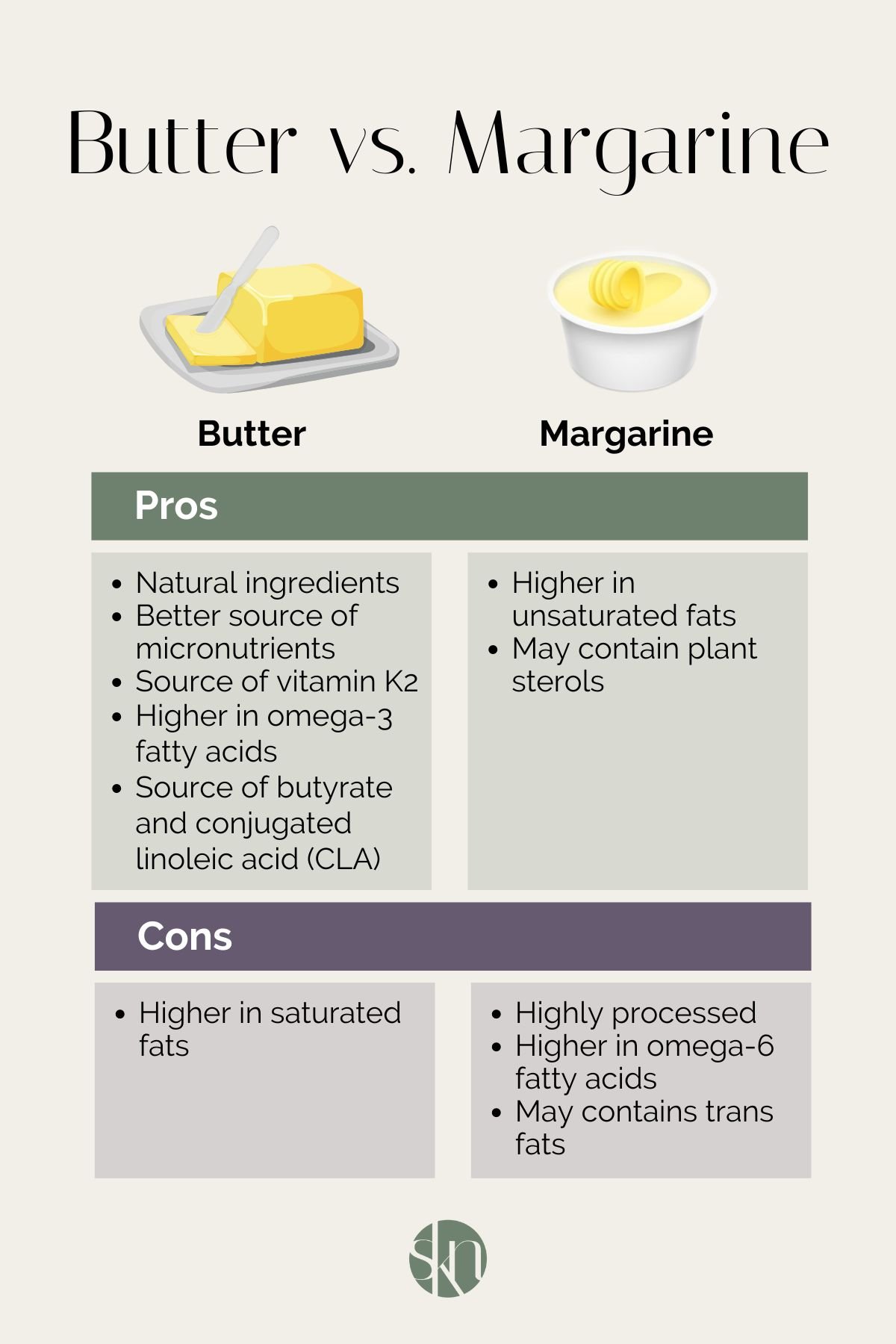
For decades, the simple act of choosing a spread for toast or a fat for cooking has been fraught with nutritional anxiety. The debate between butter and margarine, once a straightforward culinary preference, evolved into a proxy war over dietary health, with each contender taking turns as the hero or villain in the public consciousness. This isn’t merely a tale of two spreads; it’s a profound narrative of how scientific understanding of healthy fats has matured, challenged dogma, and ultimately led us to a more nuanced, evidence-based approach to nutrition. What started as a binary choice has blossomed into a spectrum of considerations, shaped by biochemistry, epidemiology, and the ever-advancing frontier of modern science.
To truly understand where we stand today, we must first journey back through time, tracing the divergent paths of these two ubiquitous kitchen staples.
Chapter 1: The Golden Standard – Butter’s Enduring Legacy
Butter, the creamy, golden emulsion of milk fat, water, and milk solids, is as ancient as dairy farming itself. Its origins trace back thousands of years, revered across cultures for its rich flavor, versatile culinary applications, and perceived wholesomeness. For centuries, it was simply "fat," a natural product of the farm, embodying richness and sustenance.
Composition and Traditional Perception:
At its core, butter is primarily dairy fat, typically around 80% fat by weight. Its nutritional profile is dominated by saturated fatty acids (SFAs), making up about 60-70% of its total fat content. It also contains significant amounts of cholesterol (around 30 mg per tablespoon). Beyond these macronutrients, butter offers fat-soluble vitamins such as Vitamin A (in the form of beta-carotene, giving it its characteristic yellow hue), Vitamin D, Vitamin E, and perhaps most notably, Vitamin K2 (Menaquinone), which is increasingly recognized for its role in bone health and cardiovascular well-being. Additionally, butter contains small amounts of beneficial compounds like Conjugated Linoleic Acid (CLA), a natural trans fat found in ruminant animals, and butyrate, a short-chain fatty acid.
For much of history, butter was synonymous with good living and robust health. It was a caloric powerhouse, providing energy and essential fat-soluble vitamins. The notion that something so natural and time-honored could be detrimental to health was, for a long time, unthinkable.
The Saturated Fat Scapegoat Era:
The mid-20th century, however, brought a dramatic shift in perception. The burgeoning understanding of cardiovascular disease (CVD) led researchers to investigate dietary links. The "diet-heart hypothesis," championed by figures like Ancel Keys, posited a direct correlation between dietary saturated fat, elevated blood cholesterol, and an increased risk of heart disease. Butter, being a concentrated source of saturated fat and cholesterol, was quickly cast as a primary culprit.
This era marked the demonization of saturated fat. Public health campaigns urged consumers to reduce their intake, leading to a widespread embrace of low-fat diets and the search for "healthier" alternatives. Butter, once the golden standard, was now viewed with suspicion, often relegated to the realm of indulgence rather than a dietary staple. This narrative, while influential, was a simplification, as modern science would eventually reveal.
Chapter 2: The Industrial Challenger – Margarine’s Metamorphosis
Margarine, in contrast to butter’s ancient lineage, is a product of scientific ingenuity and industrial revolution. Its birth in the mid-19th century was driven by necessity, not tradition.
A Quest for Affordability:
The story of margarine begins in 1869, when Emperor Napoleon III of France offered a prize for a butter substitute that was cheaper, more shelf-stable, and suitable for the armed forces and the poor. A French chemist, Hippolyte Mège-Mouriès, answered the call with "oleomargarine," a blend primarily derived from beef tallow (animal fat) and milk. It was an instant success, providing a much-needed, affordable fat source.
The Rise of Vegetable Oils and Hydrogenation:
The real transformation of margarine, however, occurred in the early 20th century with the advent of hydrogenation. This chemical process allowed liquid vegetable oils (like cottonseed or soybean oil), which were cheap and abundant, to be solidified. By adding hydrogen atoms to the unsaturated fatty acids in these oils, their melting point increased, transforming them from liquid to a semi-solid state, resembling butter. This innovation propelled margarine into mass production, making it a viable and often preferred alternative to butter, especially as butter prices fluctuated.
The "Health Halo" and the Trans Fat Revelation:
In the latter half of the 20th century, margarine seized the nutritional high ground. Marketed as "cholesterol-free" and "low in saturated fat" (compared to butter), it became the darling of health-conscious consumers. Its plant-based origins further cemented its image as a healthier choice, aligning perfectly with the prevailing advice to avoid animal fats.
However, a dark secret lurked within these hydrogenated fats: industrial trans fatty acids. While the hydrogenation process solidified oils, it also inadvertently created these novel fat structures. Initially, trans fats were not recognized as a health concern. But by the late 1980s and early 1990s, a growing body of scientific evidence unequivocally demonstrated their detrimental effects on cardiovascular health. Industrial trans fats were found to not only raise "bad" LDL cholesterol but also lower "good" HDL cholesterol, a double whammy for heart health. They were also linked to increased inflammation and insulin resistance.
The revelation about trans fats was a seismic shift. Margarine, once the beacon of healthy eating, was now exposed as potentially more harmful than the butter it sought to replace. This discovery led to a global effort to eliminate industrial trans fats from the food supply, culminating in bans and mandatory labeling in many countries.
Modern Margarine: A Continuous Evolution:
The modern margarine on supermarket shelves is a vastly different product from its predecessors. Manufacturers, spurred by scientific findings and consumer demand, reformulated their products. The process of partial hydrogenation, which created trans fats, was largely abandoned in favor of alternative methods like interesterification (which rearranges fatty acids within triglycerides without creating trans fats) or blending different oils to achieve the desired texture.
Today’s margarines are typically made from a blend of liquid vegetable oils (sunflower, canola, soybean, olive, flaxseed) chosen for their favorable profiles of monounsaturated fatty acids (MUFAs) and polyunsaturated fatty acids (PUFAs). Many are fortified with vitamins A and D, and some even include plant sterols or stanols, compounds known to help lower LDL cholesterol. The modern margarine aims to be trans-fat-free, low in saturated fat, and rich in beneficial unsaturated fats.
Chapter 3: Decoding the Lipid Landscape – A Primer on Dietary Fats
To truly compare butter and margarine in the context of modern science, we must first understand the fundamental building blocks: dietary fats themselves. Fats are not merely caloric dense compounds; they are essential for life, playing critical roles in energy storage, cell membrane structure, hormone production, and the absorption of fat-soluble vitamins. The key lies in differentiating between the various types.
1. Saturated Fatty Acids (SFAs):
Characterized by having all carbon atoms "saturated" with hydrogen atoms, meaning no double bonds in their carbon chain. They are typically solid at room temperature.
- Sources: Primarily animal products (meat, dairy, butter), but also some plant oils (coconut oil, palm oil).