The phone rings. Or perhaps it’s an email, a letter slipped through the mail slot. Your heart gives a little lurch. You open it, scanning for the familiar "normal" or "no abnormalities detected." But this time, the words are different. "Your mammogram results are normal, but we want to inform you that you have dense breasts."
A pause. A frown. "Dense breasts?" What does that even mean? Is it good? Bad? Does it increase your risk of cancer? Suddenly, a routine health check-up has opened a new, somewhat unsettling chapter in your health journey. For the knowledgeable woman, this isn’t just a medical fact; it’s a call to understand, to question, and to proactively navigate a path that might feel unexpectedly complex.
This isn’t a diagnosis of cancer, but it is a revelation that fundamentally changes the landscape of your breast health screening. It’s a moment that can spark confusion, anxiety, and a flood of questions. This article isn’t just about defining dense breasts; it’s about telling the story of what comes next – the "Now What?" that empowers you to take control, advocate for yourself, and make informed decisions in a world that suddenly seems a little less straightforward.
The Initial Revelation: A Moment of Unsettling Clarity
For many women, the notification about dense breasts is the first they’ve ever heard of the condition. You might have left your annual mammogram feeling confident, only to have this piece of information drop into your lap, unexpected and undefined. Your initial reaction might be a mix of curiosity and concern. Is this something I should worry about? Does it mean I’m more likely to get breast cancer? Did the mammogram even work?
This initial moment of revelation is critical. It’s the point where passive screening becomes active inquiry. It transforms a routine procedure into a personalized health challenge, demanding a deeper understanding of your own anatomy and the nuances of breast cancer detection. For the informed woman, this isn’t a signal to panic, but an invitation to learn, to engage with her healthcare providers, and to become an even more vigilant guardian of her health.
Understanding the Landscape: What Exactly Are Dense Breasts?
Before we dive into the "now what," let’s establish a foundational understanding of what dense breasts are. It’s not a disease, nor is it a lump or a cyst. Breast density refers to the composition of your breast tissue, as seen on a mammogram.
Imagine your breast as a complex landscape made up of different types of terrain:
- Fatty tissue: This appears dark or transparent on a mammogram. It’s easy for radiologists to see through fatty tissue, making abnormalities (which appear white) stand out clearly. Think of looking for a polar bear in a snow-free, dark forest.
- Fibrous (connective) tissue: This provides support and structure to the breast.
- Glandular tissue: This is involved in milk production.
Both fibrous and glandular tissues appear white or light on a mammogram. When a woman has a significant amount of these white-appearing tissues, her breasts are considered "dense."
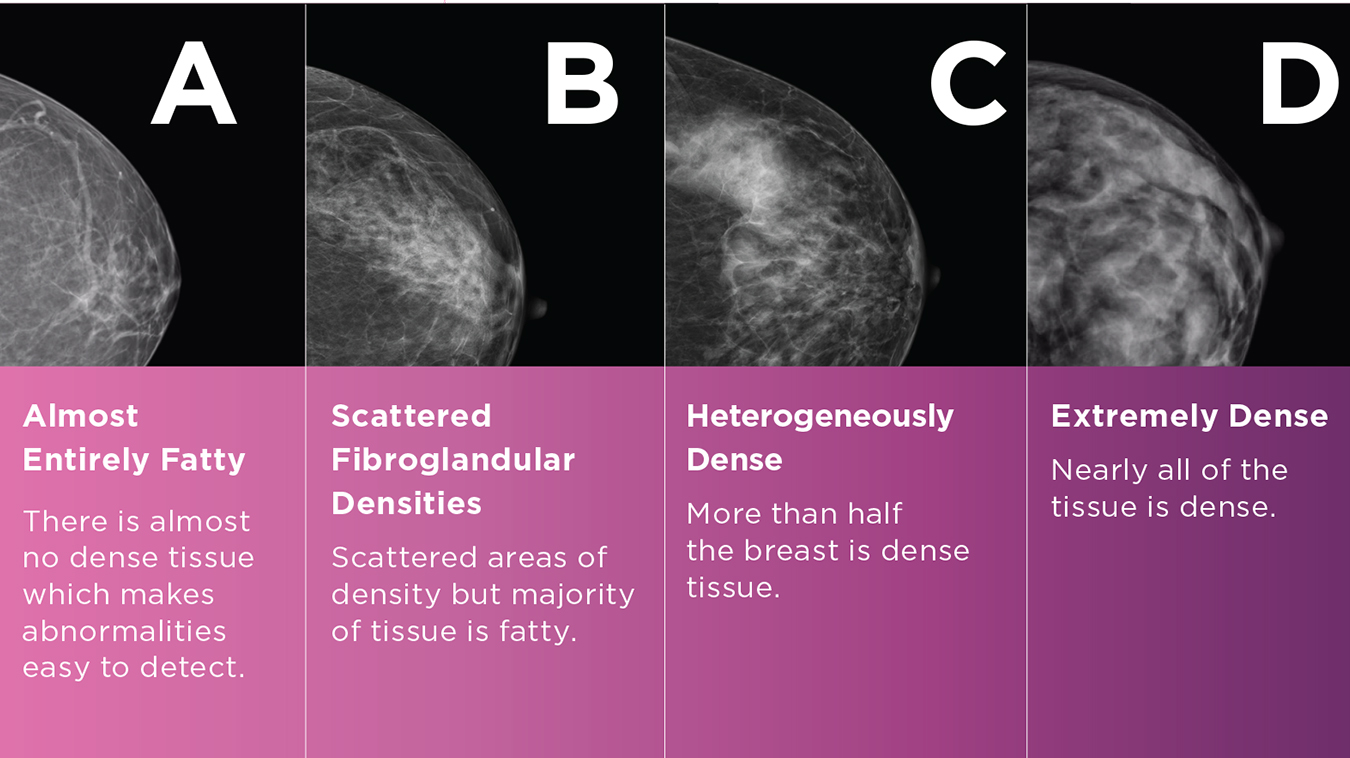
Radiologists use a four-category scale, known as the BI-RADS (Breast Imaging Reporting and Data System) Atlas, to describe breast density:
- Category A: Almost entirely fatty. The breast is composed almost entirely of fat. This occurs in about 10% of women.
- Category B: Scattered fibroglandular density. There are some areas of dense tissue, but most of the breast is fatty. This applies to about 40% of women.
- Category C: Heterogeneously dense. The breast is composed of many areas of dense tissue. This can obscure small masses. This is common, affecting about 40% of women.
- Category D: Extremely dense. The breast is composed of nearly all dense tissue. This makes it very difficult to detect cancer on a mammogram. This affects about 10% of women.
If you received a notification, you likely fall into Category C or D. It’s important to recognize that breast density is common – affecting nearly half of all women over 40. It’s also something that can change over time due to factors like age, menopause, hormone therapy, and weight fluctuations.
The Double-Edged Sword: Why Dense Breasts Matter
The existence of dense breast tissue presents two primary challenges for women and their healthcare providers:
-
The Masking Effect: This is the most immediate and tangible concern. Because both dense tissue and cancerous tumors appear white on a mammogram, dense breasts can "mask" or hide potential cancers. Imagine trying to spot a snowflake in a snowstorm. A small tumor, which would be easily visible against a background of fatty tissue, can be completely obscured by dense fibroglandular tissue. This significantly reduces the sensitivity of mammography. For women with extremely dense breasts, a mammogram’s ability to detect cancer can drop from over 85% to as low as 40-50%.