The human body, a marvel of evolutionary engineering, is exquisitely designed for survival. For millennia, this design served us well, allowing our ancestors to thrive in environments of scarcity. Yet, in the modern age of abundance, this very design has become a double-edged sword, contributing to a global health crisis: obesity. More than a cosmetic concern, obesity is a complex, chronic disease, a metabolic labyrinth that increases the risk of heart disease, stroke, type 2 diabetes, certain cancers, and a host of other debilitating conditions. For decades, the fight against obesity felt like a losing battle, often reduced to the simplistic and often shaming advice of "eat less, move more." But the story of obesity treatment is undergoing a revolutionary chapter, marked by the advent of a new class of medications that are fundamentally reshaping our understanding and approach to weight management.
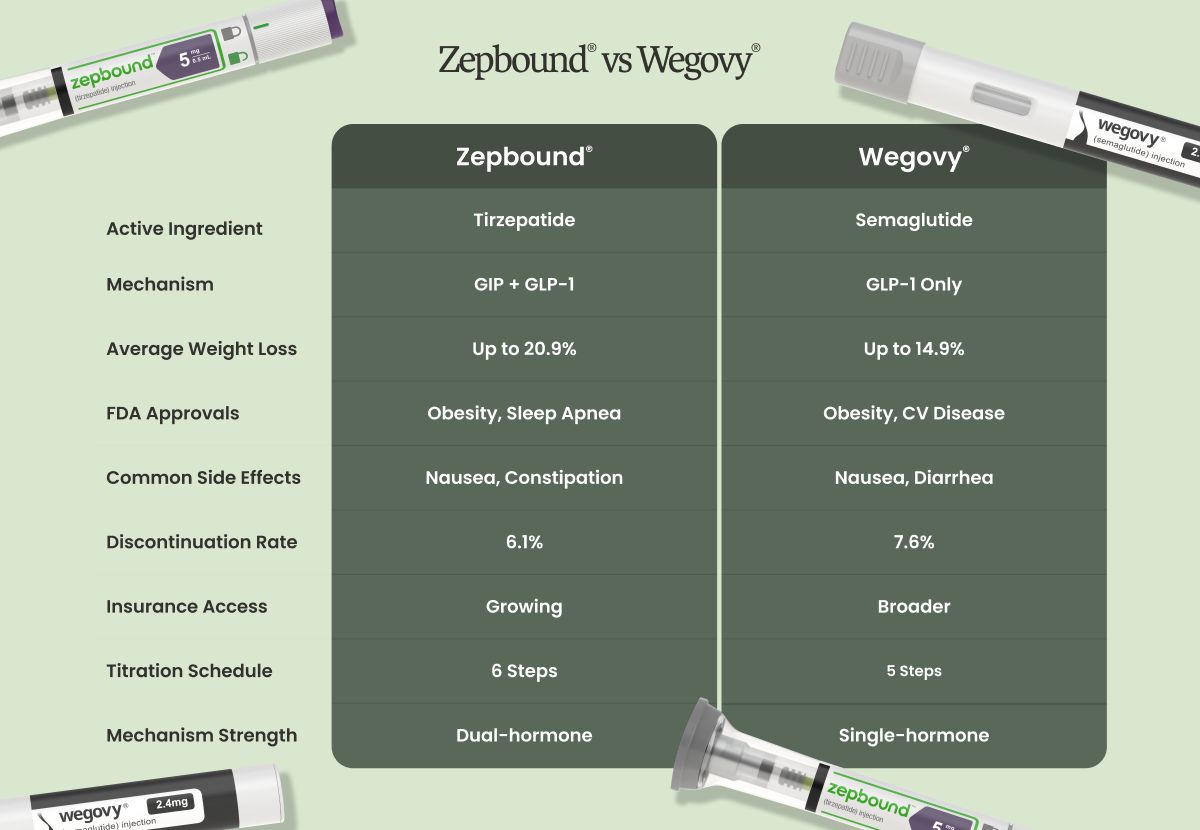
At the heart of this revolution stand two prominent figures: Wegovy (semaglutide) and Zepbound (tirzepatide). These medications, both once-weekly injectable therapies, have ushered in an era of unprecedented efficacy in pharmaceutical weight loss. Their arrival has sparked a crucial question for patients, clinicians, and the healthcare system alike: Which is better? The answer, as with most complex medical narratives, is not a simple binary. It’s a story woven with threads of scientific innovation, individual physiology, personal preference, and the ever-present realities of access and cost. To truly understand their respective strengths and limitations, we must embark on a journey through their mechanisms, clinical triumphs, and the nuanced considerations that guide their application.
Act I: The Dawn of a New Era – Wegovy and the GLP-1 Revolution
Our story begins not with Wegovy itself, but with the foundational understanding of the gut-brain axis and the intricate dance of hormones that regulate hunger, satiety, and metabolism. For years, scientists observed that certain hormones released by the gut after eating played a critical role in controlling blood sugar. Among these, Glucagon-Like Peptide-1 (GLP-1) emerged as a star player.
GLP-1 is an incretin hormone, meaning it’s released from the intestines in response to food intake and stimulates insulin secretion in a glucose-dependent manner. This helps lower blood sugar without causing hypoglycemia when glucose levels are normal. But GLP-1’s influence extends far beyond the pancreas. It slows gastric emptying, leading to a feeling of fullness. It acts on receptors in the brain, particularly in the hypothalamus, to reduce appetite and food cravings. It also suppresses glucagon secretion, further contributing to glucose control.
Early GLP-1 receptor agonists (drugs that mimic GLP-1) like exenatide and liraglutide were initially approved for type 2 diabetes. While effective for glucose control, clinicians and patients began to notice a significant "side effect": weight loss. This observation opened the door to a new therapeutic strategy for obesity.
Semaglutide: From Diabetes Management to Weight Loss Champion
Enter semaglutide. Developed by Novo Nordisk, semaglutide is a longer-acting GLP-1 receptor agonist, designed with modifications to resist degradation by enzymes, allowing for once-weekly administration. It first gained widespread recognition as Ozempic, approved for type 2 diabetes. The weight loss observed with Ozempic was even more pronounced than with earlier GLP-1 agonists, signaling its potential as a dedicated anti-obesity medication.
In 2021, the U.S. Food and Drug Administration (FDA) approved semaglutide, under the brand name Wegovy, specifically for chronic weight management in adults with obesity (BMI ≥30) or overweight (BMI ≥27) with at least one weight-related comorbidity (e.g., hypertension, type 2 diabetes, dyslipidemia). This marked a pivotal moment, offering a prescription medication that achieved weight loss levels previously only seen with bariatric surgery.
Wegovy’s Clinical Triumph: The STEP Program
The efficacy of Wegovy was unequivocally demonstrated in the Semaglutide Treatment Effect in People with Obesity (STEP) clinical trial program. This comprehensive series of trials involved thousands of participants and showcased remarkable results:
- STEP 1: In a pivotal 68-week trial involving nearly 2,000 adults with obesity or overweight without diabetes, participants receiving semaglutide 2.4 mg once weekly, in conjunction with lifestyle intervention, achieved an average weight loss of 14.9% from baseline. This was compared to a placebo group, which lost only 2.4%. A significant proportion (over one-third) lost 20% or more of their body weight.
- STEP 2: Focused on individuals with type 2 diabetes and obesity, demonstrating an average weight loss of 9.6% with semaglutide 2.4 mg, alongside improved glycemic control.
- STEP 3: Combined semaglutide with intensive behavioral therapy, showing a 16.0% weight loss.
- STEP 4: A withdrawal trial demonstrating that discontinuing semaglutide led to significant weight regain, underscoring the chronic nature of obesity and the need for sustained treatment.
Beyond impressive weight loss, Wegovy also showed significant improvements in cardiometabolic risk factors, including blood pressure, lipid profiles, and inflammatory markers. Its approval was hailed as a game-changer, offering a powerful new tool in the fight against a pervasive and devastating disease.
Act II: The Emergence of a New Contender – Zepbound and the Dual Agonist Advantage
While Wegovy was making waves, another pharmaceutical giant, Eli Lilly, was quietly developing its own innovative molecule. Their approach sought to build upon the success of GLP-1 agonists by tapping into another, often overlooked, incretin hormone: Glucose-Dependent Insulinotropic Polypeptide (GIP).
GIP: The Underestimated Partner
GIP, like GLP-1, is released from the gut in response to food and also stimulates insulin secretion in a glucose-dependent manner. However, its role in metabolism is more complex and, for a long time, was considered less impactful for weight loss than GLP-1. Recent research, however, has unveiled GIP’s crucial contributions to energy balance. GIP receptors are found throughout the body, including in fat cells (adipocytes), where GIP influences fat storage and breakdown. It also has direct effects on the brain, potentially modulating satiety and reward pathways in ways complementary to GLP-1.
The brilliance of tirzepatide lies in its design: it’s not just a GLP-1 receptor agonist, but a dual GLP-1 and GIP receptor agonist. It acts on both pathways simultaneously, creating a synergistic effect that amplifies the metabolic benefits observed with GLP-1 alone.
Tirzepatide: Double the Hormones, Double the Impact?
Tirzepatide first gained FDA approval in 2022 under the brand name Mounjaro, specifically for the treatment of type 2 diabetes. Like Ozempic, Mounjaro quickly garnered attention for its profound effects on weight loss in diabetic patients, even surpassing those seen with semaglutide in head-to-head diabetes trials.
This compelling evidence paved the way for tirzepatide’s approval for chronic weight management. In late 2023, the FDA approved tirzepatide under the brand name Zepbound, for adults with obesity or overweight with at least one weight-related comorbidity, mirroring Wegovy’s indication.
Zepbound’s Clinical Dominance: The SURMOUNT Program
The efficacy of Zepbound was meticulously evaluated in the SURMOUNT clinical trial program, which consistently demonstrated even higher levels of weight loss than those reported for Wegovy.