The Unseen Battle: When the Body Turns Against Itself
Imagine a silent, invisible fire smouldering within you. Not a searing blaze that brings immediate pain and alarm, but a persistent, low-grade heat, slowly singeing your tissues, eroding your health, and setting the stage for a myriad of chronic diseases. This is the insidious reality of chronic inflammation – a fundamental biological process that, when dysregulated, transforms from a life-saving defense mechanism into a destructive force.
For millennia, inflammation was understood primarily through its acute manifestations: the redness, swelling, heat, and pain accompanying an injury or infection. These are the body’s emergency responders, rushing to the scene to clear debris, neutralize threats, and initiate repair. This acute inflammatory response is a marvel of evolution, a vital component of our survival.
But the story doesn’t end there. In the past few decades, scientific inquiry has peeled back layers of complexity, revealing a darker, more protracted narrative. We’ve come to understand that inflammation can linger, becoming a chronic, systemic condition that silently fuels ailments ranging from heart disease and diabetes to neurodegenerative disorders and certain cancers. It’s a double-edged sword, and our modern lifestyles often push it towards its destructive edge.
Yet, within this tale of silent destruction, there emerges a hero from the depths of the ocean: fish omega-3 fatty acids. Far from being mere dietary supplements, these remarkable molecules are sophisticated biological modulators, capable of reprogramming the body’s inflammatory machinery and helping to extinguish this silent fire. Their story is one of profound scientific discovery, offering not just hope, but a tangible, evidence-based strategy for mitigating one of the most pervasive threats to human health.
The Silent Fire: Unpacking the Mechanisms of Chronic Inflammation
To truly appreciate the power of omega-3s, we must first understand the enemy: chronic inflammation. It’s a complex immunological dance involving a vast orchestra of cells, signals, and pathways.
At its core, inflammation is the immune system’s response to perceived threats. When a cell is damaged, or a pathogen invades, it releases danger signals. These signals recruit an army of immune cells – neutrophils, macrophages, lymphocytes – to the site. These cells release a cascade of chemical mediators:
- Cytokines: These are the messengers of the immune system. Pro-inflammatory cytokines like Tumor Necrosis Factor-alpha (TNF-α), Interleukin-1 beta (IL-1β), and Interleukin-6 (IL-6) orchestrate the initial response, driving fever, pain, and tissue changes.
- Chemokines: These guide immune cells to the site of inflammation.
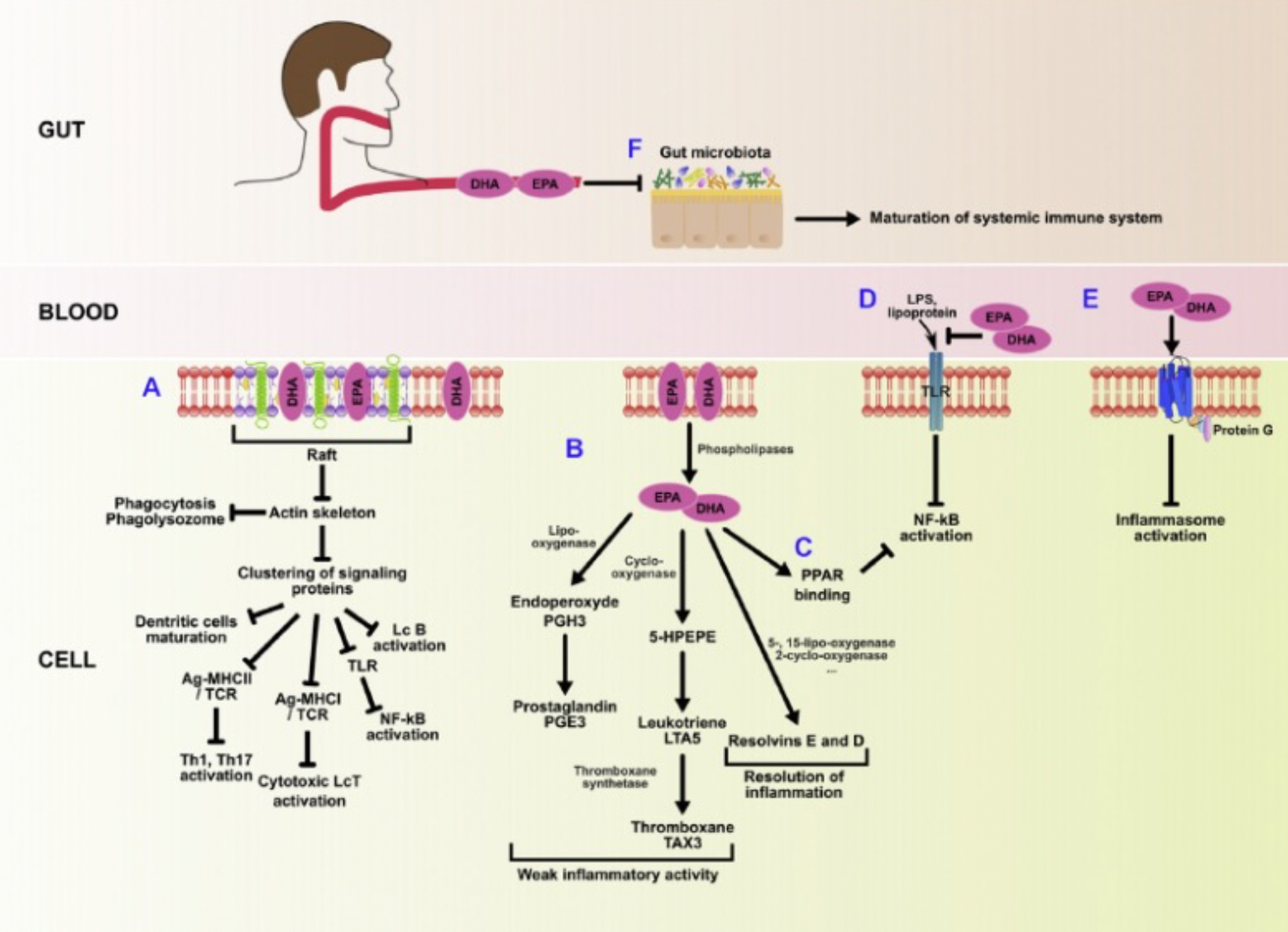
- Eicosanoids: These potent lipid mediators, derived from fatty acids in cell membranes, are crucial for modulating inflammation. Prostaglandins and leukotrienes, particularly those derived from arachidonic acid (an omega-6 fatty acid), are powerful drivers of inflammation, pain, and fever.
- Reactive Oxygen Species (ROS): These are unstable molecules that can cause oxidative damage to cells and DNA, further perpetuating the inflammatory cycle.
In acute inflammation, this response is tightly controlled and self-limiting. Once the threat is neutralized and the damage repaired, anti-inflammatory cytokines (like IL-10 and TGF-β) and specialized pro-resolving mediators step in to shut down the process, allowing the body to return to homeostasis.
However, in chronic inflammation, this delicate balance is disrupted. The inflammatory response fails to resolve, persisting for weeks, months, or even years. This sustained low-grade activation leads to:
- Tissue Damage: Constant exposure to inflammatory mediators and ROS damages healthy cells and tissues.
- Fibrosis: Chronic inflammation can lead to the excessive deposition of connective tissue, impairing organ function (e.g., liver cirrhosis, lung fibrosis).
- Endothelial Dysfunction: The inner lining of blood vessels becomes damaged, a critical precursor to atherosclerosis and cardiovascular disease.
- Insulin Resistance: Inflammatory cytokines interfere with insulin signaling, contributing to type 2 diabetes.
- Immune Dysregulation: The immune system can become hyper-responsive or even start attacking the body’s own tissues, leading to autoimmune diseases.
The list of chronic diseases linked to this silent fire is extensive:
- Cardiovascular Disease: Atherosclerosis, hypertension, heart failure.
- Metabolic Syndrome: Obesity, type 2 diabetes, non-alcoholic fatty liver disease.
- Autoimmune Diseases: Rheumatoid arthritis, lupus, inflammatory bowel disease (Crohn’s, ulcerative colitis), multiple sclerosis.
- Neurodegenerative Diseases: Alzheimer’s, Parkinson’s (neuroinflammation).