From the earliest flickers of human curiosity to the most advanced scientific inquiry, the penis has stood as a remarkable, often misunderstood, organ. More than just a simple conduit for bodily fluids or a tool for reproduction, it is a masterpiece of biological engineering, a testament to evolution’s elegant solutions, and a central player in the human experience of pleasure, intimacy, and procreation. To truly understand "how the penis works" is to embark on a journey through a symphony of anatomical structures, neurological pathways, hormonal signals, and intricate physiological processes that culminate in its astonishing transformations. This is its story – a narrative of pressure, flow, sensation, and purpose, unfolding within the human body.
Chapter 1: The Blueprint – A Foundation of Form and Function
At first glance, the penis appears deceptively simple. Yet, beneath its surface lies a complex architecture meticulously designed for its dual primary roles: facilitating urination and enabling sexual intercourse and reproduction. To appreciate its function, we must first dissect its form.
The External Landscape:
The visible part of the penis, the shaft, typically ends in the glans penis, a sensitive, dome-shaped head. The glans is rich in nerve endings, making it a primary site for sexual sensation. At its tip lies the urethral meatus, the opening through which both urine and semen exit the body. In some individuals, the glans is covered by the foreskin (prepuce), a retractable fold of skin that can be removed through circumcision. The shaft itself is composed of spongy tissue, blood vessels, nerves, and skin. Directly beneath the penis, the scrotum, containing the testes, hangs in close proximity, a vital partner in the reproductive drama.
The Internal Architecture: The Engine Room
The true marvel of the penis resides within its core, where three cylindrical bodies of erectile tissue are arranged. These are the stars of our story:
-
Corpora Cavernosa (Plural for Corpus Cavernosum): These are two parallel, larger columns of tissue that run along the top (dorsal side) of the penis. They are the primary architects of rigidity. Each corpus cavernosum is like a sophisticated sponge, a labyrinth of interconnected vascular spaces called sinusoids or lacunae. These spaces are lined with endothelial cells and surrounded by smooth muscle cells and fibrous connective tissue (trabeculae). Encasing each corpus cavernosum is a thick, inelastic, fibrous sheath called the tunica albuginea. This tough outer layer is crucial; it acts like a pressure vessel, trapping blood within the sinusoids during erection and ensuring the penis achieves its characteristic stiffness.
-
Corpus Spongiosum: This single, smaller column of erectile tissue lies beneath (ventral side) the corpora cavernosa, running along the underside of the penis. It surrounds the urethra, the tube that transports urine and semen. Unlike the corpora cavernosa, the corpus spongiosum’s tunica albuginea is thinner and more elastic. This is a critical design feature: it allows the corpus spongiosum to engorge with blood during erection, providing some firmness, but without becoming as rigid as the corpora cavernosa. This relative flexibility prevents the urethra from being completely compressed, ensuring that ejaculation remains possible. The glans penis itself is an extension of the corpus spongiosum.
The Plumbing and Wiring: Blood Vessels and Nerves
No engine can run without fuel lines and electrical circuits. The penis is richly supplied by both:
-
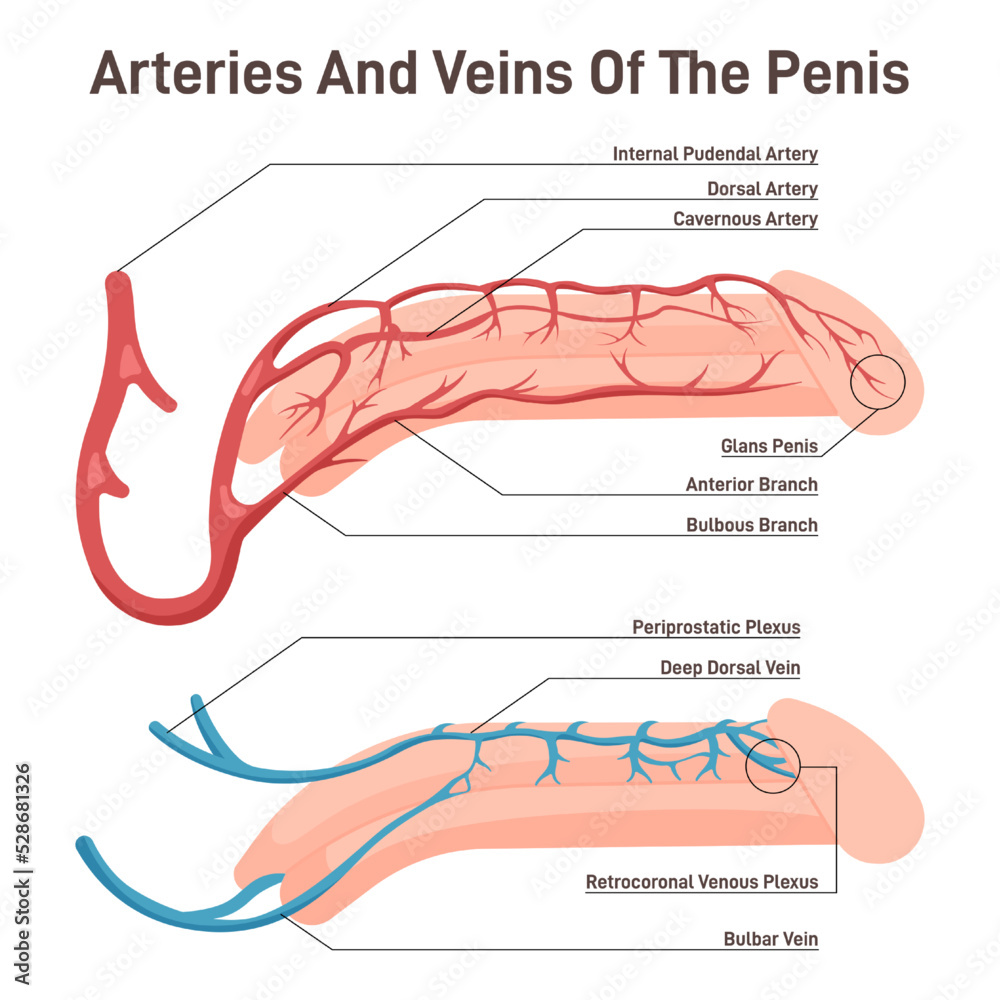
Blood Vessels: The primary arterial supply comes from the internal pudendal artery, which branches into several crucial arteries:
- Dorsal arteries: Run along the top of the penis, supplying the skin, glans, and corpus spongiosum.
- Cavernosal (or deep) arteries: These penetrate directly into the center of each corpus cavernosum. They are coiled (helicine) in the flaccid state but straighten and dilate dramatically during erection, delivering the torrent of blood needed for engorgement.
- Bulbourethral arteries: Supply the bulb of the penis and parts of the corpus spongiosum.
On the venous side, a complex network of emissary veins drains the sinusoids, piercing the tunica albuginea to empty into circumflex veins and then the deep dorsal vein of the penis, ultimately leading back to the internal pudendal veins. This venous drainage system is as critical to erection as the arterial inflow.
-
Nerves: The penis is a highly innervated organ, responding to both conscious and unconscious commands: