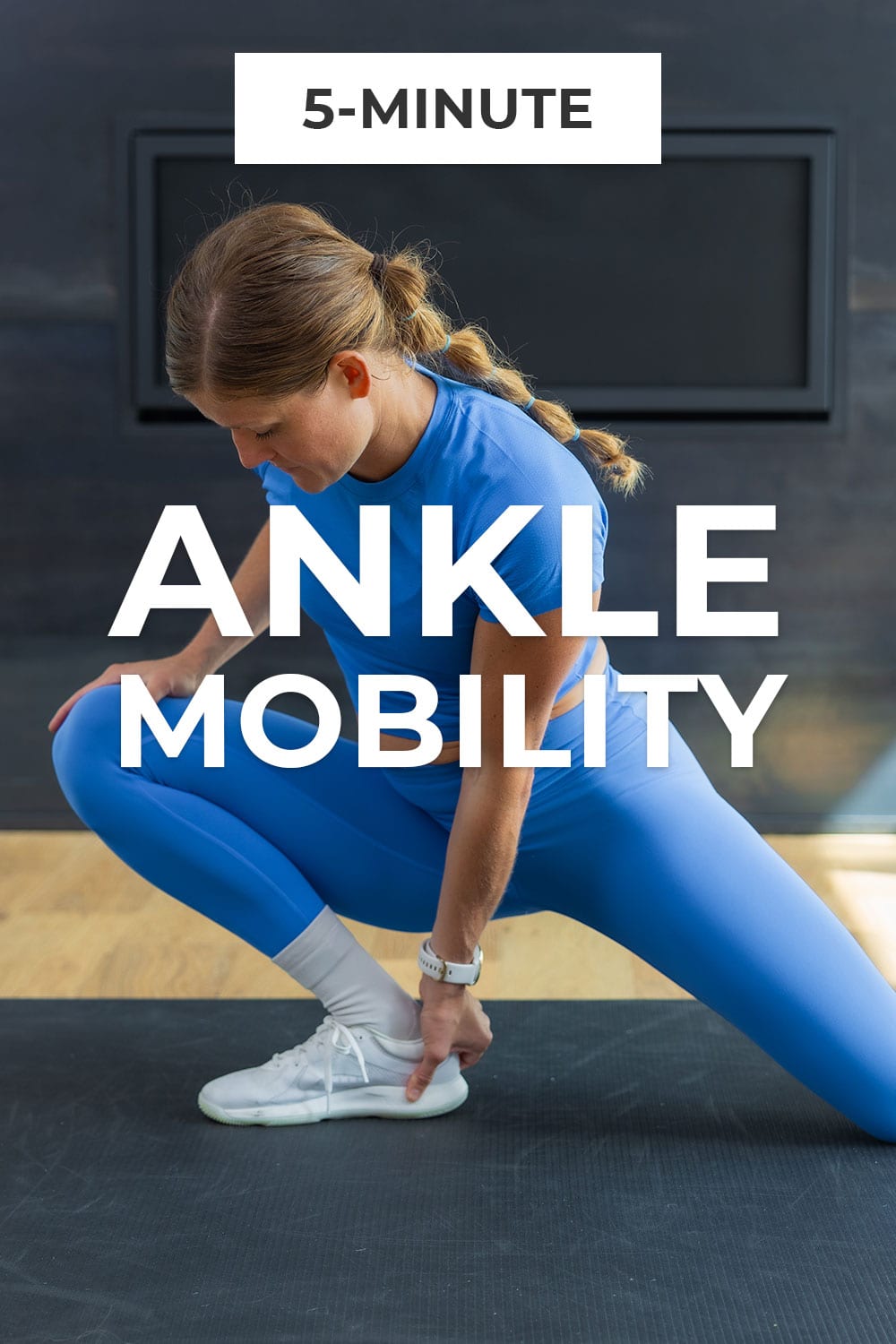
We live in a world obsessed with big muscles and impressive lifts. We meticulously plan our chest days, agonizing over the perfect pec fly, and dedicate countless hours to sculpting glutes that could crack walnuts. Yet, often overlooked, undervalued, and frequently underdeveloped, lies the humble ankle – a joint that is, in essence, the very foundation of human movement.
Think of your body as a magnificent, intricate building. You wouldn’t ignore cracks in the foundation while meticulously polishing the rooftop gargoyles, would you? Similarly, neglecting your ankle mobility is akin to building a skyscraper on shifting sand. It’s a silent saboteur, slowly undermining your athletic potential, increasing your risk of injury, and even compromising the quality of your daily life, one stiff step at a time.
For the knowledgeable among us, those who understand the interconnectedness of the kinetic chain, the profound impact of the ankle joint is not news. You’ve likely felt the frustration of a restricted squat, the instability in a lunge, or the nagging tightness that hints at something deeper. This isn’t just about flexibility; it’s about stability, power, and the seamless transmission of force from the ground up. It’s about unlocking your body’s true potential, one dorsiflexion at a time.
Today, we’re not just going to talk about ankle mobility; we’re going to dive deep into why it matters so profoundly, unraveling the biomechanical symphony it conducts. Then, we’ll equip you with five transformative exercises – not just a list, but a narrative of movement, purpose, and progression – that you need to integrate into your routine starting today. This isn’t just a guide; it’s an invitation to reclaim control over your body, to enhance your performance, and to fortify your foundation for a lifetime of agile, pain-free movement.
The Unseen Architects: Why Your Ankles Hold the Keys to Your Entire Kinetic Chain
Before we even touch on a single exercise, let’s articulate the profound, often underestimated, role your ankles play. For the discerning individual, understanding the "why" fuels the "how."
The ankle joint, primarily a hinge joint, is responsible for dorsiflexion (bringing your toes towards your shin) and plantarflexion (pointing your toes away from your shin). While it also permits slight inversion and eversion (tilting the sole of your foot inwards or outwards), its primary limitations often manifest in insufficient dorsiflexion. This seemingly minor restriction has a cascading effect, rippling through your entire body’s kinetic chain.
1. The Kinetic Chain Cascade: From Ankle to Spine
Imagine a domino effect. Your ankle is the first domino.
- Squats and Lifts: A lack of dorsiflexion is the prime culprit behind "butt wink" (posterior pelvic tilt) in squats. When your ankles can’t adequately move, your body compensates. Your knees track excessively forward, your heels lift, or, more commonly, your hips tuck under to find depth. This places undue stress on the lumbar spine, making heavy squats not just inefficient, but potentially dangerous. For deadlifts, while less directly impacted by dorsiflexion, tight calves (which often go hand-in-hand with poor ankle mobility) can limit your ability to achieve a proper starting position, forcing a rounded back.
- Knee Health: Poor ankle mobility can lead to a host of knee issues. When your ankle can’t absorb forces or achieve proper angles, your knee is forced to pick up the slack. This can manifest as knee valgus (knees caving inward) during squats or landings, patellofemoral pain syndrome, or even ACL tears in dynamic movements. The knee becomes a victim of upstream (hip) or downstream (ankle) dysfunction.
- Hip Function: The ripple effect continues. Compensations at the knee inevitably travel to the hip. Restricted ankle mobility can force external rotation at the hip to achieve squat depth, or create imbalances that contribute to hip impingement or labral issues over time.
- Spinal Alignment: Ultimately, poor ankle mechanics can alter your entire posture. An anterior pelvic tilt, compensatory lordosis in the lumbar spine, and even thoracic stiffness can all, indirectly, stem from the body’s attempts to navigate a stiff ankle foundation.
2. Athletic Performance: Beyond the Gym
For athletes, ankle mobility isn’t a luxury; it’s a necessity.
- Running and Jumping: Every stride in running, every explosive jump, begins and ends with the foot and ankle. Efficient dorsiflexion allows for proper ground contact, absorption of impact, and a powerful push-off. Stiff ankles mean less spring, slower acceleration, and increased risk of common running injuries like shin splints, Achilles tendinopathy, and plantar fasciitis.
- Sports Specificity: From the quick cuts in basketball and soccer to the powerful drives in weightlifting, the agility in gymnastics, or the balance required in martial arts, optimal ankle mobility is a non-negotiable prerequisite for peak performance and injury resilience.
3. Injury Prevention: Fortifying Your Foundation
The statistics are clear: ankle sprains are among the most common musculoskeletal injuries. While direct trauma often plays a role, underlying ankle stiffness or imbalance can make you more susceptible.
- Sprains and Strains: An ankle that lacks full range of motion is less resilient to unexpected twists and turns. It’s like a rusty hinge that snaps rather than bends.
- Overuse Injuries: As mentioned, Achilles tendinopathy, plantar fasciitis, and shin splints are often compensatory issues stemming from restricted ankle movement, forcing other structures to overwork.
4. Daily Life and Longevity: The Silent Erosion of Function