The landscape of weight management is undergoing a profound revolution, driven by scientific breakthroughs that are fundamentally reshaping our understanding and treatment of obesity. For decades, the struggle against excess weight was often framed as a battle of willpower, leaving millions feeling isolated and defeated. Today, a new narrative is emerging, one that recognizes obesity as a complex, chronic disease influenced by genetics, physiology, and environment, and one that demands sophisticated medical intervention. At the forefront of this revolution stand two pharmaceutical titans: Ozempic (semaglutide) and Zepbound (tirzepatide).
These medications, once primarily known for their efficacy in managing Type 2 Diabetes, have now ascended to prominence as powerful agents for weight loss, offering hope to individuals who have long navigated the arduous journey of dieting and exercise with limited success. But as their popularity soars, so too do the questions: How do they work? Which one is more effective? What are the trade-offs? For a knowledgeable audience seeking a deeper understanding beyond the headlines, this article delves into the intricate mechanisms, compelling clinical evidence, safety profiles, and practical considerations that define Ozempic and Zepbound, ultimately comparing their prowess in the quest for meaningful and sustainable weight loss. This is the story of two groundbreaking drugs, each marking a significant chapter in the ongoing quest to conquer obesity.
The Science Behind the Success: Unpacking GLP-1 RAs and Beyond
To truly appreciate the power of Ozempic and Zepbound, one must first understand the intricate hormonal symphony that governs our metabolism, appetite, and satiety. Both drugs harness the body’s natural signaling pathways, but Zepbound introduces a novel dual-action approach that sets it apart.
Ozempic (Semaglutide): The Pioneering GLP-1 Receptor Agonist
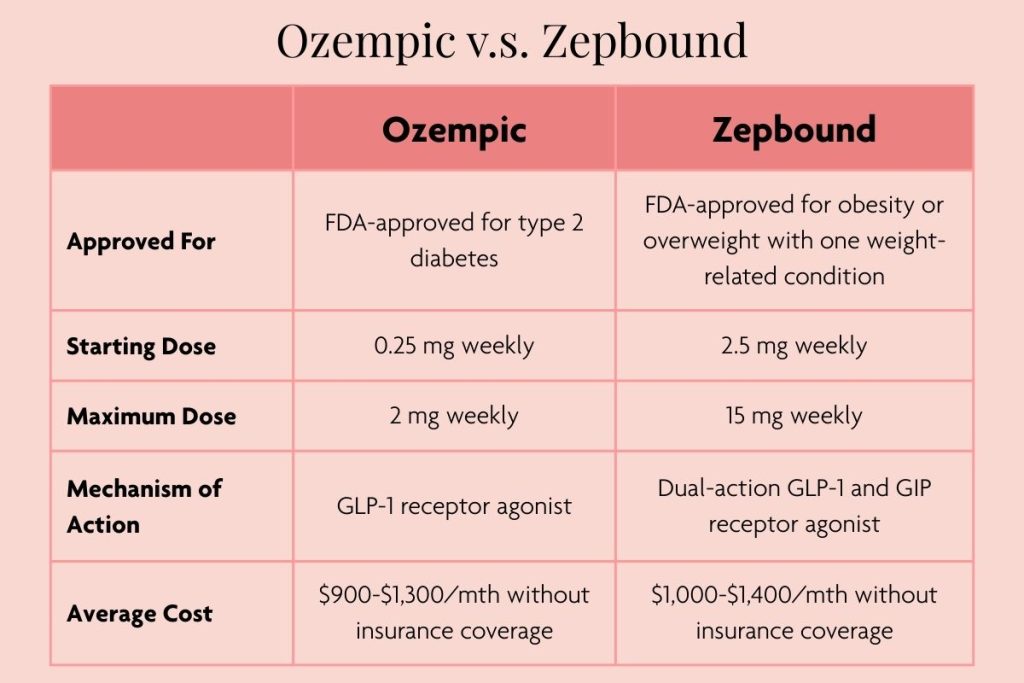
Ozempic, and its higher-dose counterpart specifically approved for weight management, Wegovy, contain the active ingredient semaglutide. Semaglutide belongs to a class of drugs known as Glucagon-Like Peptide-1 (GLP-1) receptor agonists.
GLP-1 is a natural hormone produced in the gut in response to food intake. Its physiological roles are multifaceted and crucial for metabolic regulation:
- Insulin Secretion: GLP-1 stimulates the pancreas to release insulin in a glucose-dependent manner. This means it only triggers insulin release when blood sugar levels are high, minimizing the risk of hypoglycemia.
- Glucagon Suppression: It inhibits the release of glucagon, another pancreatic hormone that raises blood sugar, further contributing to glucose control.
- Delayed Gastric Emptying: GLP-1 slows down the rate at which food leaves the stomach. This effect contributes to a feeling of fullness and satiety, helping to reduce overall food intake.
- Central Appetite Suppression: GLP-1 receptors are also found in the brain, particularly in areas involved in appetite regulation. By activating these receptors, semaglutide helps to reduce hunger, curb cravings, and promote a sense of fullness, leading to decreased calorie consumption.
Semaglutide mimics the action of natural GLP-1 but has been engineered to have a much longer half-life, allowing for once-weekly administration. Its initial approval was for the treatment of Type 2 Diabetes, where its glucose-lowering and cardiovascular benefits were well-established. The profound weight loss observed in diabetic patients, however, paved the way for its dedicated approval for chronic weight management in individuals with obesity or overweight with at least one weight-related comorbidity.
Zepbound (Tirzepatide): The Dual-Action Innovator (GLP-1 & GIP)
Zepbound, and its Type 2 Diabetes counterpart, Mounjaro, contain the active ingredient tirzepatide. Tirzepatide represents an evolution in incretin-based therapies because it is a novel dual GIP (Glucose-dependent Insulinotropic Polypeptide) and GLP-1 receptor agonist. This dual action is what fundamentally differentiates it from semaglutide.
GIP is another incretin hormone, also produced in the gut in response to nutrient intake. While GLP-1 has garnered more attention, GIP plays a significant, albeit somewhat different, role in metabolism:
- Insulin Secretion: Like GLP-1, GIP stimulates glucose-dependent insulin release from pancreatic beta cells.
- Fat Metabolism: GIP is thought to play a role in fat cell metabolism, potentially influencing fat storage and breakdown.
- Synergy with GLP-1: Research suggests that GLP-1 and GIP work synergistically. When both receptors are activated, the combined effect on glucose control, appetite regulation, and potentially even energy expenditure appears to be greater than either hormone acting alone.
Tirzepatide leverages this synergy by activating both the GLP-1 and GIP receptors. The proposed mechanism for its superior efficacy in weight loss stems from this dual agonism:
- Enhanced Satiety and Appetite Suppression: The combined effect on brain centers regulating appetite is believed to be more potent, leading to a greater reduction in hunger and food intake.
- Improved Glucose Metabolism: The dual action leads to more robust glycemic control, which, while not directly causing weight loss, contributes to overall metabolic health and potentially helps regulate fat storage.
- Potentially Direct Effects on Adipose Tissue: While research is ongoing, some hypotheses suggest that GIP agonism might have more direct beneficial effects on adipose tissue, influencing its function and reducing inflammation, thereby contributing to greater fat loss.
The story here is one of scientific progression: from understanding a single metabolic pathway (GLP-1) to recognizing the intricate interplay of multiple pathways (GLP-1 and GIP). This deeper understanding has allowed for the engineering of a more comprehensive therapeutic agent, pushing the boundaries of what pharmacological intervention can achieve in metabolic health and weight management.