The human quest for optimal health and a desirable physique is an ancient one, etched into our very DNA. In the modern era, this quest often manifests as a perennial battle against the bulge, a struggle intensified by an abundance of processed foods, sedentary lifestyles, and an overwhelming deluge of often conflicting dietary advice. Amidst this cacophony, two distinct philosophies have risen to prominence, each promising a path to a leaner, healthier self: the time-honored discipline of Calorie Counting and the revolutionary allure of Intermittent Fasting.
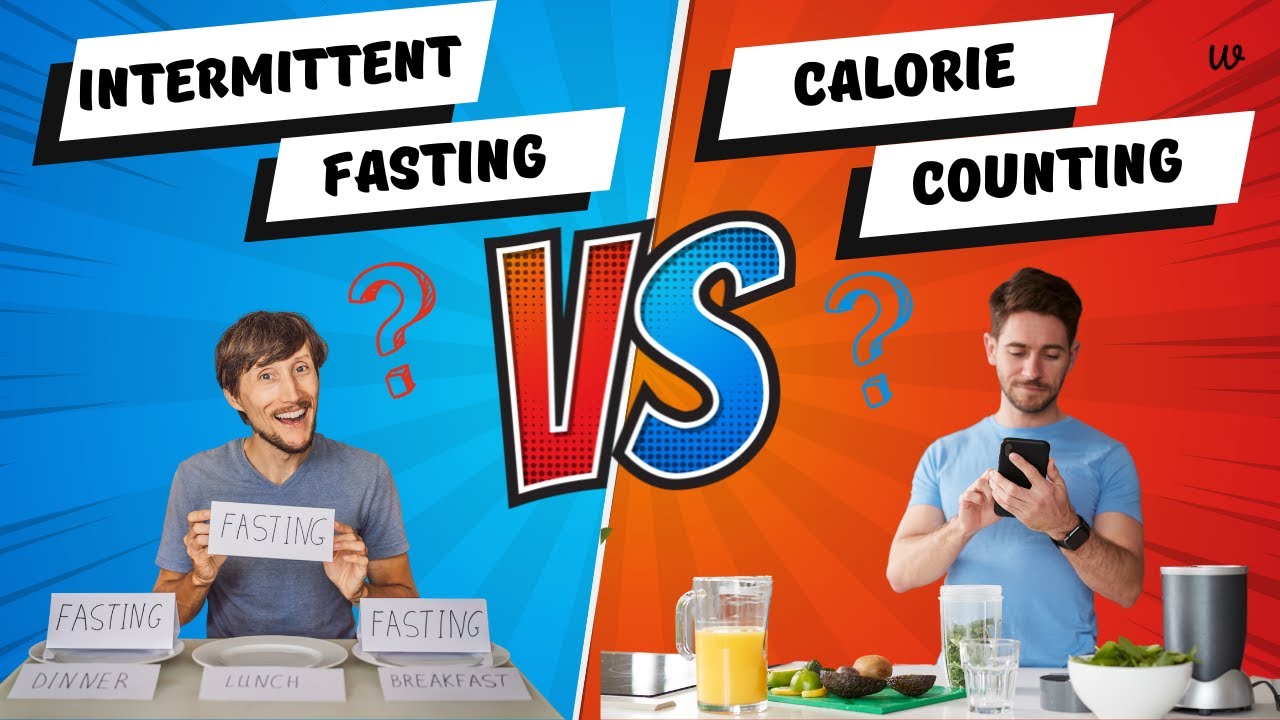
Imagine a grand arena, bathed in the harsh light of scientific scrutiny and the hopeful gaze of millions. In one corner stands Calorie Counting, the grand old dame of dietetics, stoic and quantitative, her wisdom passed down through generations. In the other, Intermittent Fasting, the maverick challenger, agile and intuitive, speaking of ancient rhythms and cellular rejuvenation. Both seek the same prize – sustainable weight loss and improved metabolic health – but their strategies, their underlying philosophies, and their very approaches to the human body couldn’t be more different.
This isn’t merely a technical comparison; it’s a narrative of human endeavor, of our eternal dance with food, hunger, and self-control. It’s a story of how we attempt to manipulate our biology, our psychology, and our daily routines to achieve a desired outcome. For the knowledgeable audience, those who have likely dabbled in both, or at least keenly observed their rise, this exploration delves beyond the superficial, seeking to uncover not just what they do, but how and why they resonate (or fail to resonate) with individuals on their unique journeys.
The Grand Old Dame: Calorie Counting – The Science of Energy Balance
For decades, if not centuries, the bedrock of weight management has been the simple yet profoundly complex principle of energy balance. At its heart lies the first law of thermodynamics: energy cannot be created or destroyed, only transformed. In the context of the human body, this translates to the widely accepted Calories In, Calories Out (CICO) model. Consume more energy (calories) than you expend, and you gain weight; consume less, and you lose weight. It sounds deceptively simple, a mathematical equation that promises predictable results if only one adheres to its strictures.
The Genesis of a Philosophy:
The concept of a "calorie" as a unit of energy dates back to the 19th century, with scientists like Antoine Lavoisier laying the groundwork for understanding metabolism as a form of combustion. By the early 20th century, the idea of meticulously tracking food intake and energy expenditure began to take hold, evolving into the dietetics profession we know today. Calorie counting became the scientific gold standard, the quantifiable metric that allowed for precise manipulation of body weight.
How it Works (in Theory and Practice):
A typical calorie counting regimen involves:
- Calculating Basal Metabolic Rate (BMR) and Total Daily Energy Expenditure (TDEE): Using formulas like Mifflin-St Jeor or Harris-Benedict, an individual estimates how many calories their body burns at rest and with activity.
- Establishing a Deficit: To lose weight, a deficit of 500-750 calories per day is commonly recommended, theoretically leading to a loss of 1-1.5 pounds per week.
- Tracking Everything: Every morsel of food, every sip of a caloric beverage, is meticulously logged using apps, journals, or scales.
- Adherence and Adjustment: The individual sticks to their prescribed calorie target, adjusting as weight loss plateaus or activity levels change.
The Allure and the Promise:
For many, the appeal of calorie counting lies in its tangibility and apparent scientific rigor. It offers a sense of control, a clear framework within which to operate. There’s a satisfaction in seeing the numbers add up, in hitting a daily target, in understanding the energy cost of every food choice. It teaches an invaluable lesson in portion control and the often-surprising caloric density of certain foods. For the analytical mind, it’s a solvable puzzle, a direct application of physics to biology.
The Shadow Side: Where the Numbers Fall Short:
Yet, the story of calorie counting isn’t without its dramatic turns and poignant struggles. While theoretically sound, its practical application often encounters significant hurdles:
- Accuracy Issues:
- Food Labels: Calorie counts on labels can have a variance of up to 20%.
- Individual Absorption: Not all calories listed are absorbed equally by every individual, influenced by gut microbiome, cooking methods, and food matrix.
- Human Error: Underestimation of portion sizes, forgotten snacks, "licked the spoon" calories – these small errors accumulate rapidly.
- Metabolic Adaptation: The body is not a static machine. As weight is lost, metabolism can slow down (adaptive thermogenesis), meaning the initial deficit may no longer be sufficient.
- Tedium and Obsession: The relentless tracking can be mentally exhausting. Dining out becomes a minefield, social events a source of anxiety. For some, it can foster an unhealthy obsession with numbers, leading to orthorexia or other disordered eating patterns.
- Ignores Food Quality: CICO, in its purest form, treats all calories equally. 100 calories of broccoli is treated the same as 100 calories of candy, ignoring the vast differences in micronutrient content, fiber, satiety, and hormonal response.