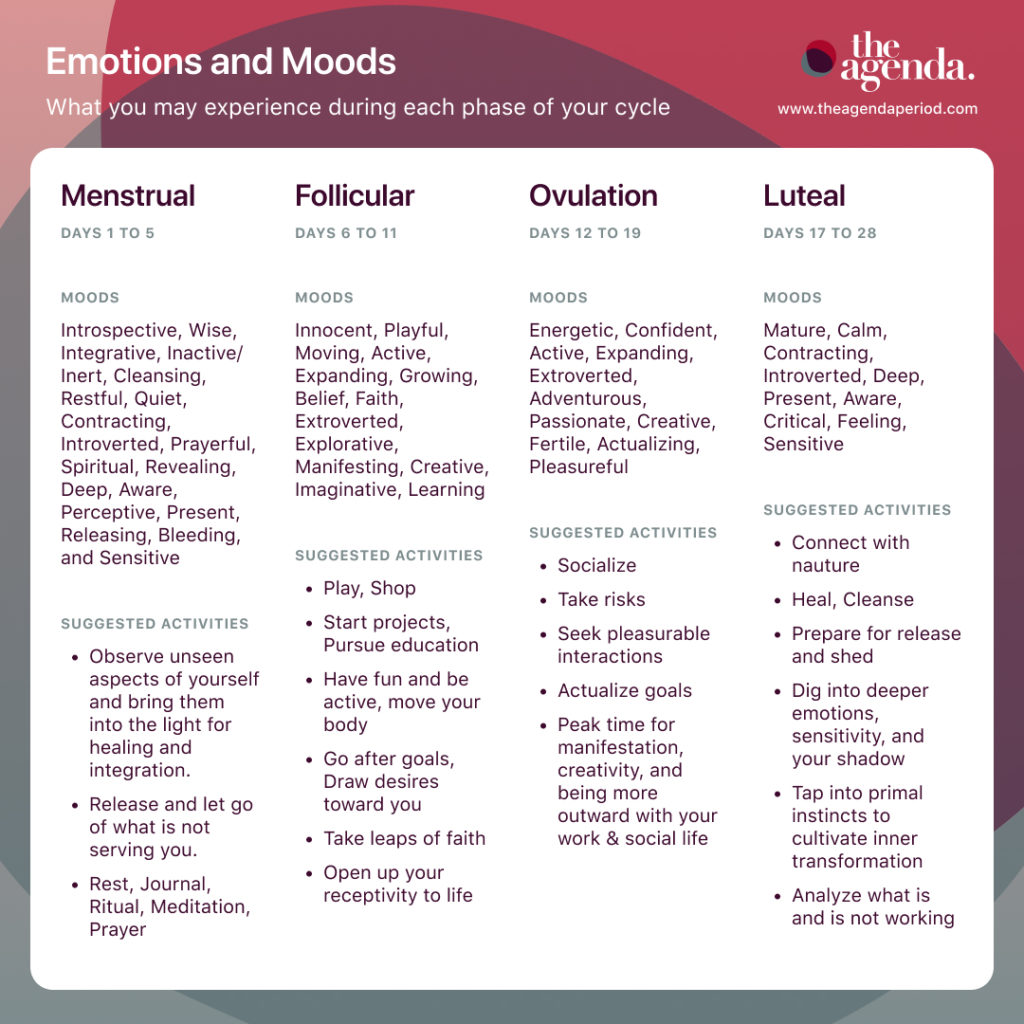
The human body is a marvel of intricate systems, a cosmic dance of cells and signals, and for those who experience a menstrual cycle, it is also a profound, monthly odyssey of emotional shifts. Far from being a mere biological rhythm, the menstrual cycle orchestrates a symphony within, playing out a diverse range of feelings, energies, and perspectives that, when understood, can become a powerful source of self-knowledge and empowerment. This isn’t just about "hormones"; it’s about a complex interplay of biology, psychology, environment, and societal narratives that shapes our inner world.
For too long, the emotional fluctuations tied to the menstrual cycle have been dismissed, pathologized, or simply misunderstood, often reduced to a simplistic and derogatory "being hormonal." Yet, within this cyclical ebb and flow lies an immense opportunity for introspection, strategic planning, and a deeper connection to one’s authentic self. This article aims to tell the story of this journey, inviting the knowledgeable audience to move beyond surface-level observations and delve into the rich, nuanced landscape of their own cyclical emotional experience.
The Overture: Unpacking the Biological Foundations
Before we embark on our journey through the emotional phases, it’s essential to understand the underlying biological orchestration. The menstrual cycle, typically lasting 21-35 days, is governed by a delicate dance of hormones primarily produced by the ovaries and regulated by the brain (the hypothalamus and pituitary gland). These hormones – primarily estrogen and progesterone, but also follicle-stimulating hormone (FSH) and luteinizing hormone (LH) – don’t just prepare the uterus for potential pregnancy; they are potent neuro-modulators, directly influencing brain chemistry, neurotransmitter activity, and neural plasticity.
- Estrogen: Often dubbed the "feel-good" hormone, estrogen has a profound impact on mood, cognition, and energy levels. It increases serotonin (our natural antidepressant) and dopamine (associated with reward and motivation) activity, enhances neural connectivity, and can improve verbal fluency and memory. Its presence tends to correlate with periods of heightened energy, optimism, and social engagement.
- Progesterone: Rising significantly after ovulation, progesterone is often considered the "calming" hormone due to its role in increasing gamma-aminobutyric acid (GABA) activity, the brain’s primary inhibitory neurotransmitter. This can promote feelings of tranquility, relaxation, and introspection. However, its rapid drop before menstruation, along with estrogen, can contribute to mood changes in the luteal phase.
- Neurotransmitters: Beyond the direct hormonal action, these fluctuations impact key neurotransmitter systems. Serotonin levels are particularly sensitive, and disruptions can lead to feelings of anxiety, irritability, and low mood. GABA, dopamine, and even noradrenaline are also influenced, contributing to the wide spectrum of emotional experiences.
- The HPA Axis: The Hypothalamic-Pituitary-Adrenal (HPA) axis, our central stress response system, is also cyclically sensitive. Fluctuations in estrogen and progesterone can alter cortisol sensitivity and production, meaning that the body’s response to stress can vary significantly across the cycle, making some phases inherently more vulnerable to the impact of external stressors.
Understanding these biological underpinnings provides a framework, but it is merely the opening notes. The true symphony unfolds as we experience these shifts.
Movement I: The Menstrual Phase – The Reflective Adagio (Winter)
The cycle begins anew with the menstrual phase, characterized by the shedding of the uterine lining. Biologically, this is a period of hormonal nadir: both estrogen and progesterone are at their lowest levels. This dramatic drop, particularly from the luteal phase, can bring about a sense of release for some, but for others, it can be accompanied by physical discomfort (cramps, fatigue) and emotional sensitivity.
The Emotional Landscape: Imagine a quiet, snow-covered landscape. The external world might demand much, but internally, there’s a strong pull towards introspection and rest. Energy levels are typically lower, and there’s a natural inclination to withdraw, conserve resources, and turn inward. This can manifest as:
- Clarity and Discernment: With the emotional "noise" of the luteal phase subsiding and the hormonal highs absent, this phase often brings a surprising sense of clarity. It’s a powerful time for honest self-assessment, identifying what truly serves you and what needs to be released.
- Vulnerability and Tenderness: The body is literally shedding, and this physical process can mirror an emotional vulnerability. There might be a heightened sense of empathy, a desire for comfort, and a gentler approach to oneself and others.
- Release and Renewal: For many, the onset of menstruation brings a feeling of relief, a sense of "starting fresh." It’s a natural reset button, a time to let go of what didn’t manifest in the previous cycle and prepare for new beginnings.
- Quiet Creativity: While not typically a phase for outward expression, the inward focus can foster a unique kind of creativity – one born from reflection, dreams, and quiet contemplation.
Understanding Your Emotions Here: Pay attention to the subtle insights that emerge. Are there patterns of thoughts or feelings that consistently surface during this time? Do you feel a natural urge to slow down, to be alone, or to process recent events? Acknowledge the need for rest without judgment. The societal pressure to maintain high productivity can clash with the body’s natural inclination here, leading to frustration if ignored.
Strategies for Alignment:
- Embrace Rest: Prioritize sleep, naps, and periods of inactivity.
- Gentle Movement: Opt for restorative yoga, slow walks, or stretching rather than high-intensity workouts.
- Nourish Your Body: Focus on warm, comforting, nutrient-dense foods.
- Journaling and Reflection: Use this time for quiet introspection, planning for the coming cycle, or simply free-writing to process emotions.
- Set Boundaries: Don’t be afraid to say no to social engagements or demanding tasks if you feel drained.