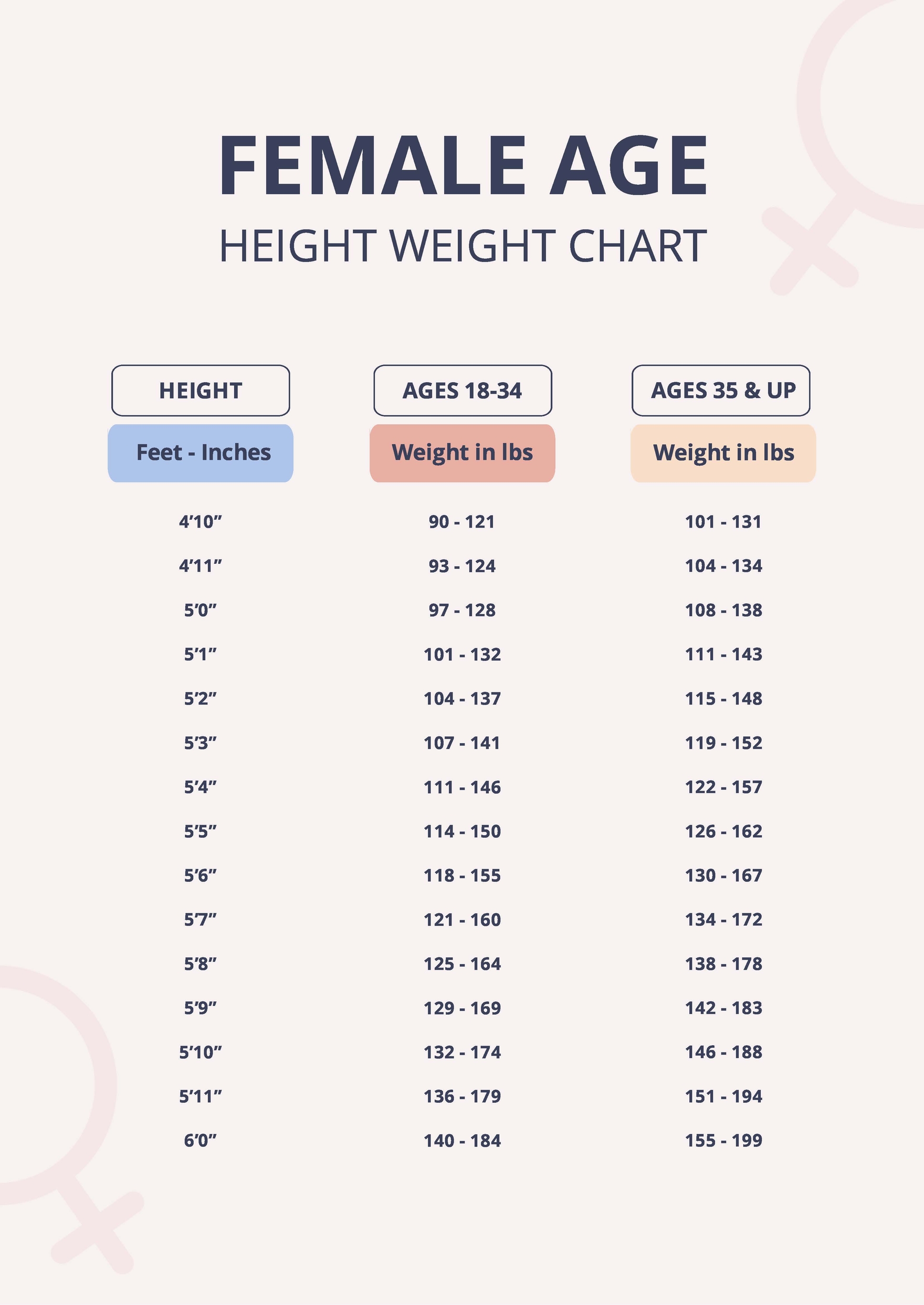
The mirror can be a cruel confidante, whispering doubts that charts and scales often amplify. For countless women, the quest to understand their body weight is a journey fraught with societal pressures, media ideals, and a bewildering array of numbers. We’ve all done it: typed "average weight for women" into a search bar, hoping for a definitive answer, only to be met with tables that offer little comfort or clarity. We scan the figures, comparing ourselves, often feeling either validated or, more frequently, dismayed.
But what do these "average" numbers truly mean? Are they a benchmark for health, a sentence for our self-worth, or merely statistical curiosities? The truth, as with most things concerning the human body, is far more complex and nuanced than a simple average suggests. This article aims to dismantle the simplistic notion of an average weight, delving into the intricate interplay of age, height, genetics, lifestyle, and individual variability that truly shapes a woman’s body. For the knowledgeable audience seeking a deeper understanding, we will explore not just what the averages are, but why they exist, their limitations, and, most importantly, what genuinely constitutes a healthy weight for you.
The Elusive "Average": A Statistical Illusion
Before we dive into the specifics of age and height, it’s crucial to understand the very concept of "average." In statistics, an average (or mean) is a single number that represents the central value of a set of data. It’s calculated by summing all values and dividing by the number of observations. While useful for population-level insights, an average is a notoriously poor predictor or descriptor for any individual within that population.
Imagine a room with 10 people: 9 are of average height, and one is an NBA basketball player. The average height of the room would be significantly skewed upwards, making it seem like everyone is taller than they actually are. Similarly, population-wide weight averages can be influenced by various factors, including the increasing prevalence of obesity in many developed nations. If the "average" weight has risen over the past few decades, is that a healthy average, or merely a reflection of a changing population health landscape?
Furthermore, "average" doesn’t account for distribution. Two populations could have the exact same average weight, but one could be tightly clustered around that average, while the other could have a wide spread of very thin and very heavy individuals. This lack of nuance is the first crack in the foundation of relying solely on an average weight for personal assessment. It’s a snapshot of a collective, not a blueprint for an individual.
The Foundation: How Height Dictates Weight Ranges
The most immediate and intuitive factor influencing a healthy weight range is height. Taller individuals naturally have more bone, muscle, and organ mass, and thus weigh more than shorter individuals of similar body composition. This relationship is typically captured by metrics that attempt to standardize weight relative to height, the most common being the Body Mass Index (BMI).
Body Mass Index (BMI): A Starting Point, Not an Endpoint
The BMI is a widely used screening tool for categorizing weight status. It’s calculated by dividing a person’s weight in kilograms by the square of their height in meters (or weight in pounds divided by height in inches squared, multiplied by 703). The categories are generally defined as:
- Underweight: BMI < 18.5
- Normal Weight: BMI 18.5 – 24.9
- Overweight: BMI 25.0 – 29.9
- Obese (Class I): BMI 30.0 – 34.9
- Obese (Class II): BMI 35.0 – 39.9
- Obese (Class III): BMI ≥ 40.0
For a woman, these ranges translate into different weight values depending on her height. For example, a woman who is 5 feet 4 inches (163 cm) tall would have a "normal" weight range of approximately 108 to 145 pounds (49 to 66 kg). A woman who is 5 feet 9 inches (175 cm) tall would have a "normal" weight range of approximately 127 to 170 pounds (58 to 77 kg).
The Critical Caveat: Limitations of BMI
While useful for population-level studies and initial screening, BMI is far from a perfect measure for individual health assessment, especially for women. Its most significant flaw is its inability to differentiate between fat mass and lean mass (muscle, bone, water).
- Muscle Mass: A highly muscular woman, such as an athlete or a dedicated weightlifter, might have a high BMI that categorizes her as "overweight" or even "obese," despite having very low body fat and excellent health. Her dense muscle tissue weighs more than fat, skewing the BMI upwards.
- Body Composition: Conversely, a sedentary woman with low muscle mass but a high percentage of body fat might fall within the "normal" BMI range, yet still be at increased risk for metabolic diseases due – a phenomenon sometimes referred to as "TOFI" (Thin Outside, Fat Inside).
- Frame Size: BMI does not account for differences in skeletal frame size. A woman with a naturally large bone structure might have a higher "healthy" weight than a woman of the same height with a delicate frame, even with similar body fat percentages. While not a precise science, frame size can be estimated by measuring wrist circumference relative to height. Generally, a small frame is associated with a wrist circumference less than 5.5 inches for women under 5’2", less than 6 inches for women 5’2" to 5’5", and less than 6.5 inches for women over 5’5".
- Age and Ethnicity: BMI thresholds may not be universally applicable across all age groups or ethnic backgrounds. Older adults, for instance, might benefit from a slightly higher BMI, and certain ethnic groups may have different body fat percentages at the same BMI.
Therefore, while BMI provides a basic framework based on height, it’s merely a starting point. To truly understand a woman’s weight in the context of her health, we must look beyond this single number.