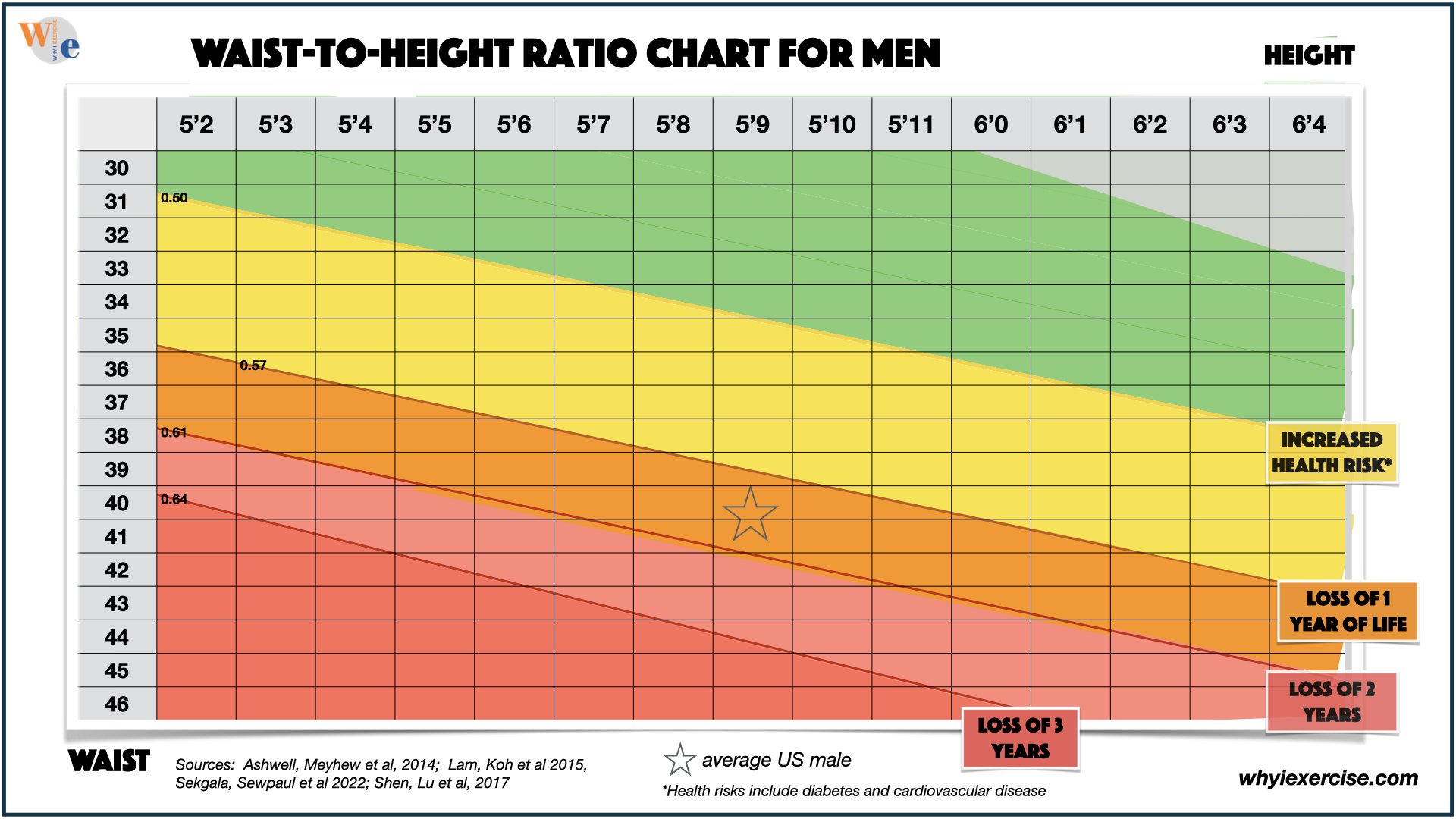
In the grand tapestry of human health, where complex algorithms and sophisticated diagnostics often dominate the discourse, there exists a deceptively simple thread, a common household tool that holds more predictive power than many give it credit for: the humble tape measure. For men, in particular, the number it reveals around their middle has evolved from a mere indicator of trouser size to a potent, silent sentinel of their overall health, whispering tales of metabolic dysfunction, cardiovascular risk, and even future disease. This is the story of the waistline – not just as a physical dimension, but as a dynamic biomarker, a narrative written in the very fat that accumulates around our organs, profoundly influencing the trajectory of a man’s well-being.
A Historical Glimpse: From Aesthetics to Epidemiology
For millennia, the male physique has been a subject of cultural fascination, shifting ideals ranging from the athletic prowess of ancient Greek sculptures to the robust strength celebrated in industrial eras. While aesthetics often dictated perceptions of health and virility, the scientific understanding of the internal mechanisms linking body composition to disease was embryonic at best. Early physicians, like Hippocrates, observed that "fat people die sooner than lean people," a broad stroke of intuition that hinted at a deeper connection. Yet, it wasn’t until the dawn of modern epidemiology and clinical science that the specific distribution of fat, particularly around the abdomen, began to emerge as a critical factor.
The initial focus in the mid-20th century gravitated towards Body Mass Index (BMI), a simple ratio of weight to height, as the primary measure of obesity. While BMI proved a useful population-level indicator, its limitations soon became apparent, especially when applied to individuals. A professional rugby player, dense with muscle, might register as "obese" by BMI standards, while a sedentary individual with little muscle mass but significant internal fat accumulation could fall within the "normal" range. BMI, it became clear, was blind to body composition and, crucially, to fat distribution – a critical oversight that paved the way for the tape measure’s ascendancy.
The scientific narrative truly deepened in the late 20th century, with landmark studies revealing that not all fat is created equal. Researchers began to distinguish between subcutaneous fat (the jiggly fat under the skin, often around the hips and thighs) and visceral fat (the deep, metabolically active fat that surrounds organs within the abdominal cavity). It was this latter discovery that transformed the waist measurement from a mere fashion metric into a vital diagnostic tool. The story of men’s health, it turned out, was intricately woven into the story of their visceral fat.
The Abdominal Fat Conundrum: A Malevolent Endocrine Gland
To understand why a man’s waist size is so revealing, one must delve into the insidious nature of visceral fat. Unlike its subcutaneous counterpart, which primarily serves as an energy reserve and insulation, visceral fat is a highly active, almost malevolent, endocrine organ. It’s not just passive storage; it’s a bustling factory of biochemicals, continuously secreting hormones and inflammatory compounds directly into the portal circulation, which leads straight to the liver. This unique anatomical positioning gives visceral fat a direct and profound impact on hepatic metabolism and systemic inflammation.
The cascade of effects begins with adipokines – a broad class of signaling proteins produced by fat cells. While some adipokines, like adiponectin, are generally beneficial (improving insulin sensitivity and reducing inflammation), visceral fat tends to produce less adiponectin and disproportionately more detrimental ones, such as resistin and leptin (when dysregulated). More critically, visceral fat is a major source of pro-inflammatory cytokines, including Interleukin-6 (IL-6), Tumor Necrosis Factor-alpha (TNF-alpha), and C-reactive protein (CRP). These inflammatory mediators are not benign; they circulate throughout the body, fostering a state of chronic low-grade inflammation that is a fundamental driver of numerous chronic diseases.
This inflammatory milieu, coupled with the constant influx of free fatty acids into the liver via the portal vein, sets the stage for insulin resistance. The liver, overwhelmed and inflamed, struggles to respond effectively to insulin, leading to increased glucose production and a diminished ability for cells to take up glucose from the bloodstream. The pancreas, attempting to compensate, works overtime, producing more insulin. This hyperinsulinemia, while initially managing blood sugar, eventually exhausts the pancreatic beta cells and further exacerbates insulin resistance, ultimately paving the way for Type 2 Diabetes. The narrative here is clear: a growing waistline often signifies a growing battle within, a silent war waged by visceral fat against the body’s metabolic harmony.
The Web of Disease: What the Expanding Waistline Predicts
The tale told by an expanding waistline is one of escalating risk across a spectrum of debilitating conditions. It’s a predictive narrative that extends far beyond the cosmetic, impacting nearly every major organ system and diminishing both the quantity and quality of life.
1. Metabolic Syndrome: The Unholy Quintet
At the heart of the waistline’s predictive power lies its strong correlation with Metabolic Syndrome – a cluster of conditions that dramatically increase the risk of heart disease, stroke, and Type 2 Diabetes. Central to its diagnosis is abdominal obesity. Alongside this, Metabolic Syndrome typically includes high blood pressure, high blood sugar, elevated triglycerides, and low levels of "good" HDL cholesterol. A man with a large waist circumference is often already halfway to a diagnosis, as the visceral fat actively contributes to the other four components through the mechanisms described above. It’s a feedback loop, a vicious cycle where each component exacerbates the others, propelled by the relentless metabolic activity of abdominal fat.
2. Cardiovascular Disease: The Silent Killer’s Accomplice
Perhaps the most alarming chapter in the waistline’s story is its intimate link to cardiovascular disease (CVD), the leading cause of death for men globally. Visceral fat contributes to CVD through multiple pathways:
- Hypertension: The inflammatory cytokines and insulin resistance impair endothelial function (the lining of blood vessels), leading to stiffer arteries and elevated blood pressure.
- Dyslipidemia: The liver, bombarded by free fatty acids, alters its lipid metabolism, increasing "bad" LDL cholesterol and triglycerides while lowering HDL cholesterol.
- Atherosclerosis: Chronic inflammation and dyslipidemia accelerate the formation of plaque in the arteries, narrowing them and increasing the risk of heart attacks and strokes.
- Blood Clotting: Visceral fat can also influence coagulation factors, increasing the risk of dangerous blood clots.
The story here is not one of sudden catastrophe, but of gradual, insidious damage, often unnoticed until a critical event. The waistline, therefore, becomes an early warning system, a marker of the slow but relentless march towards cardiovascular calamity.
3. Type 2 Diabetes: A Foregone Conclusion for Many
As previously outlined, the link between visceral fat, insulin resistance, and Type 2 Diabetes is direct and undeniable. For many men, an ever-increasing waist circumference is the most visible harbinger of impaired glucose tolerance and, eventually, full-blown diabetes. The body’s intricate system for managing blood sugar simply cannot withstand the sustained assault of hyperinsulinemia and inflammation, leading to a breakdown in glucose regulation. This chapter in the waistline’s story is particularly poignant, as Type 2 Diabetes itself is a gateway to further complications, including neuropathy, nephropathy, retinopathy, and an even greater risk of CVD.
4. Cancer: An Unexpected Connection
The narrative takes an even darker turn when considering cancer. Emerging research reveals that abdominal obesity is not merely a risk factor for diabetes and heart disease, but also for several types of cancer in men, including colorectal, prostate (aggressive forms), kidney, liver, and pancreatic cancers. The mechanisms are complex but revolve around the same culprits: chronic inflammation, insulin resistance (leading to elevated insulin and insulin-like growth factor-1, both known growth promoters), altered sex hormone metabolism (visceral fat can convert androgens to estrogens, potentially influencing prostate cancer risk), and oxidative stress. The tale here suggests that the very environment created by excess visceral fat can foster cellular proliferation and inhibit apoptosis (programmed cell death), pathways fundamental to cancer development.
5. Other Health Conditions: A Cascade of Consequences
The waistline’s story doesn’t end there. It touches upon a multitude of other conditions, each adding a layer of complexity to the overall health narrative: