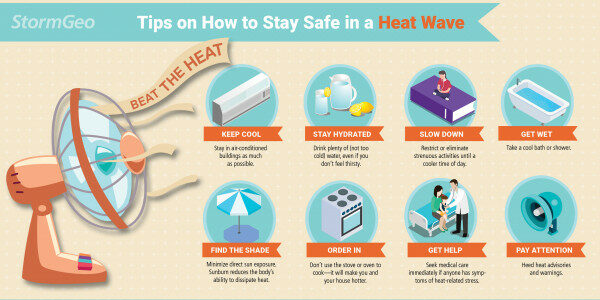
We’ve all felt that oppressive blanket of heat, the way it clings to the skin, saps energy, and fogs the mind. But beyond the sheer discomfort lies a profound danger. Extreme heat can silently and swiftly overwhelm the body’s intricate cooling systems, leading to a cascade of health crises ranging from heat exhaustion to the life-threatening condition of heatstroke. It stresses infrastructure, impacts ecosystems, and challenges our very way of life.
This isn’t merely a list of tips; it’s an exploration, a narrative woven from scientific understanding, practical wisdom, and the shared human experience of battling the relentless warmth. It’s about mastering the art of staying cool, not just for comfort, but for survival, resilience, and maintaining a semblance of normalcy when the mercury climbs to unprecedented heights. For the knowledgeable audience, we delve beyond the surface, understanding the why behind the what, and equipping ourselves with an arsenal of strategies to navigate this warming world.
The Body’s Delicate Ballet: Understanding the Enemy
To truly stay cool, we must first understand the enemy: heat itself, and how our bodies valiantly, yet sometimes futilely, try to combat it. Our core body temperature is meticulously maintained around 98.6°F (37°C). Any significant deviation, particularly upwards, spells trouble.
The body employs an ingenious biological cooling system:
- Sweating (Evaporation): This is our primary cooling mechanism. When sweat evaporates from the skin, it takes heat energy with it, effectively cooling the surface. The efficiency of this process is heavily influenced by humidity; in high humidity, sweat struggles to evaporate, making us feel much hotter.
- Vasodilation: Blood vessels near the skin surface widen, allowing more blood to flow closer to the surface. This facilitates heat transfer from the blood to the cooler environment. This is why our skin can appear flushed in the heat.
- Convection & Conduction: Heat can transfer from our warmer bodies to cooler air or surfaces (conduction when in direct contact, convection when air moves over us). If the ambient temperature is higher than our skin temperature, however, these mechanisms add heat to us rather than removing it.
- Radiation: Our bodies constantly radiate heat outwards. Again, if the surrounding environment (walls, pavement) is hotter than us, we absorb radiant heat instead.
When these mechanisms are overwhelmed – when the air is too hot, too humid, or we’re generating too much internal heat through exertion – our core temperature begins to rise. This leads to the spectrum of heat-related illnesses:
- Heat Cramps: Muscle spasms from electrolyte imbalance due to heavy sweating.
- Heat Exhaustion: Characterized by heavy sweating, weakness, cold/clammy skin, nausea, fainting. The body is still trying to cool itself but is struggling.
- Heatstroke: A medical emergency. The body’s cooling system has failed. Symptoms include a body temperature of 104°F (40°C) or higher, hot/red/dry or damp skin, rapid pulse, throbbing headache, confusion, dizziness, and loss of consciousness. This requires immediate medical intervention.
Understanding this delicate physiological ballet underscores the urgency of proactive cooling strategies. It’s not about being comfortable; it’s about maintaining cellular function and preventing systemic collapse.
Proactive Fortification: Preparing Before the Heatwave Strikes
The battle against extreme heat is won not just in the moment, but in the preparations made long before the mercury begins its relentless ascent. Think of it as building your fortress, laying your supplies, and mapping your strategy.
-
Home as a Sanctuary:
- Insulation & Sealing: This is your first line of defense. Well-insulated walls, attics, and roofs, coupled with sealed windows and doors, create a thermal envelope that resists heat intrusion. It’s an investment that pays dividends in both summer and winter.
- Window Treatments: Heavy, light-colored curtains, blinds, or external awnings are incredibly effective. They reflect solar radiation before it enters your home and converts to heat. Consider reflective films for south and west-facing windows.
- Landscaping: Trees and shrubs strategically planted can provide significant shade, particularly on the east and west sides of your home. Deciduous trees offer summer shade while allowing winter sun.
- Smart Thermostats & AC Maintenance: If you have air conditioning, ensure it’s regularly serviced. A well-maintained unit is more efficient. A smart thermostat can learn your patterns and pre-cool your home before peak demand, or remotely adjust settings.
- Attic Ventilation: A well-ventilated attic prevents heat buildup under the roof from radiating down into your living spaces. Ridge vents and soffit vents create a natural airflow.