The morning light filters through the curtains, a new day beckoning. You stir, perhaps stretch, and then make the conscious effort to transition from the realm of sleep to the waking world. For many, this is a seamless shift, a gradual re-entry into consciousness. But for others, the dawn brings with it an unwelcome guest: dizziness. That unsettling sensation – whether a gentle sway, a disorienting lightheadedness, or a full-blown, world-spinning vertigo – can transform the simple act of rising into a precarious challenge. It’s a signal from your body, a whisper or sometimes a shout, indicating that something within its intricate machinery isn’t quite aligned.
To the uninitiated, dizziness might seem like a singular experience, but it’s a broad term encompassing a spectrum of sensations. Are you experiencing vertigo, the distinct feeling that you or your surroundings are spinning? Or is it lightheadedness, a sensation of nearly fainting, a feeling of wooziness or unsteadiness? Understanding this distinction is often the first step in unraveling the mystery behind your morning disequilibrium. While occasionally benign, persistent morning dizziness warrants attention, a deeper dive into the physiological narratives playing out within your body. For the knowledgeable mind, eager to understand the complex symphony of bodily functions, let’s explore five common, yet often misunderstood, reasons why your mornings might begin with an unwelcome spin.
1. Orthostatic Hypotension: The Gravity of the Situation
Imagine your body as a meticulously engineered hydraulic system, with your heart as the central pump and your blood vessels as an extensive network of pipes. When you lie down for hours during sleep, your blood is evenly distributed throughout this system, benefiting from the lack of gravitational pull across the length of your body. The pressure within your arteries, your blood pressure, is typically stable.
The story changes dramatically the moment you decide to sit up or, more acutely, stand up. Gravity, that ever-present force, immediately begins to pull blood downwards, primarily into the veins of your legs and abdomen. This pooling of blood reduces the volume returning to your heart, subsequently decreasing the amount of blood your heart can pump out with each beat (stroke volume). For a fleeting moment, this can cause a drop in your systemic blood pressure, particularly the systolic pressure, which is the top number in a blood pressure reading and reflects the pressure during a heartbeat.
In a healthy individual, this sudden drop is swiftly countered by a remarkable set of physiological reflexes. Specialized stretch receptors, known as baroreceptors, located in the carotid arteries (in your neck) and the aortic arch (near your heart), detect this dip in pressure. They immediately send urgent signals to your brainstem, which acts as the control center for your autonomic nervous system. The sympathetic branch of this system kicks into high gear: it releases adrenaline and noradrenaline, constricting your peripheral blood vessels to push blood back towards the heart and brain, and increasing your heart rate to compensate for the reduced stroke volume. This rapid, coordinated response ensures that your brain continues to receive an adequate supply of oxygenated blood, allowing you to stand without a second thought.
However, in individuals experiencing orthostatic hypotension (OH), also known as postural hypotension, this compensatory mechanism is either delayed, insufficient, or impaired. The initial drop in blood pressure upon standing is more pronounced and sustained, leading to transient cerebral hypoperfusion – a temporary reduction in blood flow to the brain. This is the physiological narrative behind the lightheadedness, blurred vision, weakness, and yes, the dizziness you feel when you wake up and quickly change positions.
Why is it particularly pronounced in the morning? The prolonged supine position during sleep can lead to a slight physiological dehydration overnight, reducing overall blood volume. Furthermore, the autonomic nervous system, while always active, might be less primed for immediate, vigorous action right after prolonged rest. Certain medications, especially those taken at night or with a cumulative effect, can also exacerbate this morning vulnerability.
Contributing Factors and Nuances:
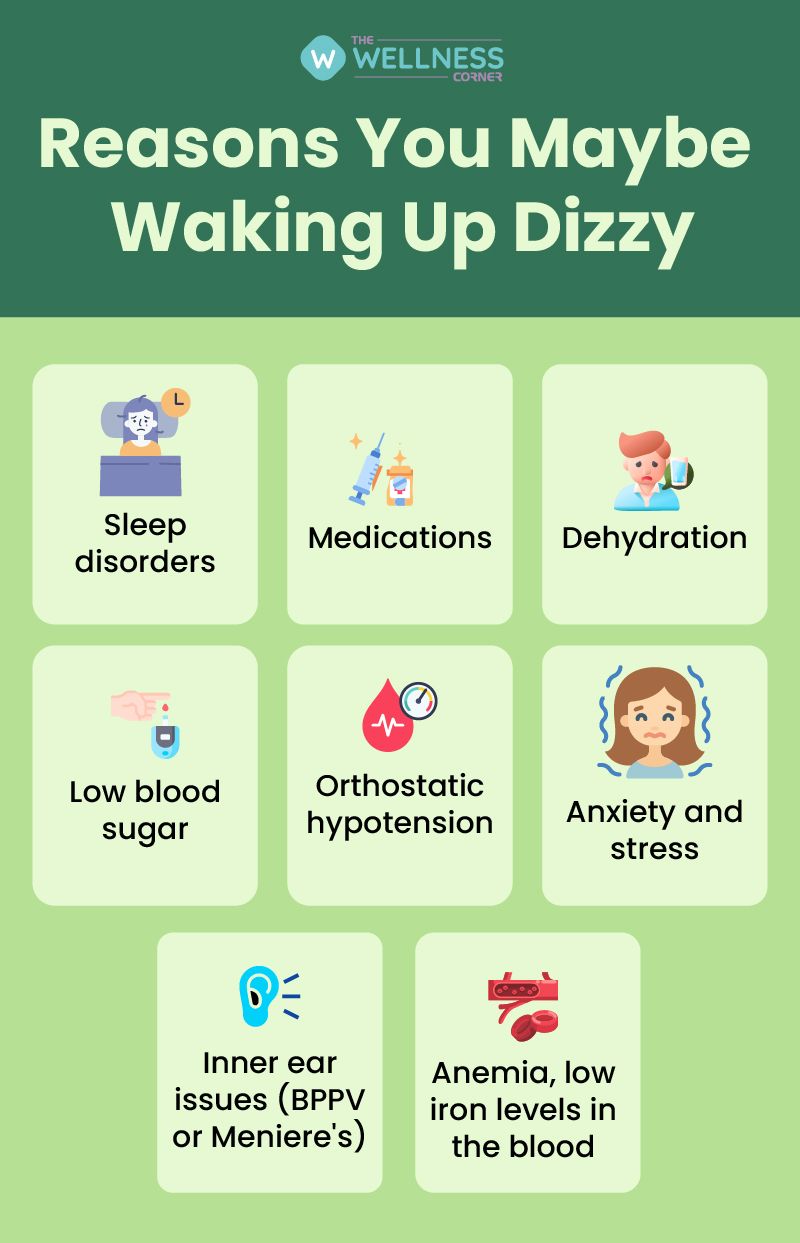
- Dehydration: Perhaps the most common culprit. Insufficient fluid intake, excessive sweating overnight, or alcohol consumption the previous evening can reduce blood volume, making the body less able to compensate for gravitational pooling.
- Medications: A vast array of pharmaceuticals can interfere with blood pressure regulation. Antihypertensives (diuretics, beta-blockers, ACE inhibitors, alpha-blockers) are obvious candidates, but antidepressants (especially tricyclic antidepressants), muscle relaxants, sedatives, and even some over-the-counter cold remedies can contribute. The timing of medication intake, particularly those with a sedative or vasodilating effect, can make morning OH more likely.
- Underlying Medical Conditions: Chronic diseases often play a role. Diabetes, particularly when it leads to autonomic neuropathy, can damage the nerves responsible for regulating blood pressure. Parkinson’s disease, multiple sclerosis, and other neurological disorders can also impair autonomic function. Adrenal insufficiency and anemia can further contribute.
- Age: As we age, our baroreceptor reflexes can become less sensitive, and our blood vessels less elastic, making us more susceptible to OH.
- Prolonged Bed Rest: Even healthy individuals can experience OH after extended periods of immobility, as the cardiovascular system deconditions.
Diagnosis and Management:
Diagnosing OH typically involves a simple orthostatic vital signs test, where blood pressure and heart rate are measured while lying down, immediately upon standing, and after 3-5 minutes of standing. A drop of at least 20 mmHg in systolic blood pressure or 10 mmHg in diastolic blood pressure, often accompanied by an increase in heart rate, confirms the diagnosis.
Management strategies revolve around understanding and mitigating the contributing factors. Hydration is paramount. Slowly transitioning from lying to sitting, and then sitting for a few moments before standing, allows the body’s compensatory mechanisms more time to engage. Compression stockings can help prevent blood pooling in the legs. Reviewing and adjusting medications with a physician is crucial. For some, dietary modifications like increased salt intake (under medical guidance) can help expand blood volume. This story of gravity and compensatory reflexes is a fundamental one in understanding morning dizziness.
2. Benign Paroxysmal Positional Vertigo (BPPV): The Inner Ear’s Misplaced Pebbles
If your morning dizziness isn’t a vague lightheadedness but rather an intense, world-spinning sensation triggered by specific head movements, especially rolling over in bed or sitting up, then the narrative likely shifts from your cardiovascular system to the intricate labyrinth of your inner ear. This is the realm of Benign Paroxysmal Positional Vertigo, or BPPV.
The inner ear is a marvel of biological engineering, responsible not only for hearing but also for balance. Within its bony confines lie the vestibular organs: the utricle, saccule, and three semicircular canals. The utricle and saccule detect linear acceleration and gravity, while the semicircular canals detect angular acceleration – head rotations. These canals are filled with a fluid called endolymph, and within them are tiny hair cells that send signals to the brain when the fluid moves.
Crucially, within the utricle are microscopic calcium carbonate crystals known as otoconia, or "ear rocks." These otoconia are embedded in a gel-like membrane and help the utricle sense gravity. They are vital for our sense of up and down. However, sometimes these otoconia can become dislodged from their normal position. The "story" of BPPV begins when these tiny crystals, like pebbles dislodged from their rightful place, migrate from the utricle into one of the semicircular canals, most commonly the posterior canal, due to its anatomical orientation.
When you then move your head in a specific way – such as rolling over in bed, sitting up quickly, or tilting your head back to look at something on a high shelf – these misplaced otoconia tumble within the endolymph of the affected canal. This movement of the crystals causes the endolymph to flow, artificially stimulating the hair cells within that canal. Your brain, receiving these erroneous signals, interprets them as intense head movement, even though your head may have only moved slightly. This sensory mismatch between what your eyes see, what your muscles feel, and what your inner ear is falsely reporting, results in the overwhelming sensation of vertigo.
Why is BPPV often a morning phenomenon? The prolonged static position of the head during sleep allows any dislodged otoconia to settle at the lowest point within a semicircular canal. The very first movements upon waking – turning your head on the pillow, sitting upright, or lifting your head from the pillow – can then trigger their displacement, initiating the cascade of symptoms. The intensity of the vertigo is often startling, accompanied by nausea and involuntary eye movements (nystagmus), but it is typically brief, lasting from a few seconds to a minute, as the crystals settle again.
Contributing Factors and Nuances:
- Age: BPPV becomes more common with advancing age, likely due to the natural degeneration of the otoconia and the supporting membrane.
- Head Trauma: A blow to the head, even a mild one, can dislodge otoconia.