In the grand tapestry of human existence, where countless metrics define us – height, weight, age, profession – one seemingly trivial measurement often goes unnoticed, yet profoundly impacts our daily lives: shoe size. For men, this figure, often plucked from the air during a fleeting visit to a shoe store or a quick glance at a previous purchase, carries a surprising weight. It’s not merely a number; it’s a whisper of our genetics, a testament to our history, a mirror to our lifestyle, and a silent participant in the vast machinery of commerce and culture.
The question, "What’s the average shoe size for men?" appears deceptively simple. One might expect a straightforward answer, a neat numerical value to slot into a tidy demographic profile. Yet, like so many aspects of the human condition, the reality is far more complex, a sprawling narrative woven from biology, geography, economics, and even psychology. To truly understand this "average," we must embark on a journey, tracing the evolution of the human foot, charting the shifts in societal norms, and dissecting the very notion of what "average" truly means in a world of ever-increasing diversity.
The Genesis of a Number: From Primal Paces to Modern Metrics
Our story begins not in a bustling mall, but on the dusty plains of prehistoric Africa. For millions of years, the human foot was a masterpiece of biological engineering, exquisitely adapted for bipedal locomotion, gripping terrain, and enduring countless miles barefoot. There were no shoe sizes then, only the intimate, unmediated connection between flesh and earth. The dimensions of these ancient feet, though inferred from skeletal remains, were shaped purely by genetics, diet, and physical activity.
Fast forward through millennia, and the foot began its long transition into a domesticated appendage. Early forms of footwear – rudimentary sandals, moccasins, and wraps – offered protection, but rarely bespoke comfort or precision sizing. Measurement, if it existed at all, was crude: a length of string, a hand’s breadth, a visual approximation. The concept of standardized sizing is a relatively modern invention, born from the crucible of industrialization and the burgeoning need for mass production.
The 19th and early 20th centuries witnessed a revolution. The Brannock Device, invented in 1927 by Charles Brannock, became the ubiquitous symbol of shoe fitting, providing a reliable method to measure not just length, but also arch length and width. This marked a pivotal moment, allowing manufacturers to move beyond guesswork and into a realm of data-driven production. Suddenly, the foot, once a unique and unquantifiable entity, could be assigned a universal code. But even with the Brannock Device, the "average" remained elusive, a moving target influenced by forces far beyond a simple measuring stick.
Unearthing the Mean: The Statistical Quest for the "Average"
So, what do the numbers say today? If we were to gather all adult men in a room and measure their feet, what would emerge as the most common size?
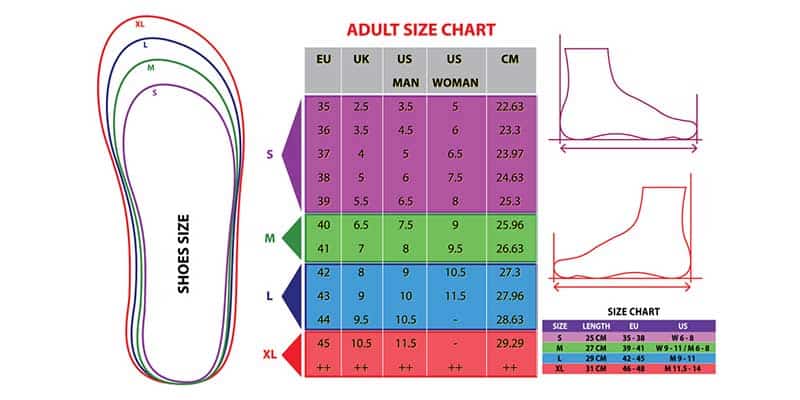
Globally, the most frequently cited average male shoe size tends to hover around US Men’s Size 9 to 10.5 (or UK 8.5 to 9.5, EU 42-44). This range represents a broad consensus across various studies and anecdotal evidence from shoe retailers. However, this is a highly generalized figure, and a deeper dive reveals significant nuances:
- United States: Many sources point to US Men’s Size 10 as the most common, with a significant portion of the male population falling between sizes 9 and 11.
- United Kingdom: The equivalent average often cited is UK Men’s Size 9.
- Europe: Due to different scaling, the average typically falls between EU 43 and 44.
It’s crucial to understand what "average" truly means here. Statisticians often refer to the mean, the sum of all values divided by the number of values. But the median (the middle value when all are ordered) or the mode (the most frequently occurring value) can also be highly informative. In the context of shoe sizes, the distribution isn’t always a perfect bell curve. There are often peaks at certain sizes, and the "average" can be skewed by outliers – those with exceptionally small or large feet.
Moreover, these averages are derived from various sources: large-scale demographic studies, data collected by shoe manufacturers and retailers, and even self-reported surveys. Each method has its own biases and limitations, making the quest for a definitive, universally accepted "average" a continuous, albeit fascinating, challenge. The numbers provide a snapshot, but the story behind them is far richer.
The Biological Imperative: Why Feet Are Growing
One of the most compelling chapters in our story is the phenomenon of the "secular trend" – the observable increase in average human height and, consequently, foot size over the past century. Our grandparents, on average, had smaller feet than we do. Why?
- Nutrition: This is arguably the most significant factor. Improved diets, particularly access to protein, vitamins, and minerals from an early age, have fostered better overall growth and development. Children today reach their full genetic potential for height and bone structure more consistently than in previous generations. A healthier body translates to larger bones, including those of the feet.
- Genetics: While nutrition allows our genes to express themselves fully, genetics lay the fundamental blueprint. We inherit predispositions for certain body types, including foot size, from our parents. The increasing diversity of populations through migration and intermarriage also contributes to a broader range of genetic expressions.
- Hormonal Factors: The timing and intensity of growth spurts during puberty are influenced by both genetics and environmental factors (like nutrition). Earlier onset of puberty and more robust growth spurts can lead to larger adult dimensions.
- Reduced Manual Labor: While less direct, a shift from physically demanding agricultural or industrial labor to more sedentary lifestyles might subtly influence bone density and development, though this is a less dominant factor than nutrition.
This growth isn’t just about length; it’s also about width and volume. Modern feet tend to be broader and fuller than those of previous generations, posing new challenges for shoe manufacturers who often rely on traditional "lasts" (foot-shaped molds) designed for older foot morphologies. The foot, it seems, is still evolving, shaped by the ever-changing landscape of human life.
The Footprints of Time: A Historical Perspective on Size
To truly appreciate the modern average, we must cast our gaze backward. What were men’s feet like in different eras?
- Ancient Civilizations: Roman sandals, Egyptian slippers, and Greek footwear suggest feet that, by modern standards, were likely smaller. Archaeological finds of ancient shoe molds or preserved footwear typically point to sizes that would correspond to modern US Men’s 7-8. This aligns with findings that average human height was significantly shorter in antiquity due to less consistent nutrition and prevalent diseases.