From the dawn of human civilization, the innate need to mend and restore has been a constant. A cut, a scrape, a burn – these universal experiences trigger a primal quest for relief, for healing. In this enduring human narrative, one plant has consistently emerged as a steadfast ally, whispering promises of recovery across millennia. It is a succulent marvel, unassuming in appearance yet profound in its capabilities: Aloe barbadensis Miller, more commonly known as Aloe Vera. Often celebrated as "Nature’s Band-Aid," Aloe’s journey from an ancient mystical remedy to a subject of rigorous scientific scrutiny is a compelling story, revealing a plant whose intricate biochemistry orchestrates a symphony of healing that continues to captivate researchers and practitioners alike.
This article embarks on an expedition through time and molecular biology, tracing Aloe Vera’s storied past, dissecting its complex chemical composition, elucidating the sophisticated mechanisms through which it orchestrates wound repair, and examining the growing body of scientific evidence that validates its role in modern medicine. For the knowledgeable audience, we will delve beyond superficial claims, unearthing the true depth of its therapeutic prowess.
A Tapestry of Time: Aloe’s Ancient Narrative
The story of Aloe Vera is interwoven with the very fabric of human history, a testament to its perceived efficacy long before the advent of scientific laboratories. Its presence in ancient texts and cultural practices across disparate civilizations paints a vivid picture of its enduring value.
Our narrative begins in Ancient Egypt, where Aloe Vera was revered as the "Plant of Immortality." Hieroglyphs and texts, most notably the Papyrus Ebers (circa 1550 BCE), detail its use for medicinal purposes, including internal cleansing and topical application for skin ailments and infections. Legend has it that both Cleopatra and Nefertiti incorporated Aloe into their beauty regimes, while its presence in embalming rituals underscored its symbolic association with preservation and eternal life. The Egyptians understood, perhaps intuitively, that this plant possessed properties that could soothe, protect, and restore.
Across the Fertile Crescent, Mesopotamian civilizations, as evidenced by Sumerian clay tablets dating back to 2100 BCE, also documented the medicinal uses of Aloe. Its journey then extended westward to Ancient Greece and Rome. The renowned Greek physician Dioscorides, in his seminal work De Materia Medica (1st century CE), meticulously described Aloe’s efficacy for treating wounds, skin irritations, and internal ailments. Pliny the Elder, another prominent Roman naturalist, echoed these observations. Perhaps the most romantic, though historically debated, anecdote involves Alexander the Great, who is said to have conquered the island of Socotra in the Indian Ocean in 330 BCE to secure a steady supply of Aloe for his wounded soldiers, highlighting its strategic importance in ancient warfare.
Concurrently, in the East, Aloe was carving its own indelible mark. In India, Ayurvedic medicine bestowed upon it the title "Kumari," meaning "princess," recognizing its rejuvenating properties for both the body and skin. For over 3,000 years, Aloe has been a cornerstone of traditional Indian medicine, employed for a vast array of conditions, including gastrointestinal issues, skin diseases, and wound care. Similarly, in Traditional Chinese Medicine (TCM), Aloe, known as "Lu Hui," was valued for its detoxifying, anti-inflammatory, and healing attributes, used for burns, infections, and digestive complaints.
The plant’s widespread adoption continued through the Islamic Golden Age, with scholars like Avicenna incorporating its uses into their medical encyclopedias. By the Medieval Period in Europe, Aloe’s fame had spread, with Crusaders reportedly bringing knowledge of its healing powers back from the Middle East. It traversed continents and oceans during the Age of Exploration, finding new homes in the Americas and other tropical regions, where indigenous cultures quickly integrated it into their traditional healing practices.
The 20th century marked a pivotal shift from folklore to scientific inquiry. The anecdotal use of Aloe to treat radiation burns, particularly after the atomic bombings of Hiroshima and Nagasaki, spurred renewed interest and laid the groundwork for modern research. Suddenly, this ancient remedy was thrust into the spotlight of contemporary science, prompting a quest to understand why and how it worked, rather than simply accepting that it did. This historical narrative is not merely a collection of anecdotes; it is a profound testament to a plant that has consistently offered solace and healing across diverse cultures and epochs, setting the stage for its modern scientific exploration.
The Green Alchemist: Unveiling the Aloe Plant
Before dissecting its biochemical wonders, it is essential to understand the botanical marvel that is Aloe barbadensis Miller. It is a succulent, xerophytic plant belonging to the Asphodelaceae family, thriving in arid and semi-arid regions globally. Its distinctive morphology is key to its therapeutic properties.
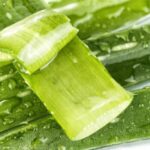
The Aloe Vera plant is characterized by its thick, fleshy, spear-shaped leaves that grow in a rosette pattern. These leaves, which can reach up to two feet in length, are encased in a tough, green rind with serrated, spiny edges. It is within these remarkable leaves that Aloe’s healing secrets are meticulously stored.
A cross-section of an Aloe leaf reveals distinct layers:
- The Rind (Cortex): The outermost protective layer, green and relatively tough.
- The Sap (Latex): Directly beneath the rind, running through vascular bundles, is a yellowish, bitter exudate. This latex contains compounds known as anthraquinones, primarily aloin, which are potent laxatives. While historically used internally, this component is typically removed or minimized in products intended for topical wound healing or internal consumption for other benefits, due to its strong purgative effect.
- The Mucilaginous Gel (Parenchyma): This is the clear, viscous inner part of the leaf, comprising the majority of the leaf’s volume. It is the gel, harvested from the inner fillet of the leaf, that is the treasure trove of bioactive compounds responsible for Aloe Vera’s celebrated wound-healing properties.
The plant’s ability to thrive in harsh environments is mirrored in its resilience and capacity for self-repair, almost as if its very existence embodies the healing principles it bestows. Its water-retaining mucilaginous gel is not just a survival mechanism for the plant; it is the vital medium that delivers its complex array of healing molecules to the human body.
The Biochemical Orchestra: A Symphony of Healing Compounds
For the knowledgeable audience, the true marvel of Aloe Vera lies not in a single miracle compound, but in the synergistic action of an astonishingly complex array of bioactive molecules. The Aloe Vera gel contains over 75 potentially active constituents, including vitamins, enzymes, minerals, sugars, lignin, saponins, salicylic acids, and amino acids. It is a biochemical orchestra, where each component plays a crucial role in the grand symphony of healing.
-
Polysaccharides: The Conductors of Cellular Repair
- Acemannan (acetylated glucomannan): This is arguably the star player. A long-chain polysaccharide, acemannan is known for its immunomodulatory effects. It stimulates macrophages (immune cells) to release cytokines, which are signaling molecules that initiate and accelerate the healing cascade. Acemannan also directly promotes fibroblast proliferation (fibroblasts produce collagen), collagen synthesis, and angiogenesis (formation of new blood vessels). Its role in strengthening cellular membranes and promoting cell-to-cell communication is critical for organized tissue regeneration.
- Other glucomannans, pectins, and hemicelluloses: These contribute to the gel’s humectant properties, forming a protective, moist film over the wound, which is vital for optimal healing.