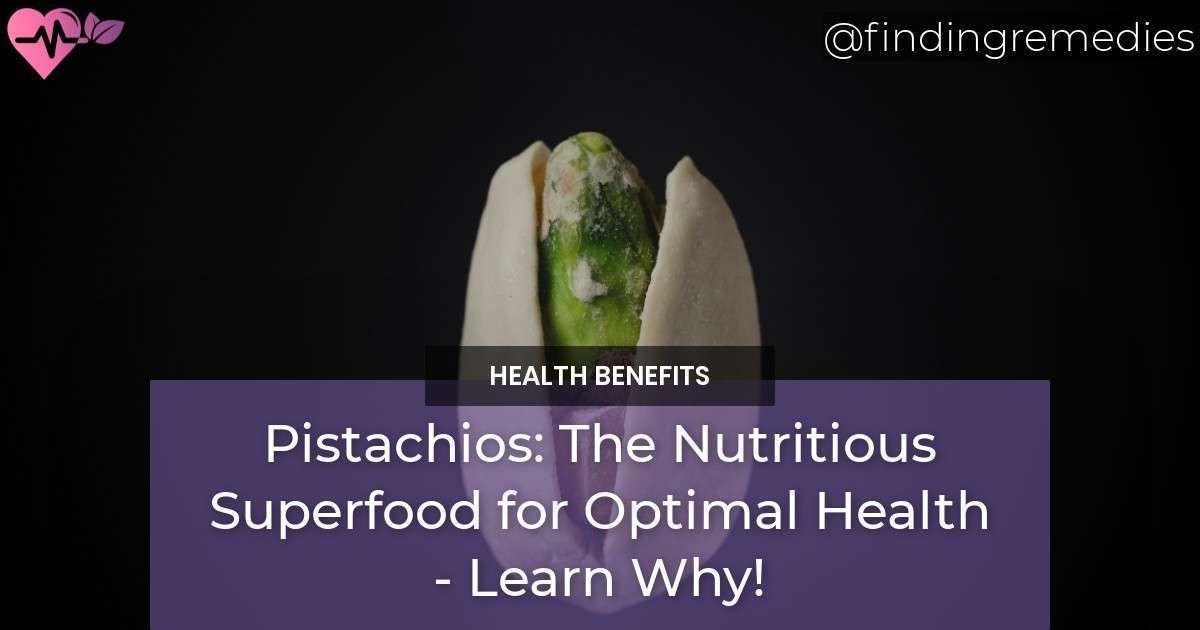
In a world perpetually searching for the next miracle ingredient, the next potent pill, or the fleeting trend promising optimal health, sometimes the most profound answers lie hidden in plain sight, or in this case, within a crimson-blushed, emerald-green nut. The pistachio, often relegated to the realm of party snacks or ice cream flavoring, is, in fact, a titan among superfoods – a nutritional powerhouse wrapped in a delightful package, boasting a history as rich and layered as its flavor. More than just a tasty treat, pistachios represent the confluence of ancient wisdom and modern scientific validation, positioning themselves as the undisputed champion of convenient, delicious, and incredibly beneficial snacking. This is the story of why the pistachio isn’t just a good snack; it’s the ultimate superfood snack.
A Legacy Etched in Time: The Ancient Roots of a Modern Marvel
To truly appreciate the pistachio, one must first journey back through millennia, to the arid lands of the Middle East, where its story began. Archeological evidence suggests that pistachios have been consumed by humans for at least 9,000 years, making them one of the oldest flowering nut trees. From the fertile crescent to the grand tables of ancient Persia, where they were revered as a symbol of wealth, health, and good fortune, pistachios held a place of honor. Legends speak of the Queen of Sheba declaring pistachios an exclusively royal food, forbidding commoners from cultivating them. They were a staple along the Silk Road, providing vital sustenance and energy to weary travelers and traders traversing vast, unforgiving landscapes.
The Romans, too, discovered the delights of pistachios, introducing them to the Mediterranean basin, where they flourished. Fast forward to the modern era, and while California, Arizona, and New Mexico have emerged as significant global producers, the essence of the pistachio – its resilience, its vibrant character, and its profound nutritional gifts – remains unchanged. This deep historical lineage isn’t just a charming anecdote; it speaks to the inherent value and long-recognized benefits of this remarkable nut, a testament to its enduring role in human diets across diverse cultures and epochs. It’s a food that has stood the test of time, not just surviving, but thriving, and continuing to offer its bounty to discerning palates and health-conscious individuals today.
The Nutritional Symphony: Deconstructing the Pistachio’s Power
What exactly makes the pistachio so extraordinary? The answer lies in its remarkably dense and diverse nutritional profile. Far from being a mere source of calories, each pistachio is a meticulously crafted miniature ecosystem of macronutrients, micronutrients, and bioactive compounds working in concert to promote optimal health.
The Macronutrient Marvel: Building Blocks of Vitality
At its core, the pistachio delivers a balanced triumvirate of essential macronutrients: healthy fats, plant-based protein, and dietary fiber.
-
Healthy Fats (The Heart’s Best Friend): Approximately half of a pistachio’s weight comes from its fats, but these are predominantly the good kind. Pistachios are rich in monounsaturated fatty acids (MUFAs), like oleic acid (the same healthy fat found in olive oil), and polyunsaturated fatty acids (PUFAs), including linoleic acid. These fats are cornerstones of cardiovascular health, known for their ability to help lower LDL ("bad") cholesterol while potentially raising HDL ("good") cholesterol. They play crucial roles in cell membrane integrity, hormone production, and nutrient absorption. Unlike the saturated fats often found in processed snacks, the fats in pistachios are anti-inflammatory and cardio-protective, providing sustained energy without the metabolic burden.
-
Plant-Based Protein (Muscle & Satiety): For a nut, pistachios are an excellent source of complete plant-based protein, offering a good spectrum of essential amino acids. A single serving (about one ounce or 49 nuts) provides approximately 6 grams of protein. This protein content is vital for muscle repair and growth, enzyme production, and immune function. Moreover, protein is a key player in satiety; it helps you feel full and satisfied for longer, reducing the likelihood of overeating and supporting weight management goals. For vegetarians and vegans, pistachios are a convenient and delicious way to boost protein intake.
-
Dietary Fiber (Gut Health & Glycemic Control): With about 3 grams of dietary fiber per serving, pistachios are a notable source, especially when compared to many other snacks. This fiber is a crucial component for digestive health, promoting regular bowel movements and preventing constipation. Beyond its mechanical role, fiber acts as a prebiotic, feeding the beneficial bacteria in your gut microbiome. A healthy gut microbiome is increasingly recognized as central to overall health, influencing everything from immunity and mood to nutrient absorption and even metabolic regulation. Furthermore, fiber helps to slow down the absorption of sugars, leading to a more gradual rise in blood glucose levels, which is particularly beneficial for blood sugar management.
The Micronutrient Matrix: A Treasury of Essential Vitamins and Minerals
Beyond the macronutrients, pistachios are a veritable treasure chest of vitamins and minerals, each contributing uniquely to physiological well-being.
- Vitamin B6 (Pyridoxine): Pistachios are exceptionally rich in Vitamin B6, a vital nutrient involved in over 100 enzyme reactions in the body. It’s critical for amino acid metabolism, red blood cell formation, and neurotransmitter synthesis, impacting mood, sleep, and nerve function. It also plays a role in immune health and reducing homocysteine levels, which are linked to heart disease.
- Potassium: A powerful electrolyte, potassium is crucial for maintaining fluid balance, nerve signals, and muscle contractions, including the rhythmic beating of the heart. Its presence helps to counteract the effects of sodium, contributing to healthy blood pressure levels and reducing the risk of hypertension.
- Phosphorus: Essential for bone and teeth formation, phosphorus is also a key component of DNA, RNA, and ATP (the body’s primary energy currency). It plays a role in kidney function, muscle contraction, and nerve signaling.
- Magnesium: Often called the "master mineral," magnesium is involved in over 300 biochemical reactions. It’s critical for muscle and nerve function, blood glucose control, blood pressure regulation, and energy production. Many people are deficient in magnesium, making pistachios a valuable dietary source.
- Copper: An essential trace mineral, copper is vital for iron metabolism, red blood cell formation, immune function, and the health of connective tissues. It also acts as an antioxidant, protecting cells from damage.
- Manganese: Another trace mineral, manganese is crucial for bone development, metabolism of carbohydrates, amino acids, and cholesterol, and acts as a co-factor for several enzymes, including the potent antioxidant superoxide dismutase.
- Thiamine (Vitamin B1): Important for energy metabolism, converting carbohydrates into energy. It also plays a role in nerve function.