We all have a finishing line. For some, it’s the summit of a towering mountain, a physical testament to endurance. For others, it’s the launch of a groundbreaking startup, the completion of a challenging degree, or simply the consistent act of showing up, day after day, for a deeply cherished goal. Whatever its form, the journey to that line is rarely linear. It’s a crucible of effort, setback, and resurgence, often feeling less like a steady sprint and more like an arduous, winding marathon. What propels us forward through the pain, the doubt, and the fatigue, when every fiber of our being screams to quit? What whispers the promise of reward, even when the finish line is a distant, shimmering mirage?
The answer, in large part, lies within the intricate dance of a single, often misunderstood, neurotransmitter: dopamine. Far from being merely the "pleasure chemical," dopamine is the invisible architect of ambition, the silent engine of drive, and the master conductor of our internal orchestra of motivation. It is the very mechanism through which our brain dictates our finishing line, not just by granting us moments of joy, but by calibrating our willingness to seek, strive, and persist.
Beyond Bliss: Unpacking the Dopamine Paradox
For decades, popular science reductionism painted dopamine with a broad, simplistic brush: the brain’s reward chemical, responsible for the fleeting rush of pleasure. A sugary treat, a winning lottery ticket, a moment of intimacy – all were attributed to a dopamine surge. While not entirely inaccurate, this understanding is akin to describing a symphony by only mentioning a single violin. The truth, as neuroscientists have meticulously uncovered, is far more profound and nuanced.
Dopamine isn’t primarily about the experience of pleasure; it’s about the anticipation of it, the motivation to pursue it, and the learning derived from that pursuit. It’s the "wanting" more than the "liking," as famously articulated by Kent Berridge and Terry Robinson. When we encounter something that promises a reward, or even just information that suggests a potential reward, our dopaminergic neurons fire, creating a surge that propels us to act. This is the seeking system, an ancient, evolutionarily conserved pathway designed to keep us engaged with the world, hunting for resources, opportunities, and mates.
Imagine a deer in a forest. It’s not just the sweet taste of berries that activates its dopamine system. It’s the smell of the berries, the sight of the bush, the memory of past foraging success. This cascade of anticipatory dopamine drives the deer to the bush, through potential dangers, to finally consume the reward. The actual consumption provides a brief, satiating "liking" signal, but it’s the "wanting" that fueled the journey.
In humans, this translates into our relentless pursuit of goals. The entrepreneur isn’t just driven by the eventual profit (the "liking"); they’re fueled by the thrilling prospect of a successful pitch, the positive feedback from a client, the intellectual challenge of solving a problem (the "wanting"). The marathon runner isn’t just focused on crossing the finish line; they’re motivated by the vision of themselves training, the improvement in their pace, the camaraderie with fellow runners, and the mental resilience forged in each painful mile. These are all dopamine-driven signals, charting a course towards a future, often abstract, reward.
The Seeking Brain: Your Internal Compass
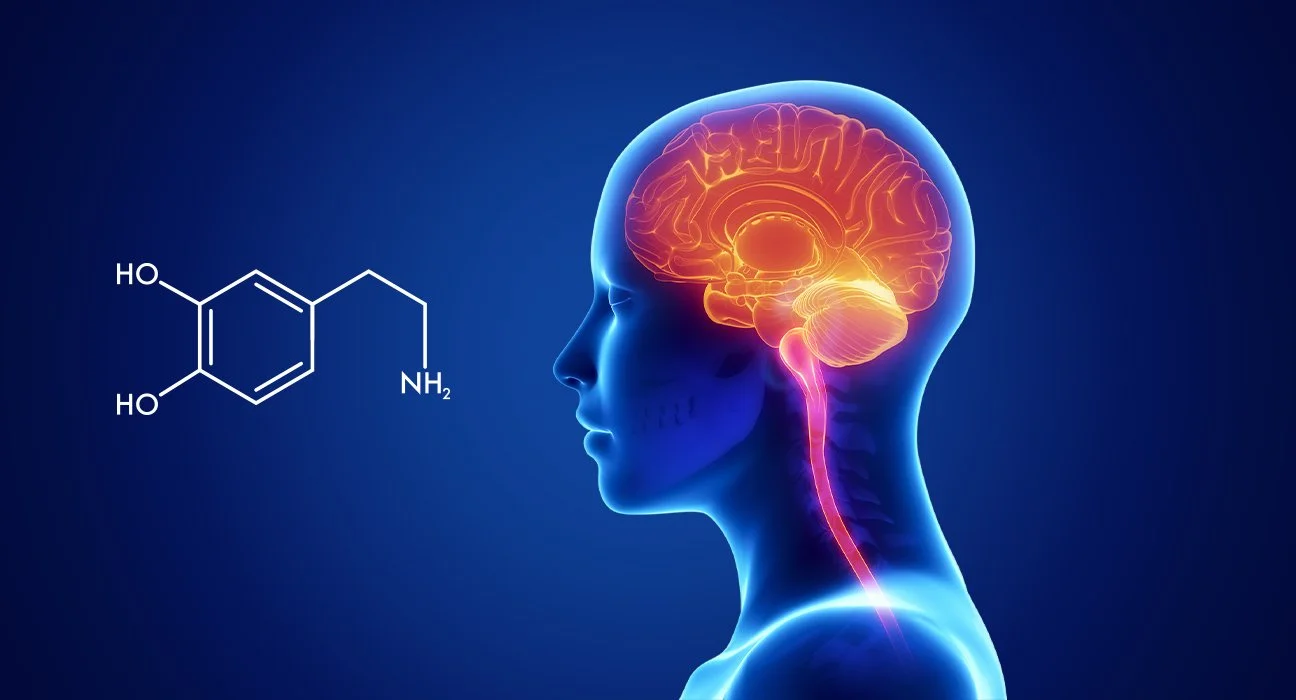
The core of our dopamine system originates in a few key areas deep within the brain, primarily the Ventral Tegmental Area (VTA) and the Substantia Nigra. From these hubs, dopaminergic pathways project throughout the brain, forming complex circuits that underpin our motivation, learning, and executive function. The mesolimbic pathway, often called the "reward pathway," projects to areas like the nucleus accumbens, amygdala, and hippocampus, driving our emotional responses and memory formation related to rewards. The mesocortical pathway projects to the prefrontal cortex, a region crucial for planning, decision-making, and sustained attention – precisely the faculties needed to navigate a long-term goal.
Consider your brain as a sophisticated internal compass. Dopamine is the magnetic force that pulls the needle towards perceived value. It assigns salience – importance or relevance – to cues in our environment. A specific email notification, the smell of coffee, the sight of a project deadline – these external stimuli acquire meaning because our dopamine system has learned to associate them with potential rewards (or punishments, which also drive dopamine-mediated learning to avoid them).
When we embark on a journey towards a finishing line, our brain doesn’t see one monolithic goal. It sees a series of intermediate milestones, potential hurdles, and learning opportunities, each weighted by its dopaminergic significance. The brain calculates the value of the reward, the effort required, and the probability of success. This ongoing, unconscious calculation is precisely how our brain dictates whether a given finishing line is worth pursuing, and with what intensity.
The Calculus of Effort: Is it Worth the Climb?
This brings us to one of dopamine’s most critical roles: mediating our willingness to exert effort. Reaching any significant finishing line demands sustained effort, often in the face of discomfort, boredom, and frustration. Dopamine helps us bridge the gap between the immediate discomfort and the delayed gratification.
Research shows that individuals with higher baseline dopamine levels or more responsive dopamine systems tend to be more willing to work harder for rewards. They perceive the effort as less aversive and the potential reward as more enticing. This isn’t just about raw physical strength; it’s about mental fortitude, the capacity to stay focused on a tedious task, to push through intellectual roadblocks, or to endure the emotional strain of creative work.
Think of an author slogging through a difficult chapter. The immediate "reward" is often minimal – perhaps a single well-crafted sentence after hours of staring at a blank screen. Yet, the dopamine system keeps signaling the ultimate reward: the completed manuscript, the published book, the reader’s appreciation. Each small victory – a coherent paragraph, a fitting metaphor – provides a mini-dopamine hit, a momentary reinforcement that tells the brain, "Yes, this is worth it. Keep going."
This effort-based decision-making is heavily influenced by the prefrontal cortex, which works in concert with the dopamine system. The prefrontal cortex evaluates the long-term consequences, plans strategies, and inhibits impulsive behaviors that might derail the journey. A well-regulated dopamine system provides the motivational fuel, while the prefrontal cortex acts as the navigator and strategist, ensuring that the fuel is used effectively towards the desired destination.
The Labyrinth of Failure: Resetting the Dopamine Compass
No journey to a finishing line is without its detours and dead ends. Failure is an inevitable, often painful, part of the process. And here, too, dopamine plays a crucial, albeit counterintuitive, role. While a positive reward prediction error (getting more than expected) causes a dopamine surge, a negative reward prediction error (getting less than expected, or failing entirely) causes a dip in dopamine activity.
This dip isn’t just a punishment; it’s a powerful learning signal. It tells the brain, "The model was wrong. Adjust your predictions. Change your strategy." This is how we learn from our mistakes, adapt our approach, and refine our path towards the finishing line. Without this dopamine-mediated learning, we would be condemned to repeat the same errors, never improving, never progressing.
However, chronic failure or a perceived inability to ever reach a goal can have detrimental effects on the dopamine system. Persistent negative reward prediction errors can lead to a state of learned helplessness, where the brain essentially "gives up," reducing its investment in effort and motivation. This is a common feature of clinical depression, where anhedonia (the inability to experience pleasure) and a profound lack of motivation are hallmark symptoms, often linked to dysregulation in dopaminergic pathways. The finishing line, in such a state, seems not just distant but entirely unattainable, and the very will to begin the race evaporates.
When the System Misfires: The Shadow Side of Drive
The power of dopamine, when out of balance, can also lead to significant challenges, dictating a finishing line that is detrimental rather than aspirational.
Addiction: Perhaps the most stark example of dopamine’s influence gone awry. Addictive substances and behaviors hijack the dopamine system, creating massive, artificial surges that overwhelm the natural reward pathways. The brain learns to prioritize the immediate, potent dopamine hit from the drug over all other natural rewards, leading to compulsive seeking and use, even in the face of devastating consequences. The "finishing line" becomes the next dose, the next hit, a relentless pursuit dictated by a deranged dopamine system.
Depression and Anhedonia: As mentioned, a depleted or dysregulated dopamine system can manifest as a profound lack of motivation and anhedonia. The brain struggles to assign salience to positive stimuli, making it difficult to initiate action or find enjoyment in activities that once brought pleasure. The finishing line, whether personal or professional, becomes invisible or utterly unappealing.
ADHD: Attention-Deficit/Hyperactivity Disorder is often linked to differences in dopamine regulation, particularly in the prefrontal cortex. This can lead to difficulties with sustained attention, impulse control, and the ability to delay gratification. The "effort cost" for tasks might feel disproportionately high, making it challenging to maintain focus on long-term goals or to complete multi-step projects. The finishing line is perceived, but the internal engine struggles to maintain a consistent speed.
Parkinson’s Disease: At the extreme end of dopamine deficiency, Parkinson’s disease highlights its critical role in motor control. The degeneration of dopamine-producing neurons in the substantia nigra leads to tremors, rigidity, and bradykinesia (slowness of movement). Even initiating a simple movement becomes an immense challenge, underscoring dopamine’s fundamental role in translating intention into action. Here, the finishing line of even basic daily tasks becomes a monumental struggle.
These examples underscore that while dopamine is our engine of ambition, its proper calibration is paramount. Too much, too little, or the wrong kind of stimulation can profoundly alter our capacity for sustained effort and our ability to even perceive, let alone reach, our desired finishing lines.
Sculpting Your Dopamine Destiny: Strategies for Sustained Drive
If our brain dictates our finishing line through the intricate mechanisms of dopamine, does that mean we are simply puppets of our neurochemistry? Not at all. Understanding these mechanisms empowers us to work with our brain, to intentionally sculpt our environment and habits to optimize our dopamine system for sustained drive and achievement. We can become conscious architects of our own finishing lines.